Amanda Way 0:05
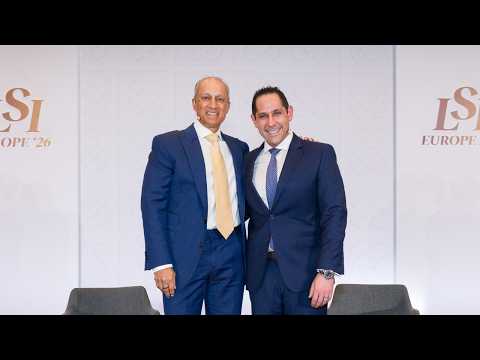
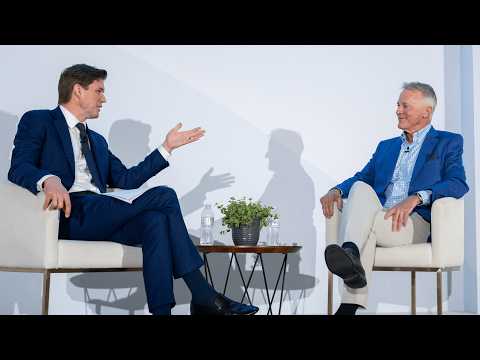
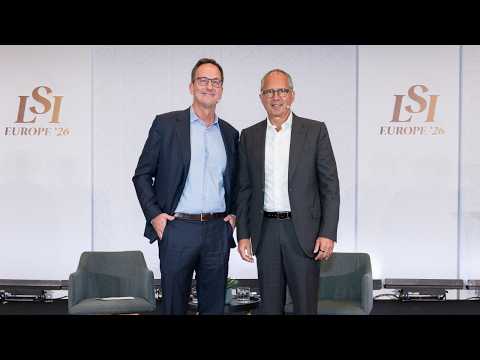
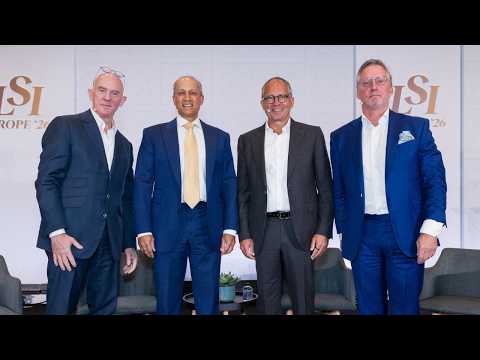
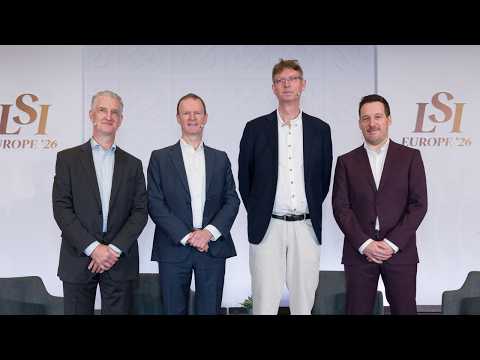
Hello everyone and welcome. I'm Amanda Way, the Global Program Director here at LSI, and I'm thrilled to have this panel with me today on CO founding capital, how investors are shaping the next generation of startups. This topic is very personal for me, as I've been on both sides of the table, both as an investor that spun out companies and build out teams out of academia that have gone through IPO and then was also a CEO that was brought in by VCs to take over a company in the early stages. So it's a personal story, and I've been on both sides. Today, we're going to talk about how investors are actively involved in building that next generation of Medtech and health tech companies from Singapore to the US and Europe. I'm joined by an incredible group of panelists who are at the forefront of this evolving landscape, and I'll quickly introduce them. We have Owen from Opal ventures, your focus is on backing founders at the earliest stages building the next generation of healthcare infrastructure. Eric, you're from tread lines medical Singapore, the subsidiary of the Israeli based investment company the trendlines group, focusing on investing growing early stage Medtech companies right here in Singapore. Peter, you represent NLC, the world's largest health tech venture builder, with over 80 companies in your portfolio, some in the very early stages of development, some scaling globally. And Colin, you're from coronet ventures, a venture capital initiatives from Cedars Sinai Hospital in LA with a focus on investing in early stage healthcare startups in Asia and supporting their growth into the US through cedars Sinai's expertise. Thank you each for being here. You all caught my eye for this panel due to your hands on approach with your portfolio companies. But this actually means quite a different thing to each of you. And so to kick things off and give an audience of a bit more color of the work you do, let's start off by exploring this increasing hands on approach from investors. So we're seeing more investors step in as near co founders. And again, that can mean something completely different to each of you. Do you see your role as co founder, catalyst or gatekeeper in the earliest stages, and what does that look like at your firm? So we'll start off with you. Peter,
Peter Wijffels 2:05
yeah. So clearly, the answer for us is co founders. We find the IP, and then we decide that we want to build a company around it, and then we attract a what we call a co founder, which is the CEO, and together with the CEO, we build it out, but without us, there would be no company. So we are clearly in the co founder bucket, in your in your definition, yeah,
Owen Willis 2:28
yeah. I mean, I think between co founder, catalyst or gatekeeper, I think the answer is yes, right? I think there are many, many different ways in which you can engage with a startup at the very early stages of building, when you're working with founders who are going through those stages of ideation, they might need different things on different days. They might different different founders need different types of support. I think at the end of the day, our job is to give founders access to resources that enable them to just grow as quickly as possible. Right answer the early questions in their business, find early customers, find early investors. And if we are able to open up those opportunities for founders, then we find that that's where we can provide the best support.
Eric Chee Mun Loh 3:19
Well to us, well, we see ourselves more like a mentor to the team of people that has been kind of involved in very early stage development work for the med tech area. Uniquely, med tech has a lot of little like challenges, you know, ranging from not just from a product point of view, which I think the team would be fully capable of kind of developing them, but issues like clinical, issues like regulatory, I think those are the things that we want to kind of guide them, so that they know how to kind of navigate it, you know, to the point of success. And in a sense, very hands on investor. And we want to kind of align our interest with that of the founder or the founding team, primarily to see the success, so that everyone can taste the success together,
Amanda Way 4:00
Colin.
Colin Tan 4:02
I think I'm go, going to go along with Owen, where it's sort of all the above. I think it really depends on the startup. I mean, I give you some examples, right? So if it's, you know, let's say, if it's a scientific co founder, first time that she's running a company, sure love to be having, you know, helping out. It's a, sort of a co founder, and sort of leading her along the way. If it's someone like a serial entrepreneur, you know, it's not his first rodeo. I mean, obviously want to be more of a catalyst, you know, let him or her do her thing, you know, and then sort of see how we can, you know, help them, network, guide them and all that. So it really depends on, on the type of startup and the type of founder that we're looking at,
Amanda Way 4:38
yeah, that makes a lot of sense. Maybe, question for Peter and and Owen, since you both sometimes will be building the idea yourself and bringing that team in, I think something that I know all of you look for is Coach ability and that initial CEO, co founder, when you're the one bringing in a. CEO or potential co founder around an idea that you've built. How do you think about that coach ability of them being able to really own that idea and run with it themselves? Is it something that's coachable? Is that how you think about it? Oh, and I'll have you start off with that. I'm sorry. Sorry, Eric, sorry, I'll have you start off that.
Eric Chee Mun Loh 5:24
Alright. So I guess the most important thing in this, in all startup, whether we bring them in or whether is the founder, I think the passion about wanting to do what they believe most in is very important. I think we have to ask someone who founded the idea, or want them to be kind of ignited in a passion of knowing what this will bring good to and I think that will kind of motivate them to find the right kind of solutions to many of the challenges. And I think all of us here would agree that, you know, managing startups, the first thing they have to get used to is that it's never going to be a plain, moving path. So they have to learn of how to kind of navigate that, especially overcoming some bumps. Having the passion is right. Having the skill sets, of course, is the other and very much guiding them through beyond just what they are most comfortable, you know, with, for example, if they started off in the engineering, technical background, but they kind of move them a little out of that, while they can still concentrate on technical but expose them to the other which along the way they will face.
Amanda Way 6:28
Makes a lot of sense. And Peter your thoughts,
Peter Wijffels 6:30
yeah. So first, I would like to ask a question to my fellow panelists, how many founders do you think are required in a Medtech venture from incubation all the way to an exit. On average. Any guesses?
Eric Chee Mun Loh 6:45
you will not be one, for sure,
Colin Tan 6:48
more than one? Yeah,
Owen Willis 6:50
two ish, yeah.
Peter Wijffels 6:51
So the answer is 4.2 so you need 4.2 founders. On average, you get so and there is, of course, there is always a Steve Jobs type who does it all the way from beginning to the end, the hero founder, you know. But for that one that makes it, the other venture that makes it, has eight CEOs, right? So, and I, you know, when, when I have this conversation with particularly some American investors who were founders themselves and were successful, they look at our model, where we attract the CEO and they say, What are you doing? You kind of, you don't find people like me. I was born. I wasn't found. And so I think there is this, this conception, and it exists very much in the in the investor community that you need. You can only succeed if the founder is, you know, the best person that and is super passionate, etc. And I don't think it's wrong, but I do think that in med tech, the nature of the development changes so much over time that the best founder at that moment in time can be somebody else. So it could be that for the first stage where you're doing product development and clinical work, you know, the profile that you need to be successful is a very different profile from the person that you need to make it a commercial success. And that also leads, again, to challenges for investors like us, because if the initial founder has 70% of the business, how are you going to attract that person that that will do the commercialization? So I think the the answer to your question is, it's very important, important to have passionate people, but it needs to be, it needs to be the right horse for that course, and you need to take that into account in your cap table formation.
Amanda Way 8:33
That's very important. Yes, maybe to add on to this, the slide just thinking about CEO. It's really thinking about who you're surrounding the CEO with. And I think each of you have built out your firms quite different. Your advisory boards quite differently. How have you thought about that, that advisory help that you bring alongside to these early stage Med, sec med tech companies, thinking about how you're going to guide them to go through regulatory moving your company to another country, things like that. I'll look at you, Colin. Since you do a lot of work bringing your companies from Singapore to the US, where you're based in LA, could you tell us a little bit more, maybe broadly, about how the team was built out and who you really used the most in the early days to help your co founders?
Colin Tan 9:18
No, I think it's a great question. I think actually dovetails a lot with what Peter was just talking about, right? You obviously need, you know, a good CEO who understands the business and that leadership qualities and that Steve Jobs kind of quality that we look for, but definitely is. It's not just one person, right? It never is. These days, you need to surround yourself, obviously, the right team. Everyone knows that. But I like the question about, you know, surrounding yourselves with what I call like a council of elders, right? You can call it advisors. You know your board members or your you know people you meet at Starbucks, you know, for advice, and they've been there, done that, but really trying to find the right group of people that can sort of augment you and just advise you along the way. Because at a startup, look, you're not going to be able to hire all these, you know, actually. Experts and regulatory experts in clinical trials and all that. It's just, you know, don't have the funds, or you don't, you know, don't have the necessary bandwidth for that, so you definitely need to surround that. So what we do at Cedars, at least, is, you know, we obviously have the clinical expertise to help, but we also have that network, whereas with reimbursement, with regulatory, with, you know, the scaling up and commercial side, or even with development. I mean, we have, we don't know everything, but at least we try to support our startups a lot in what they don't have. Sometimes a lot of times for investors, we try to look for what they have, but sometimes it's also important to be aware of what they don't have, and how we can supplement that, especially to advisors. Right team is one thing, but also that advisory team?
Amanda Way 10:39
Yeah, maybe Owen, I know a small, smaller team approach, at least for now. How do you spread yourself? How do you build out that network to make sure that you're able to bring the bring in the right people, totally.
Owen Willis 10:50
So when, when we think about our founders and our founder personas as a starting point, you know, beyond the whether or not this is the right person to build in the space that they're building, the other thing that we're really looking for are those traits that I don't quite think are coachable, which is just resilience and grit, right, the willingness and ability to run through a brick wall for what they're building. And I think during the zero to one phase, that is as important as anything else, in terms of getting them to those early milestones. I would agree with you, though, I think that the when you're building a company like it's not really a marathon, it's more of like an Iron Man, right? There are different stages, different things that founders are gonna have different strengths around, versus not. And it's actually very hard to find a founder who is both incredibly strong willed, but then able to take feedback and knows when to step away. And so those are kind of like unicorn founders, in my mind. And in supporting those folks, you really need to surround them with, I think the council of elders, example, is really good. You needed to surround them with people who have been there before, right? Folks who have sold to the same customers, folks who have been through the same regulatory processes as they have, and just helping them avoid the obvious mistakes of building right? Any company is gonna have a ton of mistakes you want to help them avoid the obvious ones, and what I describe as like the load bearing mistakes on the business, right? If something goes wrong, the company disappears. And so the way we do it with a fund that's very, very small, is that we have this incredibly broad network of experts that we've built over many, many years, who have all of that expertise, many of whom are LPS in our fund, right? And so those individuals are fully incentivized to work with our founders, to help them to make introductions. And what we find is that those are the folks that our founders are just most excited to work with and most engaged around working with, specifically, because they have spent their entire lives mastering very, very specific areas of healthcare, you know, in ways in which no other investor could possibly do it. So that's where we are able to create a lot of leverage, despite being a very small firm.
Peter Wijffels 12:56
I so I want to build on that. I really like what you're saying. Because what you're saying, in a way, is this can never be a one man job. It's a network that gets this thing over the over the threshold, over the exit line. And I think health tech, particularly is an industry where that is very true. Yeah, it's so complex. There are so many variables. You need to get so many things right, that this is a team is a team job. It's not a one person job.
Amanda Way 13:19
Do you ever see, I guess, around you coming in and building in that network? Do you ever, I guess, I don't know if criticize the right word, but look at founders and their ability to do that themselves. Is it a green flag, a yellow flag, a red flag when they're relying on you to build that network? Or are you bringing in people when the early stages, which, again, are coachable, to teach them like this is how you connect with these elders that you're able to learn from. I'll
Colin Tan 13:49
jump in on that one because I yeah, I think it's very interesting points a lot of times. Again, using my two examples before, if you have, let's say, you know, first time founder. He's never done it before, you know, but very smart person. You definitely want to I think we have a responsibility from an investor side, or if you're an incubator side, to really help build out those council of elders, right? He or she may not be as familiar with that, but, yeah, sure, if zero entrepreneur. I mean, good example, I used to be medical robotics before. So Fred Moll is at the grandfather of medical robotics funded Intuitive Surgical. He's done multiple ones. I've seen him do it so many times, and a lot of times, that a lot of times people are like, wow, he's doing that again. I wonder if he does it again or not, or if he can succeed or not. But he once and once again he does so even the most, most recent one that, you know, I think IPO, was Prometheus Biosciences and bio robotics. And you know that that company he started, I think, with, you know, just a couple of people that were ex intuitive people. He had that network already, right? He kind of knew what kind of, you know, advisory network or the employees that he needed, and he formed that. So that's great. That's a great example of someone who's been there, done that. So again, I think a lot of times, when it comes to most of the times, at least when we invest, we will see a startup that maybe has someone who hasn't really done it before. It's their first or second time. Then, yeah, I think, I think it isn't. Important that we would want from an investor side to be able to support that, you know, sort of ecosystem that they want to surround themselves with.
Owen Willis 15:08
I would say, though, there is a trap that investors can fall into, where you are backing companies because you believe you can support them, right, and you end up backing founders who are maybe not the best founders to be building a business, right? And so the way we think about it is a little bit of we want founders to be able to take advantage of the resources that we're providing them, but not rely on it. And so as part of our founder evaluation, one of the things that we look at is what I would describe as the founder reality distortion field, right? It is their ability to effectively bend reality to their will get into rooms that they have no right being in, get advisors. They have no right getting, getting early investors. They don't right getting. And that for us, is an example of a founder creating their own luck when they within the ecosystem, and it makes us more confident that if we put them in front of our advisors, they will be able to do the same thing.
Amanda Way 16:01
Think, especially the reality of a growing VC firm as well as as you invest more companies, take more board seats or helping more companies, and the team can only expand, you know, exponentially. So you can only help in depth all of your companies in a certain way. So it really is up to the C CEOs in your portfolio to actually know how to use each and every one of you looking look at your LinkedIn, see who you're connected with, actually ask, you know, is this a warm connection that you can make? Or, Hey, I know you've done this before with another portfolio company. And being able to see your portfolio as well as that most mini extension as elders, I think, is really powerful. So maybe to switch, let's broaden our view to the global landscape and strategic considerations. Why build in Asia or Europe instead of Silicon Valley? I'm biased, coming from San Francisco, but I'm also here in Singapore, and I'm really impressed by how all of you are able to cross those global bridges. Maybe I'll start off with you, Eric, to talk about, you know, why, why Singapore, and the relationships your firm has to scale beyond Singapore.
Eric Chee Mun Loh 17:09
We're a little unique because we, we originally, you know, have been for the past 20 years, based out of Israel. Have seen lots and lots of ideas and, of course, successes out of Israel. But I think where we are attracted, and therefore we started Singapore here some seven years back, is because of the ability to look at really technology from the start. Now, of course, there is always a challenge, because Singapore, while it is now a lot in the active mode of wanting to kind of grow startups, we can't grow entrepreneurs. We need entrepreneurs to obviously support the system before we can see successes. And in a sense, when we are attracted by the infrastructure, we therefore took on the task of wanting to work with people who, as I said, you know, passionate and be able to be strong will enough to bring the idea through the various phases of development, but yet be able to be flexible enough to kind of unlearn some of the skills that they probably would not be suitable for as the company progresses. I think that's a little bit, in a sense, very exciting for us. And I think today, when we have invested close to 11 companies now we are excited by that fact that even though not all of them are founder led, but we manage to find people who can kind of take on the ring. But I like to just react a little, you know, to Peter's comment. And I think this is really true. I think while we are grooming the founding team, we have to be very clear, as investors at the end of the day, we want to make sure it's successful. And what we therefore have to be very clear is that if the person that we brought in to lead the team is no longer right for a different phase of development, we have to make that decision, to say we have to bring someone else in, never the envious task of doing that, because then you find that this you're kind of like wrangling something out of, you know, this person who has been with the company, but I guess there's a lot of tech, you know, as investors, we probably need to kind of engage with the original team, and we have seen some of those successfully. But I think these are the tough parts that we want to kind of see and together. Like I said, you know that they have to see the fruition and the success they can taste together as well.
Amanda Way 19:23
And Colin, I would love to learn a little bit more about the story of, you know, why Singapore, what that relationship with La looks like? Are all companies going through the same path, or is it, is it really diverse? You
Colin Tan 19:36
know, it is it is diverse. I think for us to answer your question directly for us, you know, why Southeast Asia? I mean, I guess it wasn't so much about the geography. I guess for us, we always view that innovation can happen anywhere. I mean, I guess generic a little bit. I guess anywhere in developed countries, you definitely see, you know, good universities and educated populations. You will see good talent, whether you know good innovation, whether it's in China and Japan, Israel. UK, you only all these places we're all familiar with, you know, we we like Singapore because, you know that there was a concentration of talent here, especially for healthcare. We did see a lot of, you know, good, innovative companies here, and we did see that we could take these companies here that at least have an interest in going to the US and leverage off our expertise at Cedars. I mean, that that was sort of our mandate, and how we thought it could end up being a win, win situation on both sides. But yeah, the answer question again, we see, we see innovation all over the place. I mean, Peter, I need to talk to you at some point as well. I mean, we just open up a corner ventures office in the Netherlands as well, because we see, you know, a lot of promise, especially in the biotech space over in Europe. So again, very opportunistic. We don't just say innovation is just, you know, isolated to the Bay Area in Boston, that's lots of other places as well.
Peter Wijffels 20:47
Yeah. So we actually collaborate with your colleagues in so we have a we are based in Europe. We do a lot in us, and we are now considering coming to Asia. So I also can share some perspective. By the way, I lived in China for six years, so I have my perspective on the strength of the region, and I think there is a fantastic future here still. So European companies, you know, when you, when you're born in Europe, you need to hop from country to country, and that is really hard to do. Even within Europe, the systems are completely different. Doctors are trained a different way. Reimbursement doesn't work the same way, pricing, et cetera. So you got to adapt. And then jumping to the US is actually pretty easy because it's just another country, even though it is by far the biggest market in the world. Jumping from the US to Europe is very hard because you're doing a lot of effort that you've never done before for a very tiny little market. Even Germany or UK is a small market. So I really admire what pseudoscience has done with their innovation push, and that's really hard work. So if I then think about Asia, so I know most of our ventures have Asia as a third priority, also, because a lot of the markets here are pretty slow to adapt new technologies, particularly China, which is the largest market in in the region, they will, they will tell us, we'll do it when Europe and US have adopted this. So it's harder. And I was talking to the economic development board this morning in Singapore. For them, also the that it appears to me that Singapore is looking for its place in the ecosystem. Singapore is clearly the kind of the regional head office for the most logical location for regional head offices. But what is that? You know, that reason for really exciting tech to go here second, or maybe even first, unless the innovation was done in the region? I, I struggle to find that reason. And I don't know if anybody has any perspectives on it, but I, I don't really know yet what it's going to
Amanda Way 22:44
be. Oh, and you also spent some time in China for a few years. How does that tie into your investment story? Is it related? How does it give you insights culturally on how to think about navigating Asia versus New York and the US?
Owen Willis 22:59
Yeah. I mean, I think one of the things that investors in the US underestimate is the size of the Chinese market and the ways in which you can build absolutely massive companies within China without anybody knowing about them. Right? You have kind of the top tier. Everyone knows what those companies are. You have this tier right below that. Eventually are going to break out of China. They might not go to the US right now, immediately, but they'll go to Brazil, they'll go to Australia, they'll go all over the world. And I think we just don't have an understanding of how many companies like that there are out there. And when I out of our fund with Opal ventures, you know, we've done 12 investments out of the fund, a quarter of our investments have been outside the US. And I mean, there's two things that we think about there, one of them, one of which is, it's not one that anyone has said yet. But for an investor, there's a lot of arbitrage opportunity investing outside of the US versus in the US, right? Valuations for founders who are based in Silicon Valley are much, much higher. And so you end up being able to find founders who are extraordinary at valuations for their companies that are lower than you would find in the US. But also, I think what you can do if you're if you're able to find the right founders is you find people who have solved local problems that have global reach, right? And they're they've done it within that local context that somebody in the US would never even think of, right? And so I'm seeing a lot of really interesting companies, specifically in Southeast Asia, that are doing really interesting stuff with healthcare data and clinical data sets, where their advantage as a business is building in Southeast Asia, right because you are building out this data set that is much, much, much more diverse than anything you would build out of the US. And the demand right now in the US among you know, hospitals and pharma companies and all that are for those data sets. And so those companies end up getting this built in advantage just from being located in. In this region. And I think those are the types of things that are gonna become much, much more interesting as we think about innovation and kind of how it starts
Amanda Way 25:10
cutting across borders. Yeah, and working with these companies, talking with them, hearing how they interact with other investors, maybe those that are a little bit later, is there a common barrier that you're seeing around why maybe other investors from the US aren't coming as early? You know, this is our first year of doing LSI Asia, so we hope that investors will be coming earlier and earlier to Asia. But what have you seen are you have you been encouraging other investors to look at Asia? Has there been pushback? What's that dynamic right now in 2025
Peter Wijffels 25:44
Yeah, so I, I'm going to repeat something I said last year in Portugal at LSI. So there are a lot of founders that will not go to China because they're afraid their IP will be infringed. And I think that is, it's, it's a wrong, wrong decision, because what I always share with them is, well, you're not in China now, and if you go into China and your IP gets stolen, you also have no business. So the net difference is zero, right? Why bother? Chinese companies don't tend to export infringing IP. They tend to keep infringement within the country, and there are ways to protect yourself. Again, I ran businesses in China for six years. Generally, your your sales channel is your protection, mainly because the people running those sales channels have very strong government connections, which which protects you. So I think that the Chinese IP situation, for me, is a no issue, but for a lot of people, it is an issue.
Owen Willis 26:41
Yeah, I think for me, a lot of the work that I've done, both on this trip and when I visit Europe and other places, is actually just around conversations with those local investors and talking to them about how to actually prepare founders for the US market and for dealing with us VCs, right? I think us VCs tend to think about things a little bit differently. They tend to be much more maybe vision driven in terms of the types of things that they like to back. And I think there is an element of coaching with these founders, of explaining kind of, how do you tell the right kind of story? How do you get investors in the US excited? And then, you know, I think there's sometimes a habit of being deferential towards investors in certain markets and in the US. It has to be the opposite. The founder has to be the one that is, has the prize commodity, and the investor has to be the has to be, you know, commoditized, essentially, and so they have to just go in with almost an entirely different mindset in terms of how they think about fundraising.
Amanda Way 27:50
Yeah, and maybe quickly. Here one minute left, the last question I'd love to hear from each of you, and maybe one word, punchy response, what should founders or CO building investors actually be focused on in 2025 Colin, you want to start us off?
Colin Tan 28:06
I think that's adaptability. I mean, we all, you know, every panel I go to, we talked about what's going on, the news and everything. So really, being able to have your team, your mindset, your council of elders, whatever it is, you got to really have that adaptive mindset. I mean, everything else still counts. Of course, being able to raise course, being able to raise money and, you know, forward looking and don't give up and all that, but having the adaptability, especially in 2025
Eric Chee Mun Loh 28:29
is all the more important. Yeah, yep, exactly. I guess resilience is obviously, you know, continuously to be the important one. And as I'm telling some of the founders, when I met this time, you know, here I was telling them, there's always going to be up and downs, but don't let the down strike you further down by making sure that you kind of have a community that you can engage with. Talk to your investors, talk to your team, talk to your people about some of these challenges. And I think the important thing at the end of the day is that learning how to kind of get the solution out and driving again is what the ingredient of what the founding or founder would have to have.
Owen Willis 29:00
I agree with both of those. I would say commercialization. I think you need to be thinking about that from day one. No matter the business that you're building, I think it is a lot harder to just create IP and expect somebody to buy it. And so you really have to understand what you are selling into, and how is it accretive to the groups that you're working with and fitting into the workflows?
Peter Wijffels 29:26
So I agree with all three of those. I have one to add, which is hitting your milestones. So in this environment to raise around because you didn't hit your previous plan is a death sentence. Make sure you whatever you do, make sure you get your clinical in before you raise the next round. Get your regulatory approval in before you raise your next round. Hit the clinical the commercial milestones hit the milestones,
Amanda Way 29:51
all right. Well, a big thank you to our panelists and audience for joining us. Thank you and have a great rest of your evening. Thank you.
Amanda Way 0:05
Hello everyone and welcome. I'm Amanda Way, the Global Program Director here at LSI, and I'm thrilled to have this panel with me today on CO founding capital, how investors are shaping the next generation of startups. This topic is very personal for me, as I've been on both sides of the table, both as an investor that spun out companies and build out teams out of academia that have gone through IPO and then was also a CEO that was brought in by VCs to take over a company in the early stages. So it's a personal story, and I've been on both sides. Today, we're going to talk about how investors are actively involved in building that next generation of Medtech and health tech companies from Singapore to the US and Europe. I'm joined by an incredible group of panelists who are at the forefront of this evolving landscape, and I'll quickly introduce them. We have Owen from Opal ventures, your focus is on backing founders at the earliest stages building the next generation of healthcare infrastructure. Eric, you're from tread lines medical Singapore, the subsidiary of the Israeli based investment company the trendlines group, focusing on investing growing early stage Medtech companies right here in Singapore. Peter, you represent NLC, the world's largest health tech venture builder, with over 80 companies in your portfolio, some in the very early stages of development, some scaling globally. And Colin, you're from coronet ventures, a venture capital initiatives from Cedars Sinai Hospital in LA with a focus on investing in early stage healthcare startups in Asia and supporting their growth into the US through cedars Sinai's expertise. Thank you each for being here. You all caught my eye for this panel due to your hands on approach with your portfolio companies. But this actually means quite a different thing to each of you. And so to kick things off and give an audience of a bit more color of the work you do, let's start off by exploring this increasing hands on approach from investors. So we're seeing more investors step in as near co founders. And again, that can mean something completely different to each of you. Do you see your role as co founder, catalyst or gatekeeper in the earliest stages, and what does that look like at your firm? So we'll start off with you. Peter,
Peter Wijffels 2:05
yeah. So clearly, the answer for us is co founders. We find the IP, and then we decide that we want to build a company around it, and then we attract a what we call a co founder, which is the CEO, and together with the CEO, we build it out, but without us, there would be no company. So we are clearly in the co founder bucket, in your in your definition, yeah,
Owen Willis 2:28
yeah. I mean, I think between co founder, catalyst or gatekeeper, I think the answer is yes, right? I think there are many, many different ways in which you can engage with a startup at the very early stages of building, when you're working with founders who are going through those stages of ideation, they might need different things on different days. They might different different founders need different types of support. I think at the end of the day, our job is to give founders access to resources that enable them to just grow as quickly as possible. Right answer the early questions in their business, find early customers, find early investors. And if we are able to open up those opportunities for founders, then we find that that's where we can provide the best support.
Eric Chee Mun Loh 3:19
Well to us, well, we see ourselves more like a mentor to the team of people that has been kind of involved in very early stage development work for the med tech area. Uniquely, med tech has a lot of little like challenges, you know, ranging from not just from a product point of view, which I think the team would be fully capable of kind of developing them, but issues like clinical, issues like regulatory, I think those are the things that we want to kind of guide them, so that they know how to kind of navigate it, you know, to the point of success. And in a sense, very hands on investor. And we want to kind of align our interest with that of the founder or the founding team, primarily to see the success, so that everyone can taste the success together,
Amanda Way 4:00
Colin.
Colin Tan 4:02
I think I'm go, going to go along with Owen, where it's sort of all the above. I think it really depends on the startup. I mean, I give you some examples, right? So if it's, you know, let's say, if it's a scientific co founder, first time that she's running a company, sure love to be having, you know, helping out. It's a, sort of a co founder, and sort of leading her along the way. If it's someone like a serial entrepreneur, you know, it's not his first rodeo. I mean, obviously want to be more of a catalyst, you know, let him or her do her thing, you know, and then sort of see how we can, you know, help them, network, guide them and all that. So it really depends on, on the type of startup and the type of founder that we're looking at,
Amanda Way 4:38
yeah, that makes a lot of sense. Maybe, question for Peter and and Owen, since you both sometimes will be building the idea yourself and bringing that team in, I think something that I know all of you look for is Coach ability and that initial CEO, co founder, when you're the one bringing in a. CEO or potential co founder around an idea that you've built. How do you think about that coach ability of them being able to really own that idea and run with it themselves? Is it something that's coachable? Is that how you think about it? Oh, and I'll have you start off with that. I'm sorry. Sorry, Eric, sorry, I'll have you start off that.
Eric Chee Mun Loh 5:24
Alright. So I guess the most important thing in this, in all startup, whether we bring them in or whether is the founder, I think the passion about wanting to do what they believe most in is very important. I think we have to ask someone who founded the idea, or want them to be kind of ignited in a passion of knowing what this will bring good to and I think that will kind of motivate them to find the right kind of solutions to many of the challenges. And I think all of us here would agree that, you know, managing startups, the first thing they have to get used to is that it's never going to be a plain, moving path. So they have to learn of how to kind of navigate that, especially overcoming some bumps. Having the passion is right. Having the skill sets, of course, is the other and very much guiding them through beyond just what they are most comfortable, you know, with, for example, if they started off in the engineering, technical background, but they kind of move them a little out of that, while they can still concentrate on technical but expose them to the other which along the way they will face.
Amanda Way 6:28
Makes a lot of sense. And Peter your thoughts,
Peter Wijffels 6:30
yeah. So first, I would like to ask a question to my fellow panelists, how many founders do you think are required in a Medtech venture from incubation all the way to an exit. On average. Any guesses?
Eric Chee Mun Loh 6:45
you will not be one, for sure,
Colin Tan 6:48
more than one? Yeah,
Owen Willis 6:50
two ish, yeah.
Peter Wijffels 6:51
So the answer is 4.2 so you need 4.2 founders. On average, you get so and there is, of course, there is always a Steve Jobs type who does it all the way from beginning to the end, the hero founder, you know. But for that one that makes it, the other venture that makes it, has eight CEOs, right? So, and I, you know, when, when I have this conversation with particularly some American investors who were founders themselves and were successful, they look at our model, where we attract the CEO and they say, What are you doing? You kind of, you don't find people like me. I was born. I wasn't found. And so I think there is this, this conception, and it exists very much in the in the investor community that you need. You can only succeed if the founder is, you know, the best person that and is super passionate, etc. And I don't think it's wrong, but I do think that in med tech, the nature of the development changes so much over time that the best founder at that moment in time can be somebody else. So it could be that for the first stage where you're doing product development and clinical work, you know, the profile that you need to be successful is a very different profile from the person that you need to make it a commercial success. And that also leads, again, to challenges for investors like us, because if the initial founder has 70% of the business, how are you going to attract that person that that will do the commercialization? So I think the the answer to your question is, it's very important, important to have passionate people, but it needs to be, it needs to be the right horse for that course, and you need to take that into account in your cap table formation.
Amanda Way 8:33
That's very important. Yes, maybe to add on to this, the slide just thinking about CEO. It's really thinking about who you're surrounding the CEO with. And I think each of you have built out your firms quite different. Your advisory boards quite differently. How have you thought about that, that advisory help that you bring alongside to these early stage Med, sec med tech companies, thinking about how you're going to guide them to go through regulatory moving your company to another country, things like that. I'll look at you, Colin. Since you do a lot of work bringing your companies from Singapore to the US, where you're based in LA, could you tell us a little bit more, maybe broadly, about how the team was built out and who you really used the most in the early days to help your co founders?
Colin Tan 9:18
No, I think it's a great question. I think actually dovetails a lot with what Peter was just talking about, right? You obviously need, you know, a good CEO who understands the business and that leadership qualities and that Steve Jobs kind of quality that we look for, but definitely is. It's not just one person, right? It never is. These days, you need to surround yourself, obviously, the right team. Everyone knows that. But I like the question about, you know, surrounding yourselves with what I call like a council of elders, right? You can call it advisors. You know your board members or your you know people you meet at Starbucks, you know, for advice, and they've been there, done that, but really trying to find the right group of people that can sort of augment you and just advise you along the way. Because at a startup, look, you're not going to be able to hire all these, you know, actually. Experts and regulatory experts in clinical trials and all that. It's just, you know, don't have the funds, or you don't, you know, don't have the necessary bandwidth for that, so you definitely need to surround that. So what we do at Cedars, at least, is, you know, we obviously have the clinical expertise to help, but we also have that network, whereas with reimbursement, with regulatory, with, you know, the scaling up and commercial side, or even with development. I mean, we have, we don't know everything, but at least we try to support our startups a lot in what they don't have. Sometimes a lot of times for investors, we try to look for what they have, but sometimes it's also important to be aware of what they don't have, and how we can supplement that, especially to advisors. Right team is one thing, but also that advisory team?
Amanda Way 10:39
Yeah, maybe Owen, I know a small, smaller team approach, at least for now. How do you spread yourself? How do you build out that network to make sure that you're able to bring the bring in the right people, totally.
Owen Willis 10:50
So when, when we think about our founders and our founder personas as a starting point, you know, beyond the whether or not this is the right person to build in the space that they're building, the other thing that we're really looking for are those traits that I don't quite think are coachable, which is just resilience and grit, right, the willingness and ability to run through a brick wall for what they're building. And I think during the zero to one phase, that is as important as anything else, in terms of getting them to those early milestones. I would agree with you, though, I think that the when you're building a company like it's not really a marathon, it's more of like an Iron Man, right? There are different stages, different things that founders are gonna have different strengths around, versus not. And it's actually very hard to find a founder who is both incredibly strong willed, but then able to take feedback and knows when to step away. And so those are kind of like unicorn founders, in my mind. And in supporting those folks, you really need to surround them with, I think the council of elders, example, is really good. You needed to surround them with people who have been there before, right? Folks who have sold to the same customers, folks who have been through the same regulatory processes as they have, and just helping them avoid the obvious mistakes of building right? Any company is gonna have a ton of mistakes you want to help them avoid the obvious ones, and what I describe as like the load bearing mistakes on the business, right? If something goes wrong, the company disappears. And so the way we do it with a fund that's very, very small, is that we have this incredibly broad network of experts that we've built over many, many years, who have all of that expertise, many of whom are LPS in our fund, right? And so those individuals are fully incentivized to work with our founders, to help them to make introductions. And what we find is that those are the folks that our founders are just most excited to work with and most engaged around working with, specifically, because they have spent their entire lives mastering very, very specific areas of healthcare, you know, in ways in which no other investor could possibly do it. So that's where we are able to create a lot of leverage, despite being a very small firm.
Peter Wijffels 12:56
I so I want to build on that. I really like what you're saying. Because what you're saying, in a way, is this can never be a one man job. It's a network that gets this thing over the over the threshold, over the exit line. And I think health tech, particularly is an industry where that is very true. Yeah, it's so complex. There are so many variables. You need to get so many things right, that this is a team is a team job. It's not a one person job.
Amanda Way 13:19
Do you ever see, I guess, around you coming in and building in that network? Do you ever, I guess, I don't know if criticize the right word, but look at founders and their ability to do that themselves. Is it a green flag, a yellow flag, a red flag when they're relying on you to build that network? Or are you bringing in people when the early stages, which, again, are coachable, to teach them like this is how you connect with these elders that you're able to learn from. I'll
Colin Tan 13:49
jump in on that one because I yeah, I think it's very interesting points a lot of times. Again, using my two examples before, if you have, let's say, you know, first time founder. He's never done it before, you know, but very smart person. You definitely want to I think we have a responsibility from an investor side, or if you're an incubator side, to really help build out those council of elders, right? He or she may not be as familiar with that, but, yeah, sure, if zero entrepreneur. I mean, good example, I used to be medical robotics before. So Fred Moll is at the grandfather of medical robotics funded Intuitive Surgical. He's done multiple ones. I've seen him do it so many times, and a lot of times, that a lot of times people are like, wow, he's doing that again. I wonder if he does it again or not, or if he can succeed or not. But he once and once again he does so even the most, most recent one that, you know, I think IPO, was Prometheus Biosciences and bio robotics. And you know that that company he started, I think, with, you know, just a couple of people that were ex intuitive people. He had that network already, right? He kind of knew what kind of, you know, advisory network or the employees that he needed, and he formed that. So that's great. That's a great example of someone who's been there, done that. So again, I think a lot of times, when it comes to most of the times, at least when we invest, we will see a startup that maybe has someone who hasn't really done it before. It's their first or second time. Then, yeah, I think, I think it isn't. Important that we would want from an investor side to be able to support that, you know, sort of ecosystem that they want to surround themselves with.
Owen Willis 15:08
I would say, though, there is a trap that investors can fall into, where you are backing companies because you believe you can support them, right, and you end up backing founders who are maybe not the best founders to be building a business, right? And so the way we think about it is a little bit of we want founders to be able to take advantage of the resources that we're providing them, but not rely on it. And so as part of our founder evaluation, one of the things that we look at is what I would describe as the founder reality distortion field, right? It is their ability to effectively bend reality to their will get into rooms that they have no right being in, get advisors. They have no right getting, getting early investors. They don't right getting. And that for us, is an example of a founder creating their own luck when they within the ecosystem, and it makes us more confident that if we put them in front of our advisors, they will be able to do the same thing.
Amanda Way 16:01
Think, especially the reality of a growing VC firm as well as as you invest more companies, take more board seats or helping more companies, and the team can only expand, you know, exponentially. So you can only help in depth all of your companies in a certain way. So it really is up to the C CEOs in your portfolio to actually know how to use each and every one of you looking look at your LinkedIn, see who you're connected with, actually ask, you know, is this a warm connection that you can make? Or, Hey, I know you've done this before with another portfolio company. And being able to see your portfolio as well as that most mini extension as elders, I think, is really powerful. So maybe to switch, let's broaden our view to the global landscape and strategic considerations. Why build in Asia or Europe instead of Silicon Valley? I'm biased, coming from San Francisco, but I'm also here in Singapore, and I'm really impressed by how all of you are able to cross those global bridges. Maybe I'll start off with you, Eric, to talk about, you know, why, why Singapore, and the relationships your firm has to scale beyond Singapore.
Eric Chee Mun Loh 17:09
We're a little unique because we, we originally, you know, have been for the past 20 years, based out of Israel. Have seen lots and lots of ideas and, of course, successes out of Israel. But I think where we are attracted, and therefore we started Singapore here some seven years back, is because of the ability to look at really technology from the start. Now, of course, there is always a challenge, because Singapore, while it is now a lot in the active mode of wanting to kind of grow startups, we can't grow entrepreneurs. We need entrepreneurs to obviously support the system before we can see successes. And in a sense, when we are attracted by the infrastructure, we therefore took on the task of wanting to work with people who, as I said, you know, passionate and be able to be strong will enough to bring the idea through the various phases of development, but yet be able to be flexible enough to kind of unlearn some of the skills that they probably would not be suitable for as the company progresses. I think that's a little bit, in a sense, very exciting for us. And I think today, when we have invested close to 11 companies now we are excited by that fact that even though not all of them are founder led, but we manage to find people who can kind of take on the ring. But I like to just react a little, you know, to Peter's comment. And I think this is really true. I think while we are grooming the founding team, we have to be very clear, as investors at the end of the day, we want to make sure it's successful. And what we therefore have to be very clear is that if the person that we brought in to lead the team is no longer right for a different phase of development, we have to make that decision, to say we have to bring someone else in, never the envious task of doing that, because then you find that this you're kind of like wrangling something out of, you know, this person who has been with the company, but I guess there's a lot of tech, you know, as investors, we probably need to kind of engage with the original team, and we have seen some of those successfully. But I think these are the tough parts that we want to kind of see and together. Like I said, you know that they have to see the fruition and the success they can taste together as well.
Amanda Way 19:23
And Colin, I would love to learn a little bit more about the story of, you know, why Singapore, what that relationship with La looks like? Are all companies going through the same path, or is it, is it really diverse? You
Colin Tan 19:36
know, it is it is diverse. I think for us to answer your question directly for us, you know, why Southeast Asia? I mean, I guess it wasn't so much about the geography. I guess for us, we always view that innovation can happen anywhere. I mean, I guess generic a little bit. I guess anywhere in developed countries, you definitely see, you know, good universities and educated populations. You will see good talent, whether you know good innovation, whether it's in China and Japan, Israel. UK, you only all these places we're all familiar with, you know, we we like Singapore because, you know that there was a concentration of talent here, especially for healthcare. We did see a lot of, you know, good, innovative companies here, and we did see that we could take these companies here that at least have an interest in going to the US and leverage off our expertise at Cedars. I mean, that that was sort of our mandate, and how we thought it could end up being a win, win situation on both sides. But yeah, the answer question again, we see, we see innovation all over the place. I mean, Peter, I need to talk to you at some point as well. I mean, we just open up a corner ventures office in the Netherlands as well, because we see, you know, a lot of promise, especially in the biotech space over in Europe. So again, very opportunistic. We don't just say innovation is just, you know, isolated to the Bay Area in Boston, that's lots of other places as well.
Peter Wijffels 20:47
Yeah. So we actually collaborate with your colleagues in so we have a we are based in Europe. We do a lot in us, and we are now considering coming to Asia. So I also can share some perspective. By the way, I lived in China for six years, so I have my perspective on the strength of the region, and I think there is a fantastic future here still. So European companies, you know, when you, when you're born in Europe, you need to hop from country to country, and that is really hard to do. Even within Europe, the systems are completely different. Doctors are trained a different way. Reimbursement doesn't work the same way, pricing, et cetera. So you got to adapt. And then jumping to the US is actually pretty easy because it's just another country, even though it is by far the biggest market in the world. Jumping from the US to Europe is very hard because you're doing a lot of effort that you've never done before for a very tiny little market. Even Germany or UK is a small market. So I really admire what pseudoscience has done with their innovation push, and that's really hard work. So if I then think about Asia, so I know most of our ventures have Asia as a third priority, also, because a lot of the markets here are pretty slow to adapt new technologies, particularly China, which is the largest market in in the region, they will, they will tell us, we'll do it when Europe and US have adopted this. So it's harder. And I was talking to the economic development board this morning in Singapore. For them, also the that it appears to me that Singapore is looking for its place in the ecosystem. Singapore is clearly the kind of the regional head office for the most logical location for regional head offices. But what is that? You know, that reason for really exciting tech to go here second, or maybe even first, unless the innovation was done in the region? I, I struggle to find that reason. And I don't know if anybody has any perspectives on it, but I, I don't really know yet what it's going to
Amanda Way 22:44
be. Oh, and you also spent some time in China for a few years. How does that tie into your investment story? Is it related? How does it give you insights culturally on how to think about navigating Asia versus New York and the US?
Owen Willis 22:59
Yeah. I mean, I think one of the things that investors in the US underestimate is the size of the Chinese market and the ways in which you can build absolutely massive companies within China without anybody knowing about them. Right? You have kind of the top tier. Everyone knows what those companies are. You have this tier right below that. Eventually are going to break out of China. They might not go to the US right now, immediately, but they'll go to Brazil, they'll go to Australia, they'll go all over the world. And I think we just don't have an understanding of how many companies like that there are out there. And when I out of our fund with Opal ventures, you know, we've done 12 investments out of the fund, a quarter of our investments have been outside the US. And I mean, there's two things that we think about there, one of them, one of which is, it's not one that anyone has said yet. But for an investor, there's a lot of arbitrage opportunity investing outside of the US versus in the US, right? Valuations for founders who are based in Silicon Valley are much, much higher. And so you end up being able to find founders who are extraordinary at valuations for their companies that are lower than you would find in the US. But also, I think what you can do if you're if you're able to find the right founders is you find people who have solved local problems that have global reach, right? And they're they've done it within that local context that somebody in the US would never even think of, right? And so I'm seeing a lot of really interesting companies, specifically in Southeast Asia, that are doing really interesting stuff with healthcare data and clinical data sets, where their advantage as a business is building in Southeast Asia, right because you are building out this data set that is much, much, much more diverse than anything you would build out of the US. And the demand right now in the US among you know, hospitals and pharma companies and all that are for those data sets. And so those companies end up getting this built in advantage just from being located in. In this region. And I think those are the types of things that are gonna become much, much more interesting as we think about innovation and kind of how it starts
Amanda Way 25:10
cutting across borders. Yeah, and working with these companies, talking with them, hearing how they interact with other investors, maybe those that are a little bit later, is there a common barrier that you're seeing around why maybe other investors from the US aren't coming as early? You know, this is our first year of doing LSI Asia, so we hope that investors will be coming earlier and earlier to Asia. But what have you seen are you have you been encouraging other investors to look at Asia? Has there been pushback? What's that dynamic right now in 2025
Peter Wijffels 25:44
Yeah, so I, I'm going to repeat something I said last year in Portugal at LSI. So there are a lot of founders that will not go to China because they're afraid their IP will be infringed. And I think that is, it's, it's a wrong, wrong decision, because what I always share with them is, well, you're not in China now, and if you go into China and your IP gets stolen, you also have no business. So the net difference is zero, right? Why bother? Chinese companies don't tend to export infringing IP. They tend to keep infringement within the country, and there are ways to protect yourself. Again, I ran businesses in China for six years. Generally, your your sales channel is your protection, mainly because the people running those sales channels have very strong government connections, which which protects you. So I think that the Chinese IP situation, for me, is a no issue, but for a lot of people, it is an issue.
Owen Willis 26:41
Yeah, I think for me, a lot of the work that I've done, both on this trip and when I visit Europe and other places, is actually just around conversations with those local investors and talking to them about how to actually prepare founders for the US market and for dealing with us VCs, right? I think us VCs tend to think about things a little bit differently. They tend to be much more maybe vision driven in terms of the types of things that they like to back. And I think there is an element of coaching with these founders, of explaining kind of, how do you tell the right kind of story? How do you get investors in the US excited? And then, you know, I think there's sometimes a habit of being deferential towards investors in certain markets and in the US. It has to be the opposite. The founder has to be the one that is, has the prize commodity, and the investor has to be the has to be, you know, commoditized, essentially, and so they have to just go in with almost an entirely different mindset in terms of how they think about fundraising.
Amanda Way 27:50
Yeah, and maybe quickly. Here one minute left, the last question I'd love to hear from each of you, and maybe one word, punchy response, what should founders or CO building investors actually be focused on in 2025 Colin, you want to start us off?
Colin Tan 28:06
I think that's adaptability. I mean, we all, you know, every panel I go to, we talked about what's going on, the news and everything. So really, being able to have your team, your mindset, your council of elders, whatever it is, you got to really have that adaptive mindset. I mean, everything else still counts. Of course, being able to raise course, being able to raise money and, you know, forward looking and don't give up and all that, but having the adaptability, especially in 2025
Eric Chee Mun Loh 28:29
is all the more important. Yeah, yep, exactly. I guess resilience is obviously, you know, continuously to be the important one. And as I'm telling some of the founders, when I met this time, you know, here I was telling them, there's always going to be up and downs, but don't let the down strike you further down by making sure that you kind of have a community that you can engage with. Talk to your investors, talk to your team, talk to your people about some of these challenges. And I think the important thing at the end of the day is that learning how to kind of get the solution out and driving again is what the ingredient of what the founding or founder would have to have.
Owen Willis 29:00
I agree with both of those. I would say commercialization. I think you need to be thinking about that from day one. No matter the business that you're building, I think it is a lot harder to just create IP and expect somebody to buy it. And so you really have to understand what you are selling into, and how is it accretive to the groups that you're working with and fitting into the workflows?
Peter Wijffels 29:26
So I agree with all three of those. I have one to add, which is hitting your milestones. So in this environment to raise around because you didn't hit your previous plan is a death sentence. Make sure you whatever you do, make sure you get your clinical in before you raise the next round. Get your regulatory approval in before you raise your next round. Hit the clinical the commercial milestones hit the milestones,
Amanda Way 29:51
all right. Well, a big thank you to our panelists and audience for joining us. Thank you and have a great rest of your evening. Thank you.
17011 Beach Blvd, Suite 500 Huntington Beach, CA 92647
714-847-3540© 2025 Life Science Intelligence, Inc., All Rights Reserved. | Privacy Policy