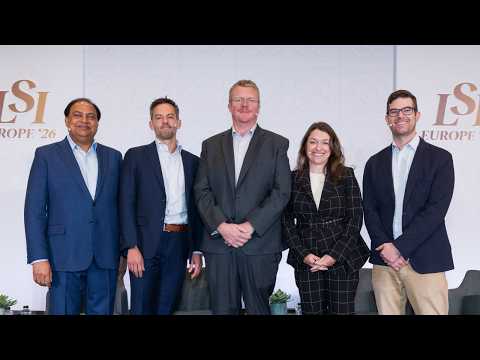
Andrew Pieprzyk 0:06
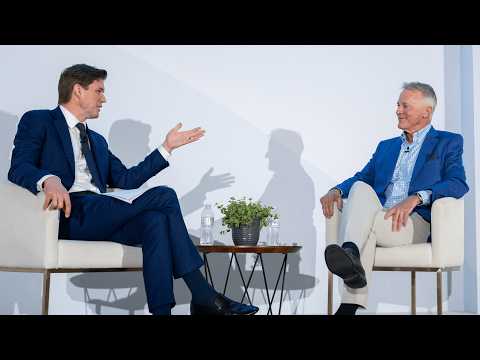
Afternoon, everybody. My name is Drew Pieprzyk, the VP of strategic development for Hologic. This is a timely signature series coming off the one we just saw in clinical workflows. This is going to be an important one, because it's an aspect that may be overlooked in terms of the workflows in many clinical areas. Last year, I was on a panel and moderated on women's health and equities, or inequities in health care, and I think both of these really apply to what Simon and Vicki are going to bring to the table today around what's happening in wound care in general, in particularly, what we've talked about in prep for today is what is the burden and some of the value leakage in health care related to the current trends and applications in wound care. What is the value creating opportunity we can make together as an industry in an ecosystem. What are some examples of this, relative to patient impact and and those inequalities, but also the call to action for us as a community of investors, strategics and innovators on how to continue to solve a lot of these problems. So Sai, it's great to be here with you today and reconnect after all these years. We hopefully shared some experiences at Stryker over a decade ago. And Vicki, welcome to the stage, rounding out the inputs. And as I was just told, it's a buy one, get one with these two. So it's great to be here today.
Simon Tarry 1:40
Thank you drew and thank you to LSI for the invitation. I've never accepted an invitation before to speak at one of these events, and I thought to myself, I should be brave, even though, within this environment, quite often one would expect rotten fruit to be thrown at the multinationals that can often kill innovation. So I'm looking forward to talking through some of the some of the ways that we see the market changing the pressures on our business and and really try to incite partnership and investment into some significant needs. I've invited Vicki to join me because I am a commercial leader, and I'm speaking about some areas of technology and R and D in some areas. And so I wanted to make sure that I could answer any questions or bring real intelligence to the table. And Vicki is our head of R and D for our advanced women management business based up in Hull. So thanks for joining me.
Victoria Beadle 2:52
Thanks. I, apparently I'm the person that kills innovation for the multinationals. Really happy to be here.
Simon Tarry 2:58
Thank you. Good. So what I what I'd like to talk through, really, is the current state of playing womb care. Introduce a little bit about the voice of the patient, and then perhaps a bit about the opportunity. And my hypothesis being that there is a significant accessible value creation opportunity of scale in wound care globally. And the way that I'd like to try and frame it is to bring a deep sense of purpose that we can all share around a common goal and common challenges, and bring it together with some profit. And what the data suggests is that there is an significant variation in practice globally, which is driven by huge numbers of people, which we'll look at in a minute, in a minute, deploying wound care differently in different settings every day. And it's this variation in practice which causes such a significant burden in outcomes, in loss of efficiency and in costs, not just to patients, but to health care systems globally. And the challenge, of course, as as I see it, and I've spent prior to the last two years of working in wound management. I've been 25 years in orthopedics, so around 10 years with Stryker, 15 years now with Smith and Nephew and running some of my own businesses. And so when I was asked to look at wound care with Smith and Nephew. Frankly, I didn't feel it was very sexy. I didn't feel it was very attractive. It's a world of wraps and dressings. So what is there to really love about wound management? Well, let's start by having a look at some of the numbers, and some of the numbers are big. I. This is just for the UK, and this is data from Julien guest, which was updated in 2017 2018 specifically looking at the burden of wounds 8.3 billion pounds is spent on wound care in the UK. And of course, it's dispersed. And you think about your own communities and families, and you can understand that wound care crosses oncology, cardiac orthopedics, chronic care, and really affects all of us in all our families, 8.3 billion, and yet only 6% of that is actually spent on products. So that's where we start to see this variation in practice and this lack of data in in the practice of wound care. So 70% on people costs, and unbelievably, just in the UK, 54 million community nurse visits in the NHS. So that's how wound care becomes this hugely dispersed area. And again, 25 per cent of those patients don't even have a differential diagnosis. So the opportunity for the use of data and the use of tools to support self care personalized medicine is really significant in numbers, and that burden over the last 200 years. Of course, Smith and Nephew is 170 year old company, but if you look across these logos, there are companies like helogics that are setting up clinics. There are companies in like my medics in tissue. We've got companies in imaging and AI like E care and pixacare. So there's a substantial ecosystem of companies looking and needing, increasingly innovation in this sector for the LSI community to work with and develop relationships.
Andrew Pieprzyk 6:59
Hey, Simon, before you go on, I was thinking back to our conversation, and often we talk about with our teams, it's time, but when you think about this segment, spend versus invest, right? Care providers are spending a lot of money on wound care today in various care settings across various demographics, but there's not a lot of investing, you know. Can you elaborate on that a little bit as we head into this next section? Yeah, we
Simon Tarry 7:31
I think that the the challenges faced by the healthcare systems, I suppose covid was something of a breaking point for those healthcare systems in such that the pressures it brought on workforce, on capacity, on patient safety and overall economic burden really brought a lot of our healthcare systems to breaking point. And it's a common theme we see across the whole of the established markets, and I've tried to illustrate some of those points here. Of course, they're not just pressures on our customers, where we've seen, you know, in every established market, a backlog of capacity. You know, in every in our companies, as well as the healthcare systems a significant pressure on workforce, but there are also great pressures on on the costs in industry, which you all know probably better than me, the cost of goods, whether it's freight, whether it's raw materials, whether it's labor costs, I think, in over the last two years, have gone up Nearly 25 per cent the health economic pressure and restraint that we see in systems that we've talked about here cause barriers to entry to be raised quite properly, around clinical governance, around procurement and value based procurement, we can see consolidation of providers, whether that's in the independent private sector or whether it's in state sector. So all of these factors, not least, of course, greater expectation from people in our communities who want more from their lives really challenge all of us to to innovate. So going back to the previous slide, the pressure on companies like Smith and Nephew, whether it you know, whoever it might be, is is really shifted and accelerated, where, if we look at this market, I apologize, it's potentially a quick, bit complex, but our market is, is divided into dressings, devices and then biologics and skin substitutes, classically. And if you look at the O US market, it's around 80% in that dressings. And when I was in my orthopedic environment, for me, these were, like bits of tissue paper, you know, very low cost items, highly commoditized. It's hard to differentiate between them, and in the new regulatory environment, of course, the burden of evidence required doesn't really stack up in that low unit of currency to provide an RCT of products that are with products that are so undifferentiated, and that's opened the flood gates for local for low cost providers to enter and increase the competition. So what we see in our portfolio is intense pressure on the P and L, through price pressure, through increased cost to serve, through increased cost of goods. And what that does is it reduces our opportunity to invest whilst we're running trying to keep up with the challenges that we face as a multinational in our P and L so it's slows down our opportunity to innovate, probably, and it opens up, I think, a really important imperative that we build greater partnerships with startups, with academia, with with tech, broadly. Vicki, I don't really want to comment on any of that from from your R and D perspective, and see from your perspective about the the way that the cycle of innovation and how you see that changed over the last years.
Victoria Beadle 11:23
Thanks, AI, and we do have a slide later on that I can, kind of like add a little bit more flavor and detail to that. But historically, as I said, you know, Smith and Nephew, 178 years of history. About 150 of those have been in wound management. And typically, our innovation cycles are between eight and 10 years, where we've really kind of revolutionary, revolutionized advanced wound care, and we've created platform technologies. But as we go forward and as we think about the rapid rate of technology change that not even we can predict, what's going to be super important is that to size earlier point, there's partnerships, there's collaborations, and there's that global mindset that we have as multinational organizations is going to be absolutely critical to our success, but fundamentally to deliver these transformational changes and products that meet and address the needs of our customers and also the ecosystem efficiencies. Yeah.
Simon Tarry 12:32
Thank you, Vicki, and as a as a commercial leader, though, my challenge to take us from, let's say, market growth, or just above market growth, and to drive us towards breakthrough growth, I need a higher cadence of innovations, I think, and I need to be able to look at that end to end pathway and say, what are the gaps that we could bring expertise and tech to the table. And I don't think that's a wound management issue. I think that's a broad med tech issue for multinational companies, this increased pressure of commoditization, the pressure it puts on your P and L and your ability to invest and drive the right cadence of innovation that serves customers and communities.
Andrew Pieprzyk 13:21
And I think the segmentation in care areas that is, you know, for in vitro diagnostics, we're seeing the same thing. Yeah, right. There's a lot of downward pressure because of the population coming through. So it is not exclusive to to wound care. And you said something interesting. So here comes my first one, ad lib that we didn't talk about wound care versus wound management, right? Is that differentiated in pathways relative to how clinicians speak to patient care more broadly, and is that a education opportunity? Because I think this is an ecosystem challenge relative to what you guys are highlighting here. So what are the highest risk, biggest gap areas in the ecosystem, relative to changing the mindset towards wound care and wound management?
Victoria Beadle 14:13
Yeah, please. Thanks. So one of the previous slides that sai had he highlighted some statistics in the UK, we spend 8.3 billion on wound care, wound management, but only 6% of that cost is attributed to the products, which means there's A whole possibility underneath the iceberg of care efficiency drivers and improvements that as an organization, we have a responsibility to think about. And the way I delineate between management and care is really simply the products manage or treat the wounds and. Care. It's the ecosystem around it. It's those clinical pathways, it's those patient journey and the patient pathways around that. How we understand, how we integrate that into our innovation process is crucial as we go forwards. It's not just about the products. We've got to think bigger. We've got to think differently.
Simon Tarry 15:20
Yeah, great. And I think the the important piece here, in terms of what I wanted to land, is that we have a very significant market opportunity here in terms of a commercial opportunity with shared, shared purpose and goals that we can we can very well see underpinned by data. So my case is that the multinationals here, which is us, have to innovate or stagnate. And the question is, of course, can we, as major med tech companies, innovate and drive to scale fast enough to serve the needs of patients and systems. So what I'd like to do is turn that then to a little bit about patients. That's a much younger me. I didn't realize how much younger I looked nine years ago, so it shocked me when I put that on there. That's my son Atticus, who's now nine, and is my bro, my segue into the male experience of childbirth, which is very limited. Our purpose at Smith and Nephew, and I think broadly across the industry, is to give people their lives back. We call it Life Unlimited. Take the limits off of living for families and for people. And I suppose there's possibly two book ends there, one is coming into the world and one is probably departing. So I'll introduce some data on C sections and some data on chronic wounds, and then some data on incisions in surgery. Some of these figures are quite surprising. Again, as somebody relatively new to wound management and wound care, I was shocked by some of these figures. 36% of deliveries in England are through C sections. That's 226,000 Prana. And actually, when I looked at the data, I wanted a sanity check it last night, that's actually gone up to 42% it's quite an unbelievable figure. Actually, I was shocked from Peru peer review data and 29% of women in the UK. So this is the UK. I'm not I'm not moving across to the US. Yet have a BMI of 30 or above. And actually that makes them 2.4 times more likely to develop a cesarean wound infection. The infection rate's nearly 10% and it's 20% higher for high risk women. So this is a real challenge for mothers in and for families in the UK, and that translates, of course, globally. What does it actually mean? So we surveyed 1000 mothers who'd had a section in the last five years, and these are just some of the highlights and and I think one of the big issues here is is is not just outcome, but of course, it's how a mother and a family bond together in those moments after childbirth. And it's also equity of health, access to health care, access to the best treatment. So in this, this, I suppose, rather anecdotal poll, 38% of women with a surgical site complication, were more likely not to breastfeed, and of course, that's a significant impact on how mother and baby progress, not just in health, but in mental health. After birth, 44% more in this group couldn't change their baby's nappy. Actually, my wife would have thought that was an advantage, I have to say, she asked me to do it, and then 44% more likely to report delayed recovery, affecting their return to work. It's also the ongoing mental health and health and engagement in the community, so some significant impact, not to mention the health economic risk. So the and I don't
Andrew Pieprzyk 19:19
think you had it on your slide, but we discussed this between countries, so 10% of the C sections had an infection rate at an average cost of $3,000 to treat. So 26,000 infections a year at 3000 a piece is the burden of the care system, coupled with then what happens when the mom goes home, can't get back to work, and the personal impact there, all right, so when we talk about burden, there is a massive economic burden to the care provider, right, to treat something that is very controlled, right? You can say, okay, infection rates are higher out of the Ed from emergency. In car crashes, but this is a very controlled procedure, correct? So you question why it's at 10% right? And I don't think it was chance to have clinical workflows leading this one, because I do think there's questions to be asked around that. One is where you can have that controlled environment. I know chronic wound care is a little bit different, because that very much brings you more into the home and alternate care settings, but anything within the hospital, I would think we'd be able to focus on a little bit more. Don't know what your thoughts around innovation or education relative to helping solve that problem.
Victoria Beadle 20:38
I think the i Yeah, the perspective of the hospital being a more controlled environment than obviously around the corner, you'd think gives us an easier data point and an easier data control set to be able to innovate in. But actually a lot of the complications happen when the patients are discharged and they're they're now in that non controlled environment. And having said that, one thing that we do have that does help us with our innovation is risk stratification. So the assessment of who is more likely to end up with a dehis or a complication as a result of their said that their surgical procedure is absolutely something that will start to become a differentiation factor, particularly around wound care, as you start to think about the whole end to end clinical pathway beyond just that surgical procedure.
Andrew Pieprzyk 21:49
And is there differential care for higher risk today, or is it all kind of the same product, same application,
Victoria Beadle 21:54
same great question. And it varies. It varies by market. It varies by clinical choice. There's no standard of practice, if you like, and that's again, back to the responsibility of multinationals, really, to help protocol or protocol eyes and provide medical education and products that help clinicians, caregivers, to diagnose, choose and select the right clinical pathways and products
Andrew Pieprzyk 22:29
back to invest versus spend
Simon Tarry 22:32
exactly and and, you know, looking at the burden, the economic burden, and the burden to communities Around returning to work and care in the community. The simple act of empowering a woman with her own care and giving her the education and the option to to have a PICO dress in, which is what $200 is, is an interesting conversation, because actually, we can't, our penetration into this market at the moment is less than 10% and so actually, if you think about the equity of healthcare, you're much more likely to have an educated approach to to be able to take information off social media and other channels and to then ask the right have the confidence to Ask the right questions that will get you a peacock if you were not in a lower socioeconomic or ethnic or in a different ethnic group. I was
Andrew Pieprzyk 23:29
talking with someone yesterday, and we're on the screening end right the upfront screening for certain disease states. Wound Care is on the other side. But there's, I think there's one technological touch point that most of these patients or individuals have in common today, and it relies it kind of behooves us to go outside of our industry. They all have a phone. They all have access to data. So how do we tap into what they already have? That may not be inherent to the ecosystem that we live within and life sciences and med tech. But you know, in emerging countries we're talking about in India, we they give patients data on the phone for going to the doctor to do their screening and for their follow up. And we've had a lot of conversations. Or how do you connect those elements, right to deliver that education? Because there are other non med tech, med device elements to that.
Simon Tarry 24:23
Yeah, it's a great segue from C section into the into the chronic space, because that theme of empowering patients with their own data and actually using data to leverage better outcomes and better efficiencies, I think, is is even more important in the chronic wound space, and so let's just switch tech a little bit. And one of the things that struck me actually, as an ex nurse many years ago and an ex army, British Army medic, my experience of using wound care products in the community. Um, it's a what's what's clear is that every single one of us will know somebody, a family member, or somebody who has been impacted by a chronic wound, and yet it's a woefully under known area, or underserved with innovation or data. So I've invented a patient. This is Dan. And this is a story, quick story about Dan's left foot, 68 year old, male, type two, so non insulin, diabetic. He's presented to his GP with a an ulcer. He can't make a go away on his big toe and the best the blisters burst. He's lost some of the feeling in his foot, and he's poorly controlled, you know, because he likes a cup of sweet tea and a cake, and he lives quite a long way from his hospital. Now, this is a very typical scenario in all of our communities, in established markets, there's his big toe, a typical looking ulcer, and in week one, Dr blogs comes round, and we talk about variation of practice. He cleans the wound, and he gives in some fairly standard dressings to clean. It gives him some antibiotics, and then comes back in two to four weeks. Here comes the 54 million nurse visits, each one of them delivering a different type of care and treatment pathway. The community comes the nurse comes round. And basically, rather than using, you know, innovative debriding technologies to get rid of the dead skin, a pair of scissors and a bit of cleaning and bit of self care. And remember this, Dan doesn't feel any pain. He's a diabetic, and he's lost some of the neuropathy. That's why he's got the ulcer. Week five, the sores got bigger. It smells. He can see now bone at the bottom of the ulcer. Dan starts to feel unwell, and he's admitted to hospital six to 12 weeks. After three weeks IV antibiotics, is discharged home, and actually, after four months, he's back and he has to have the toe amplitude amputated. It's just a big toe. His amputation, Scar doesn't heal, which is fairly typical in this group. He's then readmitted for bone infection, foot amputation, and within two years, he's dead. And believe it or not, that is a very typical pathway for people in our communities who have chronic wounds, and here are the stats. They're unbelievable. You are more likely to be alive five years after cancer than you are to survive five years post amputation. And yet, this is care that's within our grasp. What we're not doing is deploying the innovation. So on the one side, we can have significant investment in imaging, in data, in, you know, tissue technologies, and empowering patients with communication. But for some reason, the dispersed nature and the challenging nature of getting to that womb care market has presented us with this, these numbers, any comments or thoughts?
Andrew Pieprzyk 28:33
So when, when you shared this data with me, I was shocked. Yeah, right. I mean, you think about the big clinical areas that we talk about from an industry perspective, right? Is cancer. You know that that one is one that is front and center. You don't hear about wound care and kind of the devolution of health, if that's not done, right? Yeah, you know. And the in the impact of the individual of I would say the inequity and how we think about it, right? So you have to, I think awareness is a big piece, you know, that you're highlighting here. And I don't think this is my third LSI. I don't think we've talked about wound care, yeah, maybe we have, because we get really busy over the three days. But I'm not sure this has ever been a main stage topic, you know. So I know, for one, it's highlighted an area to me, because it crosses over, you know, a different multinationals perspective relative to women's health and the care areas that we look at. So, you know, just exploring with you, there's things that we might be able to do together as we kind of touch areas of the patient journey. But wound care and management is a big matrix operation, and I think that that shows a bit of the size and scale that you talked about earlier, is this is an area that's ripe for investment, and I think this is one that we need to raise more awareness around the. Clinical implications because of its impact of the individuals on the other side?
Simon Tarry 30:04
Yeah, yeah, no, absolutely. And I think the point I'm trying to make here is that we started off talking about a significant commercial opportunity. There's a lot of leakage in that end to end care pathway of value. It's there, the money's being spent on that care and on that leakage, rather than being invested. And we've got multiple element needs driving that burden, which often, strangely, is an afterthought. So let me take you quickly to surgical incision. And this is something that I've seen often come up at LSI events. My first time here, but there's a rich discussion around surgical robotics and a rich discussion about orthopedics. So here's some orthopedic stats, surgical site infections. So rather than complications, a complication might be a sore wound, some oozing, if the wound splits, some heat discomfort. An infection is an infection. Okay, so it's a deeper affair, but 30 surgeon site infection associated with a 36.2% re operation rate. Some context is, you wouldn't expect a joint replacement surgeon to have an infection rate higher than one to 2% and most of them don't believe they have any. So you know, it's a, it's a, it's a strange environment, but 36 2.2% of them require re operation. 50% of all orthopedic readmissions, which sit around three to 4% so around three to 4% of all joint replacements. So in the UK, that's around 250,000 plus procedures per annum. Three to 40% of those are readmitted, and 50% of those will be due to surgical site complications, simply because the patient you know can't rehab properly is discharged late. There's some oozing in the wound, there's some pain. And so what's interesting about there's 7000 readmissions, and I've put the data, this is incredibly well researched and peer reviewed statistic. The interesting thing about that is, from from my perspective, could you imagine, in any other walk of life, spending, and I've been conservative, a million dollars on a here, a surgical robot, but leaving the door open to complete failure. The cost of a total hip replacement, or total knee replacement in the UK, six to 10,000 pounds. It's a much more expensive procedure. In the US, I know, you put the robot into the operating room, you train the staff, you do the procedure. You've used the Lamborghini, and you've put in cheap tyres on and you're now allowing the doorman to put the tyres on your Lamborghini. Why would you do that? Why would we allow that to happen? So the value leakage through this end to end pathway is leaving significant unmet needs on the table, because that single action of dealing with the wound properly is causing 50% of the readmissions. So if you're a big orthopod in the US and you've sacrificed your personal reputation and finances on through a surgeon managed practice in a new Ambulatory Surgical Center, which is another area of great interest here at LSI. You go through all of that, you deploy the robotics, you do the operation, and then you leave the wound closure to your physician's assistant or to your trainee, and you're in your 12 in 12 zone, going to get 12 joints done, and I'm going to push on 4% of those are going to come back to you 4% within 30 days, and potentially tarnish your reputation and ruin your finances. I can't think of any other walk in life where we'd leave that full stop off the end of the sentence. However large wound care multinationals are innovating, but we can't, because of what I described, the pressures earlier on, innovate at the right cadence. We may not be quick enough. So I think there's a significant opportunity to improve the way that we work as a med tech industry with the LSI community, to really look at how we partner, how we collaborate, and whether it's through build to buy, whether it's through distribution and licensing, whether it's through just simply sharing data and opportunities to innovate around pipeline together, there's clearly a big commercial need here and a shared set of opportunities.
Andrew Pieprzyk 34:50
And I think, as we talked about earlier, because of the community aspect of this, and I think you have a slide later where it talks about the technology and the pool. Point of care or the point of need? Yeah, right. Maybe leave it at the point of need is the further that gets out into the community. There's less innovation that the patient or the end user can use in real time. You were talking about is if, if the wrap or the dressing goes up by a pound, right? That 54 million goes very quickly to 108 but if it goes up by a pound, and you cut down those visits from once a week to every two weeks, and they have better outcomes, and all of a sudden they start getting in the hospital less, the economics start to add up on the other side. So I think it's a systems change that we have to go after. And thinking about this from the perspective of another multinational is we can't go it alone, no, right? And that's where I think the innovation community, between technology reach and call point or access really starts to bring in. Is this needs an ecosystem of care at every one of the points. And there might be high tech as you're in the hospital, but how do you get to a point where you're monitoring you know the symptoms in real time, to help self educate that person to go, Oh, hey, something's going on. And I think that's that's an area right for opportunity, for for this group, yeah, for sure.
Simon Tarry 36:15
So we can quickly mention how we triangulate our lens, our landscape around new products and and find those opportunities today?
Victoria Beadle 36:26
Yeah, sure, and apologies. This is a bit of a tricky slide. It's very difficult to kind of like put on one slide simply, you know that whole innovation cycle, right? So what I just wanted to highlight here is, is that synthesis between our understanding of the patient and the practice, for all of the reasons, side described, and as druid highlighted, understanding those touch points with the devices, those touch points with the healthcare systems. There's touch points for the caregivers in the hospital or in the home in the various environments, is absolutely critical, and we go through quite an intensive research process to really understand that end to end journey of our devices. It's also super important that we understand the wound. And one of the previous slides, you can see all various different types of wounds that we we manage and we treat and we also prevent. To do that requires a scientific understanding, and we're really proud of that scientific understanding and that quality of medical education that also supports Smith and nephew's wound management products and our deep knowledge of wound management, Treatment and Prevention, coupled With those user journeys, the clinical practice and the patient's workflow really then allows us to simplify the complexity. And I can sit here as an engineer and say, simplify the complexity, but actually for those innovators in the room, that is very difficult to do right when you're decoupling features and all of these bells and whistles that everybody's come to expect and you're bundling it up in something that's smaller and easier to use, is real innovation, and that's where the opportunity to differentiate and transform for the future really lies. And I touched on a couple of areas around diagnostics, early diagnostics, understanding the risk stratification of those patients using AI driven data that is really creating a bespoke pathway, And then remote monitoring, either in the hospital or outside in that home care facility. Imagine a world where it's not just about the product, but the whole system is included in our innovation.
Simon Tarry 39:15
So I'll wrap up if I can. The key takeaways I wanted to leave people with this well, first to say, thank you for allowing us the stage for 40 minutes. I hope it's been interesting for those of you who've been here. I wanted to try and ignite an interest in wound care as an investment, as a partnering opportunity. I wanted to bring Smith and Nephew to the table as a possible partner, and we want to talk, and we want to learn and find ways that we can serve patients and communities better. There is a large scale source of value, so there's a significant commercial opportunity. There are multiple and unmet needs driving this burden of care, burden of care, of womb care, through. The leakage in this end to end pathway, and the type of scenario described where we invest in the robot together, we invest in the training and education, the implants, but we just don't put the full stop on the end of the end of the sentence and close with quality and professionalism, and we leave, leave that money on the table and that outcome. There's a genuine shared sense of purpose, I hope, around the strategic investment that could be made here. And we are open for business, and we want to partner to close that innovation gap. There is a huge number of areas to speak about together, probably data is the big ticket item, marrying it up with personalized care. How we bring data to play and put it into the hands of pay as providers and patients so that we can standardize pathways, new standards of care and improve efficiencies and outcomes for for all involved. So thank you, yeah,
Andrew Pieprzyk 41:02
and thank you everybody. And that's going to wrap our C sections to chronic wounds, and the vision to co create, I think, is real and much needed based on what we've learned here today. So sai and Vicki, thank you very much. Thank you. Thank you.
Andrew Pieprzyk 0:06
Afternoon, everybody. My name is Drew Pieprzyk, the VP of strategic development for Hologic. This is a timely signature series coming off the one we just saw in clinical workflows. This is going to be an important one, because it's an aspect that may be overlooked in terms of the workflows in many clinical areas. Last year, I was on a panel and moderated on women's health and equities, or inequities in health care, and I think both of these really apply to what Simon and Vicki are going to bring to the table today around what's happening in wound care in general, in particularly, what we've talked about in prep for today is what is the burden and some of the value leakage in health care related to the current trends and applications in wound care. What is the value creating opportunity we can make together as an industry in an ecosystem. What are some examples of this, relative to patient impact and and those inequalities, but also the call to action for us as a community of investors, strategics and innovators on how to continue to solve a lot of these problems. So Sai, it's great to be here with you today and reconnect after all these years. We hopefully shared some experiences at Stryker over a decade ago. And Vicki, welcome to the stage, rounding out the inputs. And as I was just told, it's a buy one, get one with these two. So it's great to be here today.
Simon Tarry 1:40
Thank you drew and thank you to LSI for the invitation. I've never accepted an invitation before to speak at one of these events, and I thought to myself, I should be brave, even though, within this environment, quite often one would expect rotten fruit to be thrown at the multinationals that can often kill innovation. So I'm looking forward to talking through some of the some of the ways that we see the market changing the pressures on our business and and really try to incite partnership and investment into some significant needs. I've invited Vicki to join me because I am a commercial leader, and I'm speaking about some areas of technology and R and D in some areas. And so I wanted to make sure that I could answer any questions or bring real intelligence to the table. And Vicki is our head of R and D for our advanced women management business based up in Hull. So thanks for joining me.
Victoria Beadle 2:52
Thanks. I, apparently I'm the person that kills innovation for the multinationals. Really happy to be here.
Simon Tarry 2:58
Thank you. Good. So what I what I'd like to talk through, really, is the current state of playing womb care. Introduce a little bit about the voice of the patient, and then perhaps a bit about the opportunity. And my hypothesis being that there is a significant accessible value creation opportunity of scale in wound care globally. And the way that I'd like to try and frame it is to bring a deep sense of purpose that we can all share around a common goal and common challenges, and bring it together with some profit. And what the data suggests is that there is an significant variation in practice globally, which is driven by huge numbers of people, which we'll look at in a minute, in a minute, deploying wound care differently in different settings every day. And it's this variation in practice which causes such a significant burden in outcomes, in loss of efficiency and in costs, not just to patients, but to health care systems globally. And the challenge, of course, as as I see it, and I've spent prior to the last two years of working in wound management. I've been 25 years in orthopedics, so around 10 years with Stryker, 15 years now with Smith and Nephew and running some of my own businesses. And so when I was asked to look at wound care with Smith and Nephew. Frankly, I didn't feel it was very sexy. I didn't feel it was very attractive. It's a world of wraps and dressings. So what is there to really love about wound management? Well, let's start by having a look at some of the numbers, and some of the numbers are big. I. This is just for the UK, and this is data from Julien guest, which was updated in 2017 2018 specifically looking at the burden of wounds 8.3 billion pounds is spent on wound care in the UK. And of course, it's dispersed. And you think about your own communities and families, and you can understand that wound care crosses oncology, cardiac orthopedics, chronic care, and really affects all of us in all our families, 8.3 billion, and yet only 6% of that is actually spent on products. So that's where we start to see this variation in practice and this lack of data in in the practice of wound care. So 70% on people costs, and unbelievably, just in the UK, 54 million community nurse visits in the NHS. So that's how wound care becomes this hugely dispersed area. And again, 25 per cent of those patients don't even have a differential diagnosis. So the opportunity for the use of data and the use of tools to support self care personalized medicine is really significant in numbers, and that burden over the last 200 years. Of course, Smith and Nephew is 170 year old company, but if you look across these logos, there are companies like helogics that are setting up clinics. There are companies in like my medics in tissue. We've got companies in imaging and AI like E care and pixacare. So there's a substantial ecosystem of companies looking and needing, increasingly innovation in this sector for the LSI community to work with and develop relationships.
Andrew Pieprzyk 6:59
Hey, Simon, before you go on, I was thinking back to our conversation, and often we talk about with our teams, it's time, but when you think about this segment, spend versus invest, right? Care providers are spending a lot of money on wound care today in various care settings across various demographics, but there's not a lot of investing, you know. Can you elaborate on that a little bit as we head into this next section? Yeah, we
Simon Tarry 7:31
I think that the the challenges faced by the healthcare systems, I suppose covid was something of a breaking point for those healthcare systems in such that the pressures it brought on workforce, on capacity, on patient safety and overall economic burden really brought a lot of our healthcare systems to breaking point. And it's a common theme we see across the whole of the established markets, and I've tried to illustrate some of those points here. Of course, they're not just pressures on our customers, where we've seen, you know, in every established market, a backlog of capacity. You know, in every in our companies, as well as the healthcare systems a significant pressure on workforce, but there are also great pressures on on the costs in industry, which you all know probably better than me, the cost of goods, whether it's freight, whether it's raw materials, whether it's labor costs, I think, in over the last two years, have gone up Nearly 25 per cent the health economic pressure and restraint that we see in systems that we've talked about here cause barriers to entry to be raised quite properly, around clinical governance, around procurement and value based procurement, we can see consolidation of providers, whether that's in the independent private sector or whether it's in state sector. So all of these factors, not least, of course, greater expectation from people in our communities who want more from their lives really challenge all of us to to innovate. So going back to the previous slide, the pressure on companies like Smith and Nephew, whether it you know, whoever it might be, is is really shifted and accelerated, where, if we look at this market, I apologize, it's potentially a quick, bit complex, but our market is, is divided into dressings, devices and then biologics and skin substitutes, classically. And if you look at the O US market, it's around 80% in that dressings. And when I was in my orthopedic environment, for me, these were, like bits of tissue paper, you know, very low cost items, highly commoditized. It's hard to differentiate between them, and in the new regulatory environment, of course, the burden of evidence required doesn't really stack up in that low unit of currency to provide an RCT of products that are with products that are so undifferentiated, and that's opened the flood gates for local for low cost providers to enter and increase the competition. So what we see in our portfolio is intense pressure on the P and L, through price pressure, through increased cost to serve, through increased cost of goods. And what that does is it reduces our opportunity to invest whilst we're running trying to keep up with the challenges that we face as a multinational in our P and L so it's slows down our opportunity to innovate, probably, and it opens up, I think, a really important imperative that we build greater partnerships with startups, with academia, with with tech, broadly. Vicki, I don't really want to comment on any of that from from your R and D perspective, and see from your perspective about the the way that the cycle of innovation and how you see that changed over the last years.
Victoria Beadle 11:23
Thanks, AI, and we do have a slide later on that I can, kind of like add a little bit more flavor and detail to that. But historically, as I said, you know, Smith and Nephew, 178 years of history. About 150 of those have been in wound management. And typically, our innovation cycles are between eight and 10 years, where we've really kind of revolutionary, revolutionized advanced wound care, and we've created platform technologies. But as we go forward and as we think about the rapid rate of technology change that not even we can predict, what's going to be super important is that to size earlier point, there's partnerships, there's collaborations, and there's that global mindset that we have as multinational organizations is going to be absolutely critical to our success, but fundamentally to deliver these transformational changes and products that meet and address the needs of our customers and also the ecosystem efficiencies. Yeah.
Simon Tarry 12:32
Thank you, Vicki, and as a as a commercial leader, though, my challenge to take us from, let's say, market growth, or just above market growth, and to drive us towards breakthrough growth, I need a higher cadence of innovations, I think, and I need to be able to look at that end to end pathway and say, what are the gaps that we could bring expertise and tech to the table. And I don't think that's a wound management issue. I think that's a broad med tech issue for multinational companies, this increased pressure of commoditization, the pressure it puts on your P and L and your ability to invest and drive the right cadence of innovation that serves customers and communities.
Andrew Pieprzyk 13:21
And I think the segmentation in care areas that is, you know, for in vitro diagnostics, we're seeing the same thing. Yeah, right. There's a lot of downward pressure because of the population coming through. So it is not exclusive to to wound care. And you said something interesting. So here comes my first one, ad lib that we didn't talk about wound care versus wound management, right? Is that differentiated in pathways relative to how clinicians speak to patient care more broadly, and is that a education opportunity? Because I think this is an ecosystem challenge relative to what you guys are highlighting here. So what are the highest risk, biggest gap areas in the ecosystem, relative to changing the mindset towards wound care and wound management?
Victoria Beadle 14:13
Yeah, please. Thanks. So one of the previous slides that sai had he highlighted some statistics in the UK, we spend 8.3 billion on wound care, wound management, but only 6% of that cost is attributed to the products, which means there's A whole possibility underneath the iceberg of care efficiency drivers and improvements that as an organization, we have a responsibility to think about. And the way I delineate between management and care is really simply the products manage or treat the wounds and. Care. It's the ecosystem around it. It's those clinical pathways, it's those patient journey and the patient pathways around that. How we understand, how we integrate that into our innovation process is crucial as we go forwards. It's not just about the products. We've got to think bigger. We've got to think differently.
Simon Tarry 15:20
Yeah, great. And I think the the important piece here, in terms of what I wanted to land, is that we have a very significant market opportunity here in terms of a commercial opportunity with shared, shared purpose and goals that we can we can very well see underpinned by data. So my case is that the multinationals here, which is us, have to innovate or stagnate. And the question is, of course, can we, as major med tech companies, innovate and drive to scale fast enough to serve the needs of patients and systems. So what I'd like to do is turn that then to a little bit about patients. That's a much younger me. I didn't realize how much younger I looked nine years ago, so it shocked me when I put that on there. That's my son Atticus, who's now nine, and is my bro, my segue into the male experience of childbirth, which is very limited. Our purpose at Smith and Nephew, and I think broadly across the industry, is to give people their lives back. We call it Life Unlimited. Take the limits off of living for families and for people. And I suppose there's possibly two book ends there, one is coming into the world and one is probably departing. So I'll introduce some data on C sections and some data on chronic wounds, and then some data on incisions in surgery. Some of these figures are quite surprising. Again, as somebody relatively new to wound management and wound care, I was shocked by some of these figures. 36% of deliveries in England are through C sections. That's 226,000 Prana. And actually, when I looked at the data, I wanted a sanity check it last night, that's actually gone up to 42% it's quite an unbelievable figure. Actually, I was shocked from Peru peer review data and 29% of women in the UK. So this is the UK. I'm not I'm not moving across to the US. Yet have a BMI of 30 or above. And actually that makes them 2.4 times more likely to develop a cesarean wound infection. The infection rate's nearly 10% and it's 20% higher for high risk women. So this is a real challenge for mothers in and for families in the UK, and that translates, of course, globally. What does it actually mean? So we surveyed 1000 mothers who'd had a section in the last five years, and these are just some of the highlights and and I think one of the big issues here is is is not just outcome, but of course, it's how a mother and a family bond together in those moments after childbirth. And it's also equity of health, access to health care, access to the best treatment. So in this, this, I suppose, rather anecdotal poll, 38% of women with a surgical site complication, were more likely not to breastfeed, and of course, that's a significant impact on how mother and baby progress, not just in health, but in mental health. After birth, 44% more in this group couldn't change their baby's nappy. Actually, my wife would have thought that was an advantage, I have to say, she asked me to do it, and then 44% more likely to report delayed recovery, affecting their return to work. It's also the ongoing mental health and health and engagement in the community, so some significant impact, not to mention the health economic risk. So the and I don't
Andrew Pieprzyk 19:19
think you had it on your slide, but we discussed this between countries, so 10% of the C sections had an infection rate at an average cost of $3,000 to treat. So 26,000 infections a year at 3000 a piece is the burden of the care system, coupled with then what happens when the mom goes home, can't get back to work, and the personal impact there, all right, so when we talk about burden, there is a massive economic burden to the care provider, right, to treat something that is very controlled, right? You can say, okay, infection rates are higher out of the Ed from emergency. In car crashes, but this is a very controlled procedure, correct? So you question why it's at 10% right? And I don't think it was chance to have clinical workflows leading this one, because I do think there's questions to be asked around that. One is where you can have that controlled environment. I know chronic wound care is a little bit different, because that very much brings you more into the home and alternate care settings, but anything within the hospital, I would think we'd be able to focus on a little bit more. Don't know what your thoughts around innovation or education relative to helping solve that problem.
Victoria Beadle 20:38
I think the i Yeah, the perspective of the hospital being a more controlled environment than obviously around the corner, you'd think gives us an easier data point and an easier data control set to be able to innovate in. But actually a lot of the complications happen when the patients are discharged and they're they're now in that non controlled environment. And having said that, one thing that we do have that does help us with our innovation is risk stratification. So the assessment of who is more likely to end up with a dehis or a complication as a result of their said that their surgical procedure is absolutely something that will start to become a differentiation factor, particularly around wound care, as you start to think about the whole end to end clinical pathway beyond just that surgical procedure.
Andrew Pieprzyk 21:49
And is there differential care for higher risk today, or is it all kind of the same product, same application,
Victoria Beadle 21:54
same great question. And it varies. It varies by market. It varies by clinical choice. There's no standard of practice, if you like, and that's again, back to the responsibility of multinationals, really, to help protocol or protocol eyes and provide medical education and products that help clinicians, caregivers, to diagnose, choose and select the right clinical pathways and products
Andrew Pieprzyk 22:29
back to invest versus spend
Simon Tarry 22:32
exactly and and, you know, looking at the burden, the economic burden, and the burden to communities Around returning to work and care in the community. The simple act of empowering a woman with her own care and giving her the education and the option to to have a PICO dress in, which is what $200 is, is an interesting conversation, because actually, we can't, our penetration into this market at the moment is less than 10% and so actually, if you think about the equity of healthcare, you're much more likely to have an educated approach to to be able to take information off social media and other channels and to then ask the right have the confidence to Ask the right questions that will get you a peacock if you were not in a lower socioeconomic or ethnic or in a different ethnic group. I was
Andrew Pieprzyk 23:29
talking with someone yesterday, and we're on the screening end right the upfront screening for certain disease states. Wound Care is on the other side. But there's, I think there's one technological touch point that most of these patients or individuals have in common today, and it relies it kind of behooves us to go outside of our industry. They all have a phone. They all have access to data. So how do we tap into what they already have? That may not be inherent to the ecosystem that we live within and life sciences and med tech. But you know, in emerging countries we're talking about in India, we they give patients data on the phone for going to the doctor to do their screening and for their follow up. And we've had a lot of conversations. Or how do you connect those elements, right to deliver that education? Because there are other non med tech, med device elements to that.
Simon Tarry 24:23
Yeah, it's a great segue from C section into the into the chronic space, because that theme of empowering patients with their own data and actually using data to leverage better outcomes and better efficiencies, I think, is is even more important in the chronic wound space, and so let's just switch tech a little bit. And one of the things that struck me actually, as an ex nurse many years ago and an ex army, British Army medic, my experience of using wound care products in the community. Um, it's a what's what's clear is that every single one of us will know somebody, a family member, or somebody who has been impacted by a chronic wound, and yet it's a woefully under known area, or underserved with innovation or data. So I've invented a patient. This is Dan. And this is a story, quick story about Dan's left foot, 68 year old, male, type two, so non insulin, diabetic. He's presented to his GP with a an ulcer. He can't make a go away on his big toe and the best the blisters burst. He's lost some of the feeling in his foot, and he's poorly controlled, you know, because he likes a cup of sweet tea and a cake, and he lives quite a long way from his hospital. Now, this is a very typical scenario in all of our communities, in established markets, there's his big toe, a typical looking ulcer, and in week one, Dr blogs comes round, and we talk about variation of practice. He cleans the wound, and he gives in some fairly standard dressings to clean. It gives him some antibiotics, and then comes back in two to four weeks. Here comes the 54 million nurse visits, each one of them delivering a different type of care and treatment pathway. The community comes the nurse comes round. And basically, rather than using, you know, innovative debriding technologies to get rid of the dead skin, a pair of scissors and a bit of cleaning and bit of self care. And remember this, Dan doesn't feel any pain. He's a diabetic, and he's lost some of the neuropathy. That's why he's got the ulcer. Week five, the sores got bigger. It smells. He can see now bone at the bottom of the ulcer. Dan starts to feel unwell, and he's admitted to hospital six to 12 weeks. After three weeks IV antibiotics, is discharged home, and actually, after four months, he's back and he has to have the toe amplitude amputated. It's just a big toe. His amputation, Scar doesn't heal, which is fairly typical in this group. He's then readmitted for bone infection, foot amputation, and within two years, he's dead. And believe it or not, that is a very typical pathway for people in our communities who have chronic wounds, and here are the stats. They're unbelievable. You are more likely to be alive five years after cancer than you are to survive five years post amputation. And yet, this is care that's within our grasp. What we're not doing is deploying the innovation. So on the one side, we can have significant investment in imaging, in data, in, you know, tissue technologies, and empowering patients with communication. But for some reason, the dispersed nature and the challenging nature of getting to that womb care market has presented us with this, these numbers, any comments or thoughts?
Andrew Pieprzyk 28:33
So when, when you shared this data with me, I was shocked. Yeah, right. I mean, you think about the big clinical areas that we talk about from an industry perspective, right? Is cancer. You know that that one is one that is front and center. You don't hear about wound care and kind of the devolution of health, if that's not done, right? Yeah, you know. And the in the impact of the individual of I would say the inequity and how we think about it, right? So you have to, I think awareness is a big piece, you know, that you're highlighting here. And I don't think this is my third LSI. I don't think we've talked about wound care, yeah, maybe we have, because we get really busy over the three days. But I'm not sure this has ever been a main stage topic, you know. So I know, for one, it's highlighted an area to me, because it crosses over, you know, a different multinationals perspective relative to women's health and the care areas that we look at. So, you know, just exploring with you, there's things that we might be able to do together as we kind of touch areas of the patient journey. But wound care and management is a big matrix operation, and I think that that shows a bit of the size and scale that you talked about earlier, is this is an area that's ripe for investment, and I think this is one that we need to raise more awareness around the. Clinical implications because of its impact of the individuals on the other side?
Simon Tarry 30:04
Yeah, yeah, no, absolutely. And I think the point I'm trying to make here is that we started off talking about a significant commercial opportunity. There's a lot of leakage in that end to end care pathway of value. It's there, the money's being spent on that care and on that leakage, rather than being invested. And we've got multiple element needs driving that burden, which often, strangely, is an afterthought. So let me take you quickly to surgical incision. And this is something that I've seen often come up at LSI events. My first time here, but there's a rich discussion around surgical robotics and a rich discussion about orthopedics. So here's some orthopedic stats, surgical site infections. So rather than complications, a complication might be a sore wound, some oozing, if the wound splits, some heat discomfort. An infection is an infection. Okay, so it's a deeper affair, but 30 surgeon site infection associated with a 36.2% re operation rate. Some context is, you wouldn't expect a joint replacement surgeon to have an infection rate higher than one to 2% and most of them don't believe they have any. So you know, it's a, it's a, it's a strange environment, but 36 2.2% of them require re operation. 50% of all orthopedic readmissions, which sit around three to 4% so around three to 4% of all joint replacements. So in the UK, that's around 250,000 plus procedures per annum. Three to 40% of those are readmitted, and 50% of those will be due to surgical site complications, simply because the patient you know can't rehab properly is discharged late. There's some oozing in the wound, there's some pain. And so what's interesting about there's 7000 readmissions, and I've put the data, this is incredibly well researched and peer reviewed statistic. The interesting thing about that is, from from my perspective, could you imagine, in any other walk of life, spending, and I've been conservative, a million dollars on a here, a surgical robot, but leaving the door open to complete failure. The cost of a total hip replacement, or total knee replacement in the UK, six to 10,000 pounds. It's a much more expensive procedure. In the US, I know, you put the robot into the operating room, you train the staff, you do the procedure. You've used the Lamborghini, and you've put in cheap tyres on and you're now allowing the doorman to put the tyres on your Lamborghini. Why would you do that? Why would we allow that to happen? So the value leakage through this end to end pathway is leaving significant unmet needs on the table, because that single action of dealing with the wound properly is causing 50% of the readmissions. So if you're a big orthopod in the US and you've sacrificed your personal reputation and finances on through a surgeon managed practice in a new Ambulatory Surgical Center, which is another area of great interest here at LSI. You go through all of that, you deploy the robotics, you do the operation, and then you leave the wound closure to your physician's assistant or to your trainee, and you're in your 12 in 12 zone, going to get 12 joints done, and I'm going to push on 4% of those are going to come back to you 4% within 30 days, and potentially tarnish your reputation and ruin your finances. I can't think of any other walk in life where we'd leave that full stop off the end of the sentence. However large wound care multinationals are innovating, but we can't, because of what I described, the pressures earlier on, innovate at the right cadence. We may not be quick enough. So I think there's a significant opportunity to improve the way that we work as a med tech industry with the LSI community, to really look at how we partner, how we collaborate, and whether it's through build to buy, whether it's through distribution and licensing, whether it's through just simply sharing data and opportunities to innovate around pipeline together, there's clearly a big commercial need here and a shared set of opportunities.
Andrew Pieprzyk 34:50
And I think, as we talked about earlier, because of the community aspect of this, and I think you have a slide later where it talks about the technology and the pool. Point of care or the point of need? Yeah, right. Maybe leave it at the point of need is the further that gets out into the community. There's less innovation that the patient or the end user can use in real time. You were talking about is if, if the wrap or the dressing goes up by a pound, right? That 54 million goes very quickly to 108 but if it goes up by a pound, and you cut down those visits from once a week to every two weeks, and they have better outcomes, and all of a sudden they start getting in the hospital less, the economics start to add up on the other side. So I think it's a systems change that we have to go after. And thinking about this from the perspective of another multinational is we can't go it alone, no, right? And that's where I think the innovation community, between technology reach and call point or access really starts to bring in. Is this needs an ecosystem of care at every one of the points. And there might be high tech as you're in the hospital, but how do you get to a point where you're monitoring you know the symptoms in real time, to help self educate that person to go, Oh, hey, something's going on. And I think that's that's an area right for opportunity, for for this group, yeah, for sure.
Simon Tarry 36:15
So we can quickly mention how we triangulate our lens, our landscape around new products and and find those opportunities today?
Victoria Beadle 36:26
Yeah, sure, and apologies. This is a bit of a tricky slide. It's very difficult to kind of like put on one slide simply, you know that whole innovation cycle, right? So what I just wanted to highlight here is, is that synthesis between our understanding of the patient and the practice, for all of the reasons, side described, and as druid highlighted, understanding those touch points with the devices, those touch points with the healthcare systems. There's touch points for the caregivers in the hospital or in the home in the various environments, is absolutely critical, and we go through quite an intensive research process to really understand that end to end journey of our devices. It's also super important that we understand the wound. And one of the previous slides, you can see all various different types of wounds that we we manage and we treat and we also prevent. To do that requires a scientific understanding, and we're really proud of that scientific understanding and that quality of medical education that also supports Smith and nephew's wound management products and our deep knowledge of wound management, Treatment and Prevention, coupled With those user journeys, the clinical practice and the patient's workflow really then allows us to simplify the complexity. And I can sit here as an engineer and say, simplify the complexity, but actually for those innovators in the room, that is very difficult to do right when you're decoupling features and all of these bells and whistles that everybody's come to expect and you're bundling it up in something that's smaller and easier to use, is real innovation, and that's where the opportunity to differentiate and transform for the future really lies. And I touched on a couple of areas around diagnostics, early diagnostics, understanding the risk stratification of those patients using AI driven data that is really creating a bespoke pathway, And then remote monitoring, either in the hospital or outside in that home care facility. Imagine a world where it's not just about the product, but the whole system is included in our innovation.
Simon Tarry 39:15
So I'll wrap up if I can. The key takeaways I wanted to leave people with this well, first to say, thank you for allowing us the stage for 40 minutes. I hope it's been interesting for those of you who've been here. I wanted to try and ignite an interest in wound care as an investment, as a partnering opportunity. I wanted to bring Smith and Nephew to the table as a possible partner, and we want to talk, and we want to learn and find ways that we can serve patients and communities better. There is a large scale source of value, so there's a significant commercial opportunity. There are multiple and unmet needs driving this burden of care, burden of care, of womb care, through. The leakage in this end to end pathway, and the type of scenario described where we invest in the robot together, we invest in the training and education, the implants, but we just don't put the full stop on the end of the end of the sentence and close with quality and professionalism, and we leave, leave that money on the table and that outcome. There's a genuine shared sense of purpose, I hope, around the strategic investment that could be made here. And we are open for business, and we want to partner to close that innovation gap. There is a huge number of areas to speak about together, probably data is the big ticket item, marrying it up with personalized care. How we bring data to play and put it into the hands of pay as providers and patients so that we can standardize pathways, new standards of care and improve efficiencies and outcomes for for all involved. So thank you, yeah,
Andrew Pieprzyk 41:02
and thank you everybody. And that's going to wrap our C sections to chronic wounds, and the vision to co create, I think, is real and much needed based on what we've learned here today. So sai and Vicki, thank you very much. Thank you. Thank you.
17011 Beach Blvd, Suite 500 Huntington Beach, CA 92647
714-847-3540© 2026 Life Science Intelligence, Inc., All Rights Reserved. | Privacy Policy