Mary Kan 0:05
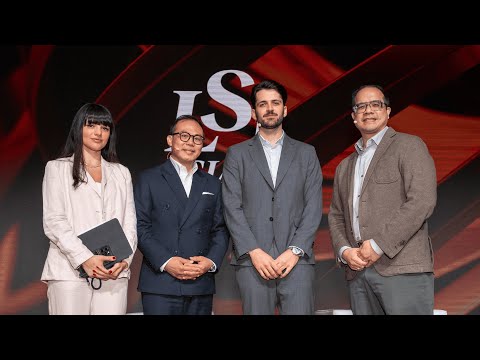
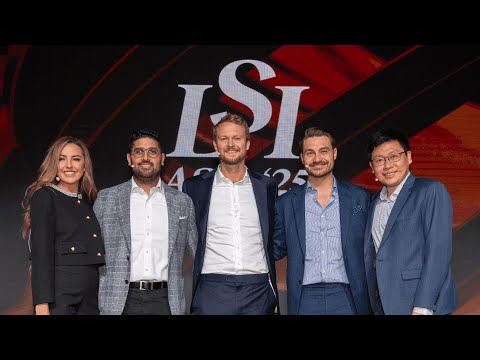
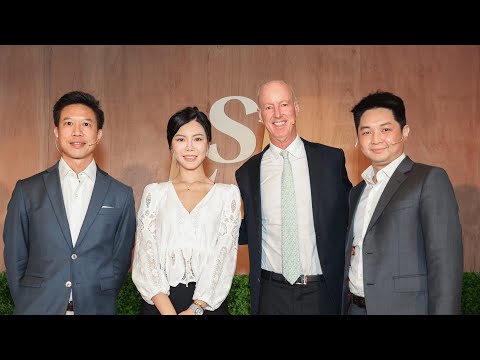
All right, good afternoon, everyone. Thanks for coming for this workshop. This is organized by a star and Medtech catapult in conjunction with EDB enterprise Singapore, and it's titled building and scaling successful Medtech ventures from Singapore. So I'm Mary. I'm currently the program director for Medtech catapult, and also the Director for Medtech cluster, Astar. So today I represent a star in terms of trying to share with you our ecosystem. So Astar, we are lead public sector agency for under the Ministry of Trade and Industry, and we actually support R and D for med tech innovations. So just within a star, we have 17 research institutes spanning biomedical and science engineering research. And so we do support new technologies can that can spin off from a star in venture co creation models, as well as supporting a new follow on R D for new products, as well as for product iterations. So I also want to share with you some of our national platforms that are hosted by a star. So Singapore bio design is actually a the first agent global affiliate for Stanford bio design, which I think many of you from the US will be familiar with and it does mainly talent training to bring Medtech innovation closer to the market. We also have two productization units, Medtech catapult, as well as the DXD hub that support the product engineering development and commercialization and deployment for medical devices, as well as in vitro diagnostics. Finally, we also have the biomedical sciences industry partnerships office, which supports connections with our internal external stakeholders. So this workshop, you know, we have people from all entities present today, if you would like to reach out to us for more information. So without further ado, I would like to introduce our program flow, so we have three esteemed panelists today who can share more about the work that they do with Medtech startups, as well as how they have been able to interface with the Singapore ecosystem to build and scale their startups. And we wanted to make this more of an interactive session, so we have actually set up a pigeon hole to encourage all of you to put through your questions and answers for all of our panelists today, through the general Q and A, you'll see one at the top which says, building and scaling. Any questions you have for them, please help to challenge them. You know, get their thinking hats on right. I think we welcome you know, your inputs. But also I heard in the previous session that actually one of the audience actually stood out and started, you know, sharing his thoughts, and he actually also became one of the speakers eventually. So we also welcome any of you who would like to voice your thoughts vocally. And of course, for each of this, you know, speakers, we have actually asked them to share specifically on three topics. So Mike from aI think tank will share more about our venture creation models for our AI solutions. And then we have Steven from M and L investments sharing with us product development and clinical validation. And finally, Jolene, a partner at edbi for venture financing and scaling in Singapore. So please, we are going to open the pigeonhole right now. So any burning questions, please feel free to put them into the pigeonhole chat. All right, and then we will be able to address them over time. All right. So without further ado, I'm going to introduce the speaker, but let him introduce himself, what he does, and also share a little bit more about, you know, his experiences with the Singapore ecosystem and how he has been able to grow ventures. And we'll go down the line with five minutes sharing from each of the speakers, and then we will then open up to the floor. All right, so Mike, take it away. Thank you.
Mike Kennewick 4:01
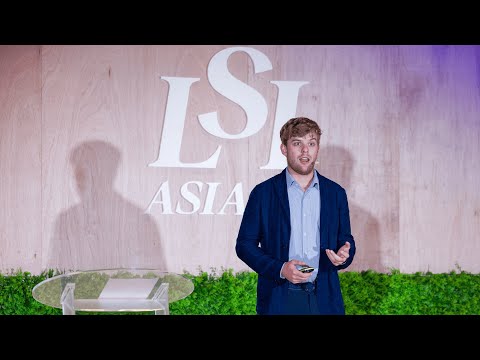
Hello everybody. I'm Mike Kennewick. I'm a partner in aI think tank. We're a Seattle based AI Lab and venture builder. I've had a long standing relationship with a star going back to about 2014 and in the case of aI think tank, we started this specific relationship actually right as covid was starting. And so a lot of it was over zoom to start with, and eventually it came here. We what we do is we look at market opportunities where AI could be disruptive in the med tech and general healthcare business. And we then take a look at IP that our lab can develop, and where a star has IP, and we look at those combinations to see if we've got breakthrough solutions. Options for the problems we've identified so far, we our company has spun off. We're in the process of spinning. Spinning off our third company here in Singapore. Our first company in Singapore was a company called Carecam and do. And another one we're doing now is called tele PT, which is an AI physiotherapist. So our background, a lot of us, came from a company called voice box that invented the original voice assistant, similar to if you look at Siri, you look at Alexa, those were all for my 2011 or 12. In 2005 we created the first voice assistant. And so we learned a lot about AI. We had a lot of data, 20 million cars a year. Three, 50 million mobile devices. And so we had early introductions to AI, and that's how I first met a star. They approached us about doing a JV here in Singapore, and we worked on that together. We put together a team of experienced scientists, entrepreneurs, business development, finance professionals, and we bring that to the to the startups that we venture build. We also understand IP, and we've got a process where we patent a lot of the concepts in IP that we do when we spin the mouth. Our mission, as I said, is an AI Lab and a venture builder, and where commitments co creation startups that produce transformative healthcare solutions. Our current focus is visual intelligence on consumer electronic devices like mobile phones. So what we're trying to do is create software as a medical device, but run them on inexpensive and very accessible platforms like mobile phones and iPads the general co creation process is we work with a star, we work with founders and ourselves, and we co create the startup. In our case, we work closely with a star research organizations, and with dx d hub. We're currently exploring a relationship with Mary's group, and we guess one of our spin offs could involve hardware that needs manufacturing. The current companies I mentioned Carecam. So Carecam is basically taking a mobile phone, watching somebody's gait for just a few meters, and we do a full assessment of that gait. It's being used today for stroke rehabilitation, teaching people to walk again after strokes. It's being used in frailty, both cardio aging and general aging population. And then also we're starting work in orthopedic particularly hip replacement, knee replacement sports box is a sports company. It's in use today a lot by many of the PGA golfers and Bryson de Shambo gave us credit for his winning the US Open last year, because we discovered that when he was having trouble with his shots, his chest was about three inches further forward than his good shots, and that's something the human eye couldn't see. And our analysis said, hey, the correlation is, your good shots look like this. By mechanically, your bad shots look like this. Biomechanically, try doing something different. And then finally, tele PT, that's still not yet announced, but we're working on a a set of a assessment tools to allow remote physiotherapy to be more effective. So we can measure range of motion remotely, we can measure strength remotely, and we can essentially make intervention recommendations using generative AI. So that's that's my story.
Mary Kan 9:17
All right, we'll move Q and A to after each speaker shares about their story, so we'll just move on to Steven next.
Dr. Steven Kum 9:25
Thank you very much.
Mary Kan 9:28
Yeah, we'll just click Yeah, click Yeah. So we need to introduce him first. So Steven is a vascular surgeon and Chief Medical Officer at M and L healthcare, so we've invited him to share maybe more about understanding the product development and developing trials that can prove efficacy. So Steven, please over to you.
Dr. Steven Kum 9:47
Okay, so this is how you condense 10 years of your life any project into five and a half. You
Mary Kan 9:55
promise me five and a half minutes hold
Dr. Steven Kum 9:59
this girl. So I. The title of talk is product development and clinical validation. And this would like to give you a case example of how we develop limb flow in Singapore. For those who are not familiar, lymph flow is a technology for peripheral arterial disease. As Mary said that I'm a practicing vascular surgeon with my other hat is the chief medical officer of a Family Fund. These are my disclosures for those who are not familiar in critical limb ischemia, we have a typical patient, a very common disc patient. This therapy was spun out of the need in Singapore, so that is a big question about the need. And the patient with 85 year old with gangrene, with what we call a desert foot. There's no dye and no blood going to the foot. And this patient was destined for a major habitation, and this is what we term no option, critically, mischemia as a no option to save the leg. This happens very commonly, this two two minutes. Every two minutes, a leg is lost in the US. And if you have an amputation, you're pretty much destined to a bad outcome in terms of mortality, high direct and indirect patient costs. And this market is just ballooning. It's It's an epidemic. Now the current therapies to heal these patients is extremely poor. A lot of these patients are what we call end up with a salami effect. You know, the doctor tries to do something, he cuts off one toe, he end up cutting more and more toe. So it's like the salami effect. And in the year, later on, a quarter of these patients die because they probably had too many interventions, probably anyway to to get blood to the foot, a standard procedure is a bypass procedure, where we put the we bypass, we take blood from the artery, we bypass the blockage and put it back into the artery. But what we found is that we can actually do the same, improving the blood to the circulation, by taking blood from the artery and plunk it onto a vein which the other side of the circulation. And this we tried in the standards in a surgical procedure in 2012 after attending a major conference, I saw a physician did it, and it works. So this is a bypass with a plus with a vein graft in a patient, as you can see on the picture on the left, full of calcium and hardening of the blood vessels, which is typical of patients with diabetes and end stage funnifit. And we had a good result in this case, which did a few other surgical procedures, and they were successful. And then we sat down and we said, Okay, now that we have a need, and we have way to fulfill the need, but this patient still have to go for an invasive procedure. Can we do this with an Endovascular, minimally invasive procedure? So someone threw the light bulb, and then we had to look for other crazy people. A lot of, you know, companies thought we were crazy, you know, and you know, a lot more other sane people around, but I think they all think that we're crazy. And we had a contact with a design house in Germany in 2012 we didn't know anybody in Singapore, right? I mean, we didn't know that that was available. And this is actually the first email from a from a US based engineer who worked for a contract manufacturer in Germany. And straight away, after the email is, guess what is an NDA? So NDAs were in place well before my time, and, you know, we partnered with them. And this is a an engineer was just one on one at that time. This procedure had never been done before, and ended up one year. About nine months after we touched base, we needed to do a procedure urgently for a 42 year old patient with gangrene. We did this with an off the shelf devices, which means what is commercially available, not the best result, not great. Worked for a while, but eventually the patient had an amputation due to infection, not due to the procedure itself. We learned many lessons from that, and then that helped us the feedback. Do we do newer devices? How do we improve on the existing devices? Is there an area of need where we can build something that's purpose built and refine the treatment protocols, but not just the devices, but also the treatment protocols that are so important to ensuring a good clinical result at the end. And what we needed to develop was a device. We needed to develop, the procedure, the bailout procedures and the post procedure care protocol. So it's always like that. You know, as a physician, you're trying to make sure that you get Plan B all figured out before you start Plan A. The challenges we face there were patients. There were physicians who said that this, this group of patients, never existed as physicians with big egos, we can fix everything, but not true. Companies thought it was nuts, and that is the truth. We had no scientific evidence. We needed to run a clinical trial. We needed to manufacture the device and make it idiot proof for your average physician, or any physician or procedures to do it. And we needed to formulate protocols. So to think about it again, disease, not well recognized. Therapy never does non existent market. It completely unknown. So we had a big problem. We need to prove not only that the device worked, but the therapy work. In those days, there was no such thing as zoom or market Microsoft Teams. It was all on emails and, you know, pictures. And I'm not sure how we managed to do it then, but we did, what did we do? We went to a cadaver the next best thing was possible. There was no animal model for this. We did countless cadavers in Toulouse, Minneapolis with NAMSA Prague Singapore. The majority were done in a public hospital in Singapore in those days. And I'll show you some photos. These were in infancy in. Agency. We had no class three devices being tested in our hospital, and aim was to understand an anatomy to test protocols, invented devices anatomy. We did a lot of anatomical dissections to find out the anatomy of the veins. This is 2013 I was half my size, and so was the cadaver. You can see that we were implanting the first generation device. But good news is there was always food after and before. That's Tim, an engineer that's known to us, doing Uran immediately after, you know. And then over the years, or four years, we did many cadavers. We moved and graduated to more chili crab and pepper crab, a little bit more luxurious. And still, in 2016 we were still developing next generation devices, all in cadavers. At the same time, we were doing a feedback to directly to the engineers who were daily, who were doing 3d printing and prototyping in those early days. This device had the works, had electronics, had a mechanical device. Everything was supposed to be small, as you know, physicians like myself would want everything to be microscopic and very handy. And, you know, either proof we had to develop stents. Stents. These were some of the early diagrams that we drew regarding the diameter, the stance, the covering of the stance was it expanded, PTFE, electrospun. PTFE, regulatory approval, patent, patentability. You know, the usual works. And then we also had to develop a valve cutter. This is a novel valve cutter that never been done before. It's a sketched off a napkin and then soon to be implanted. And I was proud to say that this was big part of this was I was involved in big part of this, and now it's the only valve cutter that's percutaneous and Endovascular in nature. Patterns were filed by somebody else. We had to do input to those things, but luckily, we had patent lawyers to help us do that. And then finally, we had to get the IRB approval and have the first demand done. The key point I like to point out, for those who are involved in the first demand device, you have to be transparent with the IRB. You have to tell them what you know and what you don't know. Everything is an assumption, and that's why we're doing a clinical study. And then what are the things you need to do? You need to have the site that has the facilities, the technology, data monitoring, Charles unit that's helpful with the budget and contract negotiations, good and adequate research staff, a good CRO track record for the visitant, who was myself then to be technically competent, reliable, dedicated team so it's not just a physician, but the team as well, was the recruitment potential and the case volume to fill. So a lot of things going on at same time. We did the first demand and some pictures, you know, a lot of sleepless nights trying to worry about these patients. Publications happened at the same time. This is the very first this study of eight patients in Singapore went towards a C marking of the device. A lot of journals, a lot of publications. Happened after that, and R D never stopped happening. The good news is, in those days, we knew that this was not the best device, and this was not the go to market device, R and D continued to happen. And with the breakthrough device, we were able to have the current procedure with a variety of techniques and stands. So we were able to have this in the current procedure, devices that happen in us, and then with pivotal trial discussions with the FDA, is it a single arm study, a Dalaman study? So we had to tell the FDA that you, if you're going to jump out at aircraft, you don't need a control group to wear a parachute right in you know, you jump out at aircraft knowing that you need a parachute, not you can't have a control group, right? So just participating centers. And then there was running the clinical pivotal trial during the covid 19 period, which I would say in the mildest form, was a pain in but only five minutes, maybe protocol. And then it was proctoring. We had the proctor fellow physicians even look at the car on the right, it was all bags and product. A new therapy was born. We had to continue training with cadavers Japanese physicians. More studies were added, first in man feasibility study, Europe registry, UK us pivotal trial and follow up study. Few PhDs were spun out of it. But the rewards were great. We had patients come from Italy. In fact, this patient on the top right was one of the first few patients that actually invested in Jurong Island, in a petrochemical plant in Italy. So he came to Singapore for the treatment, and he went home very well and lived for several years. The other patient managed to get married and
Dr. Steven Kum 19:18
cycled with half his foot, but he was able to get married and so and so forth. Now it's a new therapy. This is a slide taken just from a presentation two days ago by a colleague of mine in the US. It's now gala time, and from nothing. Now we have a therapy that's that we can be proud of. Subsequently, was acquired by Inari. And remember, the Inari is here, and subsequently, you know, the David is eaten by Goliath, a strike. Lessons Learned. Fine Experience Design House, we can do rapid prototyping, preferably in Singapore, and hope that Medtech catapult will be the avenue that we can do this. Access to animal Labs is mandatory. And class three devices, find a reliable, dedicated and clinical and driven clinical team in a hospital and a good relationship with a clinical trials unit. When a going gets tough, remember the need will always drive you and give you the strength to push on. You're going to have setbacks, but if you think about the need, you always push on, and the day you stop worrying is the day they start dying. So this is advice we give to all our residents and continues with all the clinical trials. Thank you very much for
Mary Kan 20:25
attention. Yeah, thanks for sharing. You know, really glad to hear that. So let's hold our questions, but please put all your questions into the pigeonhole, and please vote for the questions that you would like our speakers to answer as well. So we'll now move to Dr Jolene wee she's the partner of healthcare edbi, and they have been doing more and more Medtech investments and bring companies to Singapore. So let's hear from Jolene more about what she's doing.
Dr. Jolene Ooi 20:52
Sure. Well, first of all, thank you, Mary for having me here. And I don't have slides, so
Dr. Steven Kum 20:59
I made up for some of the slides,
Dr. Jolene Ooi 21:03
so I'll just keep mine brief. I think it's important to leave time for questions. So just to introduce the fund and how yourself can work with us, right? So I come from edbi, and edbi is an investment firm that serves under a larger platform right now called SG growth capital. SG. SG growth capital is kind of a new entity. It was formed first April this year, but generally it is the strategic investment platform that invests on behalf of two economic agencies under our Ministry of Trade and Industry. So one is Edd, which is the Economic Development Board, which is really bringing foreign direct investments into the country. The other economic agency is enterprise Singapore, and that's a sister agency of EDB. So what it does is to groom local, small, medium enterprises and brilliant international so at edpi, as the name suggests, we our origins is that we are the investment arm of EDB. We are a global investor. We make equity investments on to do two things. So one is to groom and nurture local, promising startups, and two is to use our equity dollars to invest, to find and invest in the best companies out there and anchor them into Singapore. So we have a portfolio growth team which helps work with each portfolio company to bring to ensure that companies that commit to us in delivering the activities that they desire in Singapore and in general, we focus on technology heavy sectors. So I lead the healthcare practice. Within healthcare, we cover med tech. And under med tech, it kind of branches out into device diagnostics and life science tools. Beyond med tech, we also look at biotech as well as digital health and beyond healthcare, we have another team that does digital economy, which looks at AI and cybersecurity. We have a third team that does next generation hardware, so the robotics and quantum computing type investments. And now we have a fourth team that does green and bio economy, so that's more synthetic biology, sustainability type projects. So you can imagine that, that we work very close across disciplinary if we look at surgical robotics, we can bring on our next generation hardware team. If we look at health tech, we bring on our digital economy team to look at AI, right? And, yeah, so so that that's generally and I so I lead the healthcare practice, and we primarily focus on growth stage investment, so Series B and later. These are companies that we typically invest in, but we now have an early stage practice as well, and that will invest in seed to a round. And on top of that, I think we recognize the need for capital to bring startups in the healthcare space to success. And so capital is important. So what we have done is that we do have a small final fund strategy to invest in funds that will redeploy their capital and spend time and resource with us into deploying resource back into the Singapore deep tech startup ecosystem. Yeah, so maybe I think Mary also wanted me to share some examples of companies that we work with. So I mentioned two things, right? So one is to nurture and groom local companies, and the second is to attract and anchor global companies to Singapore. So for the first we have an investment in an AStar spin off as two.ai so that uses AI and ultrasound as the name suggests us to.ai to really detect cardiovascular disease. Early, and they are commercial stage right now. We invested in them as early as the seed stage. And then the other company that we invested in and attracting and anchoring global companies here is deep site this so what they do is, again, an ultrasound space where they couple silicon photonics and ultrasound into a device. And initial application is to for needle positioning, and then the second they are also looking at more of the usual ultrasound from from outside, so potentially maternal care, right but, but right now the focus is on needle positioning. So why we invested in in deep side is, and how we have really helped them anchor into Singapore is as such. Initially, the when they were building the technology, and they were looking for a silicon photonics chip. I think they identified Advanced Micro foundry in Singapore to help produce the chips, and that was the first linkage back to Singapore. So we were intrigued by this, and we thought the technology was very promising. And so we took the opportunity. When the CEO was in town another we what we usually do with companies is to have an extensive visit program for for companies to meet with the different potential receptacles here in Singapore, again, based on the company's needs and desires, on how they would like to supplement their and grow their business. So for deep site, where we found traction was in terms of identifying needle providers. So if you speak with Mary and learn about med tech catapult, I think what they have done, together with EDB also is to identify a lot of the contract manufacturers that we have here in Singapore, and they are valuable resource, and we do often see synergies between the global Medtech companies in identifying supplies from our local manufacturers. So deep site was one where we tried to get them engaged with some of the needle suppliers, as well as optics fibers, where they were quite intrigued by what we had in Singapore. And then on top of that, also on the research front, to work with the clinicians to identify new applications that the company underlying technology could move into. So pipeline asset product development, and potentially this could be something that we can work with other ecosystem players like catapult, right? Yeah, so I think it's really quite a close knit ecosystem here. So when global companies leadership bring their teams here, then we will organize a visit program to make sure that they find the right receptacle, and deep site is one great example in which we have done that.
Mary Kan 28:08
All right, thanks Jolene for sharing the examples of deep site as well as us to AI. So now we're going to move to the pigeonhole. If I can ask the AB team to switch the slides to the pigeonhole, we'll go into the Q and A topic for our panel members. So I'll just direct this question to Mike first, right? So there's a question that asks, how can we develop entrepreneurial talent with a global market perspective, right? So you are doing venture creation out of Singapore, and you've actually chosen a Singaporean founder for your first company. Here. Can you share more about that?
Mike Kennewick 28:50
And the specific question is,
Mary Kan 28:53
how can we develop entrepreneurial talent with a global market perspective?
Mike Kennewick 29:00
Yeah. Yeah. So one of the things we want to do in our co creation, I when I spoke, I talked about the product development, the IP development side, one of the other things aI think tank, because we're based in the US, one of the roles we have for our company is to both develop, help them develop a market in the US. And part of what we do with the serial entrepreneurs and some of the professionals we have in our group is we mentor the CEO to understand that while they're the See, Singapore has a great ecosystem, and it's been ideal for our for example, Carecam to establish clinical trials, but the objective, ultimately is to bring it into a bigger market, global market, starting with the US market. And so we do a lot together to to train and mentoring them, to understand that, to have contacts there, and to build their clinical trial. Trials in the US market.
Mary Kan 30:02
All right, thanks. And then, Jolene, any comments on that? Because you've also invested in Singapore companies.
Dr. Jolene Ooi 30:08
Yes, yeah. So I think the Singapore bio design is a great way to train the talent make sure that they see the medical needs in Singapore, and hopefully some may grow to become entrepreneurial in nature. And one, one other thing I mentioned earlier is that we try and attract Fund of Funds here, EC funds through our final fund approach over there. We, when we were trying to convince the government to give us money for this initiative. It was really to identify where the gaps were in Singapore, and we saw the gap in early stage VC funds and talent. And so when we hunt for funds out there, it's really looking for early stage funds, in particular with venture building capabilities and networks. So these are ones that can identify technologies spin off into companies help provide the necessary operating support, so C suite and talent to help us really run the company for success. All
Mary Kan 31:20
right, thank you. And then Steven, what you didn't tell them is that you have since evolved to become a Family Fund, and you now have, like, the portfolio of 12 companies under you. Right? So where are your entrepreneurial talent coming from? And what do you see is the prospects of having a Singapore entrepreneurial talent? Well, the
Dr. Steven Kum 31:40
only way to be entrepreneurial is to make mistakes. And I think that the more of course, with the number of companies at 17, by the way, it's not 12. If you have to look after 17 companies in either a direct or an indirect approach, from the clinical to the investment point of view, you learn a lot. And I think that we've learned a lot. What kind of CEO we want, what kind of management team we want, what kind of goals we want to achieve. Are we looking at a 10 and the first question is always, when we look at the device or any type, is reimbursement? Unfortunately, that's the case, you know. And we learned a lot the way. And we we we ask our friends, we ask our partner investors, and it's all a matter of trust in in the process of investing, where we have to do diligence on all 17 in deep diligence would be impossible, but that would absolutely be impossible, so we have to rely on partners that are that we've invested with together, and like I said, we have to make mistakes, you know, and we've made mistakes along the way, and we're still young, at least from a Family Fund point of view. So I'm still learning, I'm still learning, but I support the fund from a clinical point of view, but the finances is intriguing.
Mary Kan 33:01
Yeah, understand, all right. And also earlier, you know, Jolien mentioned that in edbi, they have, like, four pillars, right, where they can, you know, pull in different teams to help each other. For Mike, right? You actually started off more as an AI base, I would say, venture fund, and with your own AI technologies, right? How? I mean, you were able to apply, you know, human performance into now, unmet medical needs, right? Tell us more about how this, you know, applying new technologies into healthcare works. Are there other engineering or other disciplines that you think you're going to have to tap on with the future rise of Medtech solutions.
Mike Kennewick 33:46
Yes. So the way, as I said earlier, we do co creation, from concept to first customer, and so we're very involved with with our companies through the whole process, and this is also part of the mentoring process for the the C suite, or the the founders that of the companies, and they, they go alongside of us. So first of all, there's the fact that our charter is to have unique technology that AI is going to disrupt. So very often, the products we're producing are first of its kind. And so it takes smart people, people that are willing to read, willing to study, willing to every day, talk to the teams, to really get it right so they learn all about product market fit. The second thing is, once the products get to proof of value, they're going to need to work with customers, understand how to interact with customers, how to figure out needs, how to execute, and get the initial clinical trials in place. And then finally, in our particular model, they when they come to the States, they're going to need to figure. Out how to scale, build teams overseas, keep communications in sync. So it's a lot of the pretty diverse skill sets that the founders and CEO have to develop
Mary Kan 35:11
understand. All right, Steven, there's a question director that you what is your biggest pain point or hurdle in getting from concept to an end product, right? You develop a lot with overseas companies. Is there any in Singapore now that can assist you, right? And then, is there a particular type of product that you feel Singapore should play in that,
Dr. Steven Kum 35:35
swear to God, this question must be coming from one of your staff. Well, you're right back in the good old days. We didn't know anybody who had credentials and would be able to execute what we really wanted, which is red lit prototyping. Give us a product, plonk it in the cadaver, make it work, and then figure out how to put it in humans later on. Right now, we have the lights of Medtech catapult. We have drive, hopefully, we have a little bit of funding to help this, and we have a whole community of contract manufacturers who are able to support this. So my, my hope is that we'll be able to not only manufacture these devices, and maybe for us entities, reduce the cogs. And I saw there was a question, you know, why? Why do it in Singapore, but reduce the cogs? You know, so so forth, but also to develop and improve an existing devices through rapid prototyping and design houses. So I think this, for me, is the biggest early hurdle, one hurdle amongst 10 other hurdles every year in 10 years of a PMA. But you know, this would be great if we could have it. I do have a question, actually, to maybe Mary and to Jolene. You know, the cost of doing business in Singapore is not, not low. We have startups coming on and, you know, we have the funding we have, you know, the facilities, we have drive and we have government agencies. Is there something being done to look at how we can perhaps bring in the hardware, the software, the software being guys from the US who have had experience doing this before, bringing them in here as consultants, employment, you know, a employment, and also brick and mortar rent, rent, help with rental and, you know, running costs, is there? Is there something that we could look at?
Mary Kan 37:27
Yeah, he's posing a hard question to us. Now,
Dr. Steven Kum 37:34
you guys are nodding at each other. But I mean, as a startup, we're looking at this,
Dr. Jolene Ooi 37:45
yeah, no, I think it's a question that we ask ourselves every day, right? Because my job is really to attract companies to Singapore. So first, we have to be convinced that there are compelling things here in Singapore, and we recognize the high costs here. And so I think we need to, we shouldn't, shouldn't try to fit a square in a circle or circle in a square. Basically, we have to see what our strengths are, right? I think Singapore, we have the large companies like med tech, Medtronic, J and J, these are sizable outfits here. So we do have talent and but these talent, typically, I think, are doing high, high value type roles. And so I think we should continue to to to work on that. The example I mentioned deep site. We Oh, one minute. Okay, yes. So I think we also have the Johor Special Economic Zone, right? So I think there we can, if we play our cuts right, and have certain activities where they should be, then we can moderate some cost efficiencies. I think a lot of the contract manufacturers here do leverage some of the expertise that we have in Johor Bahru, which is the tip of Malaysia, which is just across the bridge from Singapore, for those who are less familiar, yeah. So I think that that's one way. Maybe I'll let Mary,
Mary Kan 39:20
Yeah, unfortunately, we'll come to the end of the talk, hide Z away the question. But actually, you know, there are many questions left in the pigeon hole, but please feel free to reach out to the speakers. But I would like to just summarize what they had said, right? So I think again, you know, for for building ventures out of Singapore. I mean, we see that, you know, Singapore didn't really start out as like having a reputation for med tech, but we have all the biomedical research, and we also have all the semiconductor research and also the ecosystem behind us. So this thing about borrowing multi disciplinary into new med tech applications, I think, is very relevant for. Singapore, and then learning from Steven as a medical doctor himself, seeing the unmet need, right, seeing patients suffer. You know, he exemplifies bio design, even without being a bio design fellow. When you go to his office, there's a huge bio design textbook there, right, that he has read, and he makes all his staff read it, right? So again, coming back to the unmet need. You know why it's so important to drive the correct intention now, of course, the perseverance to see through the product to the end. And then, I think, from what Jolene mentioned in terms of having a playbook, you know, not just for our companies going out of Singapore, but also, you know, companies coming to Singapore, and having a base here, we started off first with the MNCs, you know, in Singapore, but we're also starting to see startups come here, right? So in terms of cost, to Steven's question, we spoke to one of the contract manufacturers, and I make a plug here for our contract manufacturing tour on Friday. But actually, you know, you would think that you come to Singapore, the risk is so expensive, right? It's like, how can I make any med tech venture cheap out of here? But actually, if you consider all the cost of, you know, developing a product, manufacturing a product, including all the fried and everything, we actually are still fairly cost competitive compared to the US, for example. And of course, the public research site, you know, we are trying our best to, so called, optimize and accelerate the process. For one, we are definitely trying to reduce the red tape, right? Many people here say Singapore is so small. Why do you have so many organizations? So we do have, like, one point of contact in terms of venture colleagues, you know, working with Mike and aI think tank, just to help them navigate through all of Singapore's ecosystem, not just a stars, for example, right? So I want to end with this, and thank all the speakers for the insightful comments. And you know, while they will still be hanging around for the next couple of minutes, as well as our team from A*star, if you would like to reach out to us, right? Thank you very much. And thank you.
Dr. Steven Kum 41:55
Thank you.
Mary Kan 0:05
All right, good afternoon, everyone. Thanks for coming for this workshop. This is organized by a star and Medtech catapult in conjunction with EDB enterprise Singapore, and it's titled building and scaling successful Medtech ventures from Singapore. So I'm Mary. I'm currently the program director for Medtech catapult, and also the Director for Medtech cluster, Astar. So today I represent a star in terms of trying to share with you our ecosystem. So Astar, we are lead public sector agency for under the Ministry of Trade and Industry, and we actually support R and D for med tech innovations. So just within a star, we have 17 research institutes spanning biomedical and science engineering research. And so we do support new technologies can that can spin off from a star in venture co creation models, as well as supporting a new follow on R D for new products, as well as for product iterations. So I also want to share with you some of our national platforms that are hosted by a star. So Singapore bio design is actually a the first agent global affiliate for Stanford bio design, which I think many of you from the US will be familiar with and it does mainly talent training to bring Medtech innovation closer to the market. We also have two productization units, Medtech catapult, as well as the DXD hub that support the product engineering development and commercialization and deployment for medical devices, as well as in vitro diagnostics. Finally, we also have the biomedical sciences industry partnerships office, which supports connections with our internal external stakeholders. So this workshop, you know, we have people from all entities present today, if you would like to reach out to us for more information. So without further ado, I would like to introduce our program flow, so we have three esteemed panelists today who can share more about the work that they do with Medtech startups, as well as how they have been able to interface with the Singapore ecosystem to build and scale their startups. And we wanted to make this more of an interactive session, so we have actually set up a pigeon hole to encourage all of you to put through your questions and answers for all of our panelists today, through the general Q and A, you'll see one at the top which says, building and scaling. Any questions you have for them, please help to challenge them. You know, get their thinking hats on right. I think we welcome you know, your inputs. But also I heard in the previous session that actually one of the audience actually stood out and started, you know, sharing his thoughts, and he actually also became one of the speakers eventually. So we also welcome any of you who would like to voice your thoughts vocally. And of course, for each of this, you know, speakers, we have actually asked them to share specifically on three topics. So Mike from aI think tank will share more about our venture creation models for our AI solutions. And then we have Steven from M and L investments sharing with us product development and clinical validation. And finally, Jolene, a partner at edbi for venture financing and scaling in Singapore. So please, we are going to open the pigeonhole right now. So any burning questions, please feel free to put them into the pigeonhole chat. All right, and then we will be able to address them over time. All right. So without further ado, I'm going to introduce the speaker, but let him introduce himself, what he does, and also share a little bit more about, you know, his experiences with the Singapore ecosystem and how he has been able to grow ventures. And we'll go down the line with five minutes sharing from each of the speakers, and then we will then open up to the floor. All right, so Mike, take it away. Thank you.
Mike Kennewick 4:01
Hello everybody. I'm Mike Kennewick. I'm a partner in aI think tank. We're a Seattle based AI Lab and venture builder. I've had a long standing relationship with a star going back to about 2014 and in the case of aI think tank, we started this specific relationship actually right as covid was starting. And so a lot of it was over zoom to start with, and eventually it came here. We what we do is we look at market opportunities where AI could be disruptive in the med tech and general healthcare business. And we then take a look at IP that our lab can develop, and where a star has IP, and we look at those combinations to see if we've got breakthrough solutions. Options for the problems we've identified so far, we our company has spun off. We're in the process of spinning. Spinning off our third company here in Singapore. Our first company in Singapore was a company called Carecam and do. And another one we're doing now is called tele PT, which is an AI physiotherapist. So our background, a lot of us, came from a company called voice box that invented the original voice assistant, similar to if you look at Siri, you look at Alexa, those were all for my 2011 or 12. In 2005 we created the first voice assistant. And so we learned a lot about AI. We had a lot of data, 20 million cars a year. Three, 50 million mobile devices. And so we had early introductions to AI, and that's how I first met a star. They approached us about doing a JV here in Singapore, and we worked on that together. We put together a team of experienced scientists, entrepreneurs, business development, finance professionals, and we bring that to the to the startups that we venture build. We also understand IP, and we've got a process where we patent a lot of the concepts in IP that we do when we spin the mouth. Our mission, as I said, is an AI Lab and a venture builder, and where commitments co creation startups that produce transformative healthcare solutions. Our current focus is visual intelligence on consumer electronic devices like mobile phones. So what we're trying to do is create software as a medical device, but run them on inexpensive and very accessible platforms like mobile phones and iPads the general co creation process is we work with a star, we work with founders and ourselves, and we co create the startup. In our case, we work closely with a star research organizations, and with dx d hub. We're currently exploring a relationship with Mary's group, and we guess one of our spin offs could involve hardware that needs manufacturing. The current companies I mentioned Carecam. So Carecam is basically taking a mobile phone, watching somebody's gait for just a few meters, and we do a full assessment of that gait. It's being used today for stroke rehabilitation, teaching people to walk again after strokes. It's being used in frailty, both cardio aging and general aging population. And then also we're starting work in orthopedic particularly hip replacement, knee replacement sports box is a sports company. It's in use today a lot by many of the PGA golfers and Bryson de Shambo gave us credit for his winning the US Open last year, because we discovered that when he was having trouble with his shots, his chest was about three inches further forward than his good shots, and that's something the human eye couldn't see. And our analysis said, hey, the correlation is, your good shots look like this. By mechanically, your bad shots look like this. Biomechanically, try doing something different. And then finally, tele PT, that's still not yet announced, but we're working on a a set of a assessment tools to allow remote physiotherapy to be more effective. So we can measure range of motion remotely, we can measure strength remotely, and we can essentially make intervention recommendations using generative AI. So that's that's my story.
Mary Kan 9:17
All right, we'll move Q and A to after each speaker shares about their story, so we'll just move on to Steven next.
Dr. Steven Kum 9:25
Thank you very much.
Mary Kan 9:28
Yeah, we'll just click Yeah, click Yeah. So we need to introduce him first. So Steven is a vascular surgeon and Chief Medical Officer at M and L healthcare, so we've invited him to share maybe more about understanding the product development and developing trials that can prove efficacy. So Steven, please over to you.
Dr. Steven Kum 9:47
Okay, so this is how you condense 10 years of your life any project into five and a half. You
Mary Kan 9:55
promise me five and a half minutes hold
Dr. Steven Kum 9:59
this girl. So I. The title of talk is product development and clinical validation. And this would like to give you a case example of how we develop limb flow in Singapore. For those who are not familiar, lymph flow is a technology for peripheral arterial disease. As Mary said that I'm a practicing vascular surgeon with my other hat is the chief medical officer of a Family Fund. These are my disclosures for those who are not familiar in critical limb ischemia, we have a typical patient, a very common disc patient. This therapy was spun out of the need in Singapore, so that is a big question about the need. And the patient with 85 year old with gangrene, with what we call a desert foot. There's no dye and no blood going to the foot. And this patient was destined for a major habitation, and this is what we term no option, critically, mischemia as a no option to save the leg. This happens very commonly, this two two minutes. Every two minutes, a leg is lost in the US. And if you have an amputation, you're pretty much destined to a bad outcome in terms of mortality, high direct and indirect patient costs. And this market is just ballooning. It's It's an epidemic. Now the current therapies to heal these patients is extremely poor. A lot of these patients are what we call end up with a salami effect. You know, the doctor tries to do something, he cuts off one toe, he end up cutting more and more toe. So it's like the salami effect. And in the year, later on, a quarter of these patients die because they probably had too many interventions, probably anyway to to get blood to the foot, a standard procedure is a bypass procedure, where we put the we bypass, we take blood from the artery, we bypass the blockage and put it back into the artery. But what we found is that we can actually do the same, improving the blood to the circulation, by taking blood from the artery and plunk it onto a vein which the other side of the circulation. And this we tried in the standards in a surgical procedure in 2012 after attending a major conference, I saw a physician did it, and it works. So this is a bypass with a plus with a vein graft in a patient, as you can see on the picture on the left, full of calcium and hardening of the blood vessels, which is typical of patients with diabetes and end stage funnifit. And we had a good result in this case, which did a few other surgical procedures, and they were successful. And then we sat down and we said, Okay, now that we have a need, and we have way to fulfill the need, but this patient still have to go for an invasive procedure. Can we do this with an Endovascular, minimally invasive procedure? So someone threw the light bulb, and then we had to look for other crazy people. A lot of, you know, companies thought we were crazy, you know, and you know, a lot more other sane people around, but I think they all think that we're crazy. And we had a contact with a design house in Germany in 2012 we didn't know anybody in Singapore, right? I mean, we didn't know that that was available. And this is actually the first email from a from a US based engineer who worked for a contract manufacturer in Germany. And straight away, after the email is, guess what is an NDA? So NDAs were in place well before my time, and, you know, we partnered with them. And this is a an engineer was just one on one at that time. This procedure had never been done before, and ended up one year. About nine months after we touched base, we needed to do a procedure urgently for a 42 year old patient with gangrene. We did this with an off the shelf devices, which means what is commercially available, not the best result, not great. Worked for a while, but eventually the patient had an amputation due to infection, not due to the procedure itself. We learned many lessons from that, and then that helped us the feedback. Do we do newer devices? How do we improve on the existing devices? Is there an area of need where we can build something that's purpose built and refine the treatment protocols, but not just the devices, but also the treatment protocols that are so important to ensuring a good clinical result at the end. And what we needed to develop was a device. We needed to develop, the procedure, the bailout procedures and the post procedure care protocol. So it's always like that. You know, as a physician, you're trying to make sure that you get Plan B all figured out before you start Plan A. The challenges we face there were patients. There were physicians who said that this, this group of patients, never existed as physicians with big egos, we can fix everything, but not true. Companies thought it was nuts, and that is the truth. We had no scientific evidence. We needed to run a clinical trial. We needed to manufacture the device and make it idiot proof for your average physician, or any physician or procedures to do it. And we needed to formulate protocols. So to think about it again, disease, not well recognized. Therapy never does non existent market. It completely unknown. So we had a big problem. We need to prove not only that the device worked, but the therapy work. In those days, there was no such thing as zoom or market Microsoft Teams. It was all on emails and, you know, pictures. And I'm not sure how we managed to do it then, but we did, what did we do? We went to a cadaver the next best thing was possible. There was no animal model for this. We did countless cadavers in Toulouse, Minneapolis with NAMSA Prague Singapore. The majority were done in a public hospital in Singapore in those days. And I'll show you some photos. These were in infancy in. Agency. We had no class three devices being tested in our hospital, and aim was to understand an anatomy to test protocols, invented devices anatomy. We did a lot of anatomical dissections to find out the anatomy of the veins. This is 2013 I was half my size, and so was the cadaver. You can see that we were implanting the first generation device. But good news is there was always food after and before. That's Tim, an engineer that's known to us, doing Uran immediately after, you know. And then over the years, or four years, we did many cadavers. We moved and graduated to more chili crab and pepper crab, a little bit more luxurious. And still, in 2016 we were still developing next generation devices, all in cadavers. At the same time, we were doing a feedback to directly to the engineers who were daily, who were doing 3d printing and prototyping in those early days. This device had the works, had electronics, had a mechanical device. Everything was supposed to be small, as you know, physicians like myself would want everything to be microscopic and very handy. And, you know, either proof we had to develop stents. Stents. These were some of the early diagrams that we drew regarding the diameter, the stance, the covering of the stance was it expanded, PTFE, electrospun. PTFE, regulatory approval, patent, patentability. You know, the usual works. And then we also had to develop a valve cutter. This is a novel valve cutter that never been done before. It's a sketched off a napkin and then soon to be implanted. And I was proud to say that this was big part of this was I was involved in big part of this, and now it's the only valve cutter that's percutaneous and Endovascular in nature. Patterns were filed by somebody else. We had to do input to those things, but luckily, we had patent lawyers to help us do that. And then finally, we had to get the IRB approval and have the first demand done. The key point I like to point out, for those who are involved in the first demand device, you have to be transparent with the IRB. You have to tell them what you know and what you don't know. Everything is an assumption, and that's why we're doing a clinical study. And then what are the things you need to do? You need to have the site that has the facilities, the technology, data monitoring, Charles unit that's helpful with the budget and contract negotiations, good and adequate research staff, a good CRO track record for the visitant, who was myself then to be technically competent, reliable, dedicated team so it's not just a physician, but the team as well, was the recruitment potential and the case volume to fill. So a lot of things going on at same time. We did the first demand and some pictures, you know, a lot of sleepless nights trying to worry about these patients. Publications happened at the same time. This is the very first this study of eight patients in Singapore went towards a C marking of the device. A lot of journals, a lot of publications. Happened after that, and R D never stopped happening. The good news is, in those days, we knew that this was not the best device, and this was not the go to market device, R and D continued to happen. And with the breakthrough device, we were able to have the current procedure with a variety of techniques and stands. So we were able to have this in the current procedure, devices that happen in us, and then with pivotal trial discussions with the FDA, is it a single arm study, a Dalaman study? So we had to tell the FDA that you, if you're going to jump out at aircraft, you don't need a control group to wear a parachute right in you know, you jump out at aircraft knowing that you need a parachute, not you can't have a control group, right? So just participating centers. And then there was running the clinical pivotal trial during the covid 19 period, which I would say in the mildest form, was a pain in but only five minutes, maybe protocol. And then it was proctoring. We had the proctor fellow physicians even look at the car on the right, it was all bags and product. A new therapy was born. We had to continue training with cadavers Japanese physicians. More studies were added, first in man feasibility study, Europe registry, UK us pivotal trial and follow up study. Few PhDs were spun out of it. But the rewards were great. We had patients come from Italy. In fact, this patient on the top right was one of the first few patients that actually invested in Jurong Island, in a petrochemical plant in Italy. So he came to Singapore for the treatment, and he went home very well and lived for several years. The other patient managed to get married and
Dr. Steven Kum 19:18
cycled with half his foot, but he was able to get married and so and so forth. Now it's a new therapy. This is a slide taken just from a presentation two days ago by a colleague of mine in the US. It's now gala time, and from nothing. Now we have a therapy that's that we can be proud of. Subsequently, was acquired by Inari. And remember, the Inari is here, and subsequently, you know, the David is eaten by Goliath, a strike. Lessons Learned. Fine Experience Design House, we can do rapid prototyping, preferably in Singapore, and hope that Medtech catapult will be the avenue that we can do this. Access to animal Labs is mandatory. And class three devices, find a reliable, dedicated and clinical and driven clinical team in a hospital and a good relationship with a clinical trials unit. When a going gets tough, remember the need will always drive you and give you the strength to push on. You're going to have setbacks, but if you think about the need, you always push on, and the day you stop worrying is the day they start dying. So this is advice we give to all our residents and continues with all the clinical trials. Thank you very much for
Mary Kan 20:25
attention. Yeah, thanks for sharing. You know, really glad to hear that. So let's hold our questions, but please put all your questions into the pigeonhole, and please vote for the questions that you would like our speakers to answer as well. So we'll now move to Dr Jolene wee she's the partner of healthcare edbi, and they have been doing more and more Medtech investments and bring companies to Singapore. So let's hear from Jolene more about what she's doing.
Dr. Jolene Ooi 20:52
Sure. Well, first of all, thank you, Mary for having me here. And I don't have slides, so
Dr. Steven Kum 20:59
I made up for some of the slides,
Dr. Jolene Ooi 21:03
so I'll just keep mine brief. I think it's important to leave time for questions. So just to introduce the fund and how yourself can work with us, right? So I come from edbi, and edbi is an investment firm that serves under a larger platform right now called SG growth capital. SG. SG growth capital is kind of a new entity. It was formed first April this year, but generally it is the strategic investment platform that invests on behalf of two economic agencies under our Ministry of Trade and Industry. So one is Edd, which is the Economic Development Board, which is really bringing foreign direct investments into the country. The other economic agency is enterprise Singapore, and that's a sister agency of EDB. So what it does is to groom local, small, medium enterprises and brilliant international so at edpi, as the name suggests, we our origins is that we are the investment arm of EDB. We are a global investor. We make equity investments on to do two things. So one is to groom and nurture local, promising startups, and two is to use our equity dollars to invest, to find and invest in the best companies out there and anchor them into Singapore. So we have a portfolio growth team which helps work with each portfolio company to bring to ensure that companies that commit to us in delivering the activities that they desire in Singapore and in general, we focus on technology heavy sectors. So I lead the healthcare practice. Within healthcare, we cover med tech. And under med tech, it kind of branches out into device diagnostics and life science tools. Beyond med tech, we also look at biotech as well as digital health and beyond healthcare, we have another team that does digital economy, which looks at AI and cybersecurity. We have a third team that does next generation hardware, so the robotics and quantum computing type investments. And now we have a fourth team that does green and bio economy, so that's more synthetic biology, sustainability type projects. So you can imagine that, that we work very close across disciplinary if we look at surgical robotics, we can bring on our next generation hardware team. If we look at health tech, we bring on our digital economy team to look at AI, right? And, yeah, so so that that's generally and I so I lead the healthcare practice, and we primarily focus on growth stage investment, so Series B and later. These are companies that we typically invest in, but we now have an early stage practice as well, and that will invest in seed to a round. And on top of that, I think we recognize the need for capital to bring startups in the healthcare space to success. And so capital is important. So what we have done is that we do have a small final fund strategy to invest in funds that will redeploy their capital and spend time and resource with us into deploying resource back into the Singapore deep tech startup ecosystem. Yeah, so maybe I think Mary also wanted me to share some examples of companies that we work with. So I mentioned two things, right? So one is to nurture and groom local companies, and the second is to attract and anchor global companies to Singapore. So for the first we have an investment in an AStar spin off as two.ai so that uses AI and ultrasound as the name suggests us to.ai to really detect cardiovascular disease. Early, and they are commercial stage right now. We invested in them as early as the seed stage. And then the other company that we invested in and attracting and anchoring global companies here is deep site this so what they do is, again, an ultrasound space where they couple silicon photonics and ultrasound into a device. And initial application is to for needle positioning, and then the second they are also looking at more of the usual ultrasound from from outside, so potentially maternal care, right but, but right now the focus is on needle positioning. So why we invested in in deep side is, and how we have really helped them anchor into Singapore is as such. Initially, the when they were building the technology, and they were looking for a silicon photonics chip. I think they identified Advanced Micro foundry in Singapore to help produce the chips, and that was the first linkage back to Singapore. So we were intrigued by this, and we thought the technology was very promising. And so we took the opportunity. When the CEO was in town another we what we usually do with companies is to have an extensive visit program for for companies to meet with the different potential receptacles here in Singapore, again, based on the company's needs and desires, on how they would like to supplement their and grow their business. So for deep site, where we found traction was in terms of identifying needle providers. So if you speak with Mary and learn about med tech catapult, I think what they have done, together with EDB also is to identify a lot of the contract manufacturers that we have here in Singapore, and they are valuable resource, and we do often see synergies between the global Medtech companies in identifying supplies from our local manufacturers. So deep site was one where we tried to get them engaged with some of the needle suppliers, as well as optics fibers, where they were quite intrigued by what we had in Singapore. And then on top of that, also on the research front, to work with the clinicians to identify new applications that the company underlying technology could move into. So pipeline asset product development, and potentially this could be something that we can work with other ecosystem players like catapult, right? Yeah, so I think it's really quite a close knit ecosystem here. So when global companies leadership bring their teams here, then we will organize a visit program to make sure that they find the right receptacle, and deep site is one great example in which we have done that.
Mary Kan 28:08
All right, thanks Jolene for sharing the examples of deep site as well as us to AI. So now we're going to move to the pigeonhole. If I can ask the AB team to switch the slides to the pigeonhole, we'll go into the Q and A topic for our panel members. So I'll just direct this question to Mike first, right? So there's a question that asks, how can we develop entrepreneurial talent with a global market perspective, right? So you are doing venture creation out of Singapore, and you've actually chosen a Singaporean founder for your first company. Here. Can you share more about that?
Mike Kennewick 28:50
And the specific question is,
Mary Kan 28:53
how can we develop entrepreneurial talent with a global market perspective?
Mike Kennewick 29:00
Yeah. Yeah. So one of the things we want to do in our co creation, I when I spoke, I talked about the product development, the IP development side, one of the other things aI think tank, because we're based in the US, one of the roles we have for our company is to both develop, help them develop a market in the US. And part of what we do with the serial entrepreneurs and some of the professionals we have in our group is we mentor the CEO to understand that while they're the See, Singapore has a great ecosystem, and it's been ideal for our for example, Carecam to establish clinical trials, but the objective, ultimately is to bring it into a bigger market, global market, starting with the US market. And so we do a lot together to to train and mentoring them, to understand that, to have contacts there, and to build their clinical trial. Trials in the US market.
Mary Kan 30:02
All right, thanks. And then, Jolene, any comments on that? Because you've also invested in Singapore companies.
Dr. Jolene Ooi 30:08
Yes, yeah. So I think the Singapore bio design is a great way to train the talent make sure that they see the medical needs in Singapore, and hopefully some may grow to become entrepreneurial in nature. And one, one other thing I mentioned earlier is that we try and attract Fund of Funds here, EC funds through our final fund approach over there. We, when we were trying to convince the government to give us money for this initiative. It was really to identify where the gaps were in Singapore, and we saw the gap in early stage VC funds and talent. And so when we hunt for funds out there, it's really looking for early stage funds, in particular with venture building capabilities and networks. So these are ones that can identify technologies spin off into companies help provide the necessary operating support, so C suite and talent to help us really run the company for success. All
Mary Kan 31:20
right, thank you. And then Steven, what you didn't tell them is that you have since evolved to become a Family Fund, and you now have, like, the portfolio of 12 companies under you. Right? So where are your entrepreneurial talent coming from? And what do you see is the prospects of having a Singapore entrepreneurial talent? Well, the
Dr. Steven Kum 31:40
only way to be entrepreneurial is to make mistakes. And I think that the more of course, with the number of companies at 17, by the way, it's not 12. If you have to look after 17 companies in either a direct or an indirect approach, from the clinical to the investment point of view, you learn a lot. And I think that we've learned a lot. What kind of CEO we want, what kind of management team we want, what kind of goals we want to achieve. Are we looking at a 10 and the first question is always, when we look at the device or any type, is reimbursement? Unfortunately, that's the case, you know. And we learned a lot the way. And we we we ask our friends, we ask our partner investors, and it's all a matter of trust in in the process of investing, where we have to do diligence on all 17 in deep diligence would be impossible, but that would absolutely be impossible, so we have to rely on partners that are that we've invested with together, and like I said, we have to make mistakes, you know, and we've made mistakes along the way, and we're still young, at least from a Family Fund point of view. So I'm still learning, I'm still learning, but I support the fund from a clinical point of view, but the finances is intriguing.
Mary Kan 33:01
Yeah, understand, all right. And also earlier, you know, Jolien mentioned that in edbi, they have, like, four pillars, right, where they can, you know, pull in different teams to help each other. For Mike, right? You actually started off more as an AI base, I would say, venture fund, and with your own AI technologies, right? How? I mean, you were able to apply, you know, human performance into now, unmet medical needs, right? Tell us more about how this, you know, applying new technologies into healthcare works. Are there other engineering or other disciplines that you think you're going to have to tap on with the future rise of Medtech solutions.
Mike Kennewick 33:46
Yes. So the way, as I said earlier, we do co creation, from concept to first customer, and so we're very involved with with our companies through the whole process, and this is also part of the mentoring process for the the C suite, or the the founders that of the companies, and they, they go alongside of us. So first of all, there's the fact that our charter is to have unique technology that AI is going to disrupt. So very often, the products we're producing are first of its kind. And so it takes smart people, people that are willing to read, willing to study, willing to every day, talk to the teams, to really get it right so they learn all about product market fit. The second thing is, once the products get to proof of value, they're going to need to work with customers, understand how to interact with customers, how to figure out needs, how to execute, and get the initial clinical trials in place. And then finally, in our particular model, they when they come to the States, they're going to need to figure. Out how to scale, build teams overseas, keep communications in sync. So it's a lot of the pretty diverse skill sets that the founders and CEO have to develop
Mary Kan 35:11
understand. All right, Steven, there's a question director that you what is your biggest pain point or hurdle in getting from concept to an end product, right? You develop a lot with overseas companies. Is there any in Singapore now that can assist you, right? And then, is there a particular type of product that you feel Singapore should play in that,
Dr. Steven Kum 35:35
swear to God, this question must be coming from one of your staff. Well, you're right back in the good old days. We didn't know anybody who had credentials and would be able to execute what we really wanted, which is red lit prototyping. Give us a product, plonk it in the cadaver, make it work, and then figure out how to put it in humans later on. Right now, we have the lights of Medtech catapult. We have drive, hopefully, we have a little bit of funding to help this, and we have a whole community of contract manufacturers who are able to support this. So my, my hope is that we'll be able to not only manufacture these devices, and maybe for us entities, reduce the cogs. And I saw there was a question, you know, why? Why do it in Singapore, but reduce the cogs? You know, so so forth, but also to develop and improve an existing devices through rapid prototyping and design houses. So I think this, for me, is the biggest early hurdle, one hurdle amongst 10 other hurdles every year in 10 years of a PMA. But you know, this would be great if we could have it. I do have a question, actually, to maybe Mary and to Jolene. You know, the cost of doing business in Singapore is not, not low. We have startups coming on and, you know, we have the funding we have, you know, the facilities, we have drive and we have government agencies. Is there something being done to look at how we can perhaps bring in the hardware, the software, the software being guys from the US who have had experience doing this before, bringing them in here as consultants, employment, you know, a employment, and also brick and mortar rent, rent, help with rental and, you know, running costs, is there? Is there something that we could look at?
Mary Kan 37:27
Yeah, he's posing a hard question to us. Now,
Dr. Steven Kum 37:34
you guys are nodding at each other. But I mean, as a startup, we're looking at this,
Dr. Jolene Ooi 37:45
yeah, no, I think it's a question that we ask ourselves every day, right? Because my job is really to attract companies to Singapore. So first, we have to be convinced that there are compelling things here in Singapore, and we recognize the high costs here. And so I think we need to, we shouldn't, shouldn't try to fit a square in a circle or circle in a square. Basically, we have to see what our strengths are, right? I think Singapore, we have the large companies like med tech, Medtronic, J and J, these are sizable outfits here. So we do have talent and but these talent, typically, I think, are doing high, high value type roles. And so I think we should continue to to to work on that. The example I mentioned deep site. We Oh, one minute. Okay, yes. So I think we also have the Johor Special Economic Zone, right? So I think there we can, if we play our cuts right, and have certain activities where they should be, then we can moderate some cost efficiencies. I think a lot of the contract manufacturers here do leverage some of the expertise that we have in Johor Bahru, which is the tip of Malaysia, which is just across the bridge from Singapore, for those who are less familiar, yeah. So I think that that's one way. Maybe I'll let Mary,
Mary Kan 39:20
Yeah, unfortunately, we'll come to the end of the talk, hide Z away the question. But actually, you know, there are many questions left in the pigeon hole, but please feel free to reach out to the speakers. But I would like to just summarize what they had said, right? So I think again, you know, for for building ventures out of Singapore. I mean, we see that, you know, Singapore didn't really start out as like having a reputation for med tech, but we have all the biomedical research, and we also have all the semiconductor research and also the ecosystem behind us. So this thing about borrowing multi disciplinary into new med tech applications, I think, is very relevant for. Singapore, and then learning from Steven as a medical doctor himself, seeing the unmet need, right, seeing patients suffer. You know, he exemplifies bio design, even without being a bio design fellow. When you go to his office, there's a huge bio design textbook there, right, that he has read, and he makes all his staff read it, right? So again, coming back to the unmet need. You know why it's so important to drive the correct intention now, of course, the perseverance to see through the product to the end. And then, I think, from what Jolene mentioned in terms of having a playbook, you know, not just for our companies going out of Singapore, but also, you know, companies coming to Singapore, and having a base here, we started off first with the MNCs, you know, in Singapore, but we're also starting to see startups come here, right? So in terms of cost, to Steven's question, we spoke to one of the contract manufacturers, and I make a plug here for our contract manufacturing tour on Friday. But actually, you know, you would think that you come to Singapore, the risk is so expensive, right? It's like, how can I make any med tech venture cheap out of here? But actually, if you consider all the cost of, you know, developing a product, manufacturing a product, including all the fried and everything, we actually are still fairly cost competitive compared to the US, for example. And of course, the public research site, you know, we are trying our best to, so called, optimize and accelerate the process. For one, we are definitely trying to reduce the red tape, right? Many people here say Singapore is so small. Why do you have so many organizations? So we do have, like, one point of contact in terms of venture colleagues, you know, working with Mike and aI think tank, just to help them navigate through all of Singapore's ecosystem, not just a stars, for example, right? So I want to end with this, and thank all the speakers for the insightful comments. And you know, while they will still be hanging around for the next couple of minutes, as well as our team from A*star, if you would like to reach out to us, right? Thank you very much. And thank you.
Dr. Steven Kum 41:55
Thank you.
17011 Beach Blvd, Suite 500 Huntington Beach, CA 92647
714-847-3540© 2025 Life Science Intelligence, Inc., All Rights Reserved. | Privacy Policy