Bridging the Gap: Equity and Innovation in Patient Reach | LSI Asia '25

This panel brings together industry leaders to discuss advancing equity and innovation in patient reach, exploring strategies to bridge disparities and improve healthcare access.

Buzz Palmer  0:00  
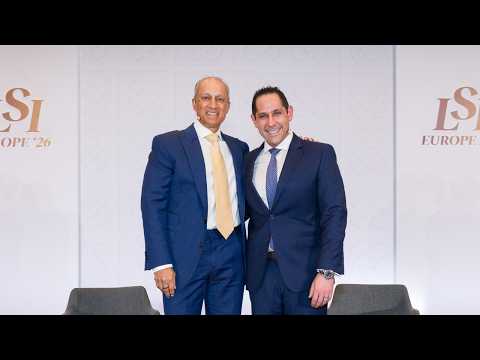
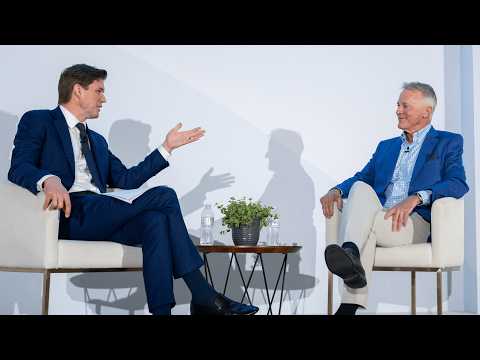
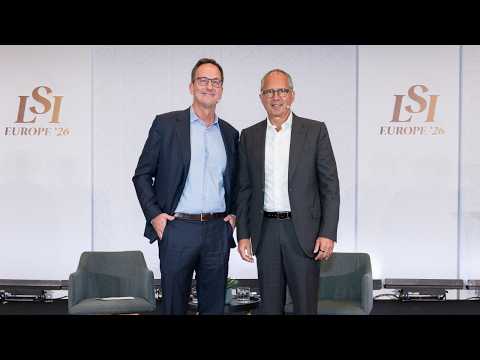
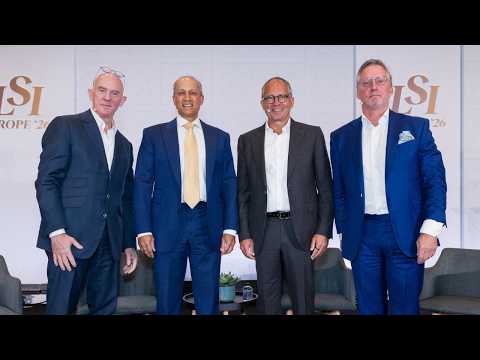
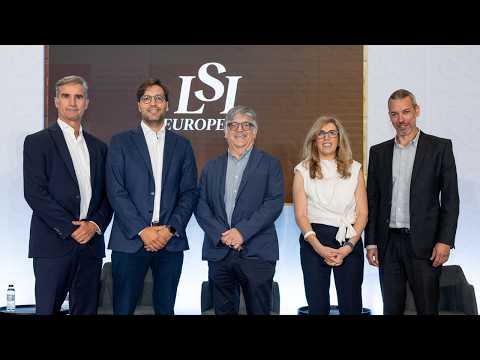
Okay, so ladies and gentlemen, thank you so much for attending this morning's panel session on Bridging the Gap equity and innovation in patient reach. It's a really interesting time. I think when we talk about equity, we talk about impact, we talk about patients, and we talk about the rights of individuals when it comes to patient care, when it comes to health care. I recently returned from Malawi having worked out there for a few weeks, and you immediately see the impact of equity. And of course, here in Southeast Asia and across Asia in general, we live in a world where we have both the most incredible hospitals, the most incredible health care. And then we have other elements where perhaps access to health care is not so available and actually quite difficult. And today we're going to explore a little bit around health care, around equity, but what it means, how innovation can really change that as well. Because I think every 100 years we see a disruption in health care, and I think now we're kind of in that predict that kind of that moment in time where we're going to see a difference. And there's a very impact orientated concept to how, certainly, founders, corporates are thinking about how they enable health care worldwide. And this ultimate question is health care a right? Is it privilege? And how do we create equity across across the world, potentially, and so I'd like to introduce you to the panel this morning. And we have an incredible panel that really know this space inside out. They're involved intently in this space. So please allow me to introduce you to our panel. So we have shalendra from mbechter, and shalendra has an incredible background in this space, both from a professional and a personal concept. We have Iris as well, from Quidd ortho, who is based currently in Beijing and leads the the JP business lead out there. We have Deepak, who's based in from Trinity life sciences and actually doing some amazing things in India right now. We'd love to hear a little bit more about that throughout and of course, Sam from Cornerstone robotics, based in Hong Kong, who are just growing at a phenomenal rate right now in this space, but maybe I can ask a nice warm up question. And Shailendra, I might start with you, but from your personal view, what does equity in healthcare mean to you? And from your perspective, where are the biggest gaps in reaching those underserved populations? And and from your experience as well, how have you seen innovation contribute to this opportunity?


Deepak Sahu  2:27  
I can start in my in my job, we we kind of sit in the boardrooms of all the bigger medical devices forms that discuss about their business plans, right? So at the end of the day, it always comes down to be, how do we treat health care is health care is a cost center, or is a revenue center for the economy? Because in the business model, we always take care of the people that could pay for it, and the innovation somehow is not frugal enough today to get to the access to every one of it as it is, right? So the covid vaccination is a great example where a part of the world has an access to it and the other part of the world did not. But what covid has taught us is innovation is not all about how could you make money at a higher price point? Innovation is about how you can make money with the volume and the price multiplier. So from my personal experience, is healthcare evolving to be a right or a privilege? There is more of an awareness of getting it towards the right of an individual, and making more and more technologies accessible to the part of the world that cannot do and even in the developed world, there is a part of the population. Medicaid in the US forms a part of the population, and a major part of the populism that cannot access a lot of different technologies because of the price pressure, right? So is it that the access to the innovation is not just a developing world problem, so I'm seeing some of the changes. Love to Discuss more and


Buzz Palmer  4:14  
Iris from your perspective, from the JPEG perspective, how do you think about this positioning?


Iris Lin  4:20  
Yeah, maybe it's just from JPEG. My previous role also include the global portfolio management. I think exactly to these perspective, we've seen a lot of changes after covid, especially especially in diagnostics. As you everyone knows, diagnostic plays a very important role in covid, and, of course, in a lot of infectious disease, and in terms of also equity, how we can get, you know, health care starting from a right diagnosis. To me, equity really means getting the right technology at the right cost to the right people, I think. And maybe more from a manufacturer perspective, I felt a lot of times, innovators focus on the high end technology. Really trying to bring the most fascinating innovation to the world, but forget about the cost piece. But a lot of time is really more about what's the right scenario. What's the really unmet needs of those patient and particular to your question, on jpg, we have different geography and different GDP situations we have to solve. So in that Purdue situation, my view on equity is really as a industry, how can we, especially in diagnostic where I've been working for more than 20 years, how can we really develop the right technology at the right cost to the right people? And happy to learn more from the rest of the panel?


Buzz Palmer  5:36  
Thank you. And Shailendra, you've got, you've got an experience from both the kind of the top down approach and the and the grassroots approach. How do how do you deal with that personally? How do you think through that?


Shailendra Bajpai  5:47  
Yeah, so pretty interesting. Interesting. So equity, for me, would be something where the voice of the user, the patient and caregiver, is integrated in designing the solution, not at the UT, and then delivering it to the door step. So when I say door step doesn't necessarily mean door step, but connecting to the last mile, I'll qualify it with some, probably some information data, which is pretty relevant for us to reflect upon. And I've used diabetes as a proxy of the chronic diseases and a large burden to the to the exchequer health care overall, or a trillion spend across the globe, and lopsided 491, billions in US alone, with 30 million people with diabetes, 700 million across the globe anyways, so 80% of the diabetes, as a proxy for chronic diseases, can be managed outside hospital. Hospital is a very expensive place to work in both for the, you know, for delivery of care and for the patient and caregivers to access it right. Of course. Second is, let me give you another example, and I will qualify a bit more on that. Indonesia. How many of you know? How many islands are there in Indonesia? I'll make it simple for you, 17,000 only 12,000 of them are inhabited. And trust me, on that 12 years back, they had 72 endocrinologist 68 of them in one town. No prizes for guessing, Jakarta. Can you believe that? And the primary care, as some of my friends and folks in the previous panel, they were talking about it, people downstream the primary care networks, communities, they didn't exactly know how to diagnose, manage, screen and follow up with them. So, you know, setting up a public, private partnership with the Ministry of Health, alongside the universal health healthcare rollout, it was pretty interesting to actually bring it to them. Empower the SCPs five over five years, 6000 of them, thanks to my previous organization, I was still in the medical affairs, so they were not counting the dollars, in the sense, at least I was not counting, not supposed to, and then we could deliver it to them. That was interesting. It also includes remote health care, virtual health care, daily consult and all of those stuff. It also includes education empowerment. It includes advocacy by involving the patients and caregivers. Interestingly, I was in some pitch decks or some places or something fantastic solutions. I believe that. I believe in them. I don't know how much voice this has been incorporated. Next time, probably I'll buddy in a patient or a PhD advocate with me to pitch it, and I, and I'm going to begin Deepak is going to give me, if you will, from that so, so my two cents on equity. I think I will deep dive on it. More


Buzz Palmer  8:22  
amazing. Thank you. And Sam, you're in a fairly unique position in that you have a very high tech robotics system. You work across the EU, Southeast Asia, India. How do you from your perspective? How do you think through this? How do you think through driving equity balance between different regions in the world as you develop your growth strategies.


Samuel Au  8:44  
Thank you so pretty much. As an innovator, I think, as a medical innovator or technologist, I think equity by sale is our ultimate goal in long term, but, but innovation take time, so it it is more like process. So sometimes people try to use a low hanging technology. They may solve some problem, but not the ultimate problem. So so one of the thing we we decide is if we in particular, in our field, like when we start the company, I think driving equity or driving accessibility is kind of the mission of the company, from Cornerstone robotics, and also, like really building our DNA. But one of the problem is, as all you said, robotics is a high end product, so if you really want to solve the problem, you cannot just just randomly apply some technology. You have to build everything from gone up. So that's why, over the past few years, we really decide to go full vertical integration, all the way to dig in into all the source component, core component in the in the project, for example, our robot has about, like over 13,000 parts, so most of them will decide in house custom design and also manufacture in house, including motors, gear, boss, sensor, operating system, energy, boss, K. More stapler, insufflator, pretty much, also like some other instrument. So pretty much, in order to do that, I mean, in order to create a balance, we also need to take some wins. So the risk is, Do you have confidence you can really solve all the core component if you cannot solve the cost core component? Pretty much, I think first, you may sacrifice, if you really want to try something becoming more accessible, you may sacrifice the performance or quality of the problem, which is something we want to we don't want to see in healthcare at the same time, if you buy lots of component from outside, the cost is high. So which cannot reach your goal, ultimate goal, which is to allow more people to assess the technology. So I think, as a technology as a technology innovator, we really to really take a lot of risk, to really dig into the details and really solve the core component problem before we start to build up the robot or some other high tech technology. If we can solve that problem, I believe we can deliver superior performance, also deliver superior cost control. At the end, you also have a superior like supply chain. We see them, which is very important given the current geopolitics.


Buzz Palmer  11:18  
Sam just on that, if you don't mind. So we recognize that there's this huge barriers and challenges to trying to drive this kind of equity and getting these technologies into into systems and into jurisdictions and geographies that perhaps cannot afford such a high tech concept. But as you say, you can reduce features, you can you can control the vertical integrations that you have full access. How would you balance this world of shareholders wanting high profits. For you, actually, from a personal impact perspective, Deepak, I'm going straight to you afterwards. But how would you balance that? So your drive is, we want to help everybody in the world, but we're pulled towards profits first, revenue and profits. But actually we want to help over here. How would you get that balance right, and how do you inform the shareholders of your sort of requirements or your goal or your purpose, if you will?


Samuel Au  12:08  
Yeah, that that's definitely not easy. I think shareholder may have their own interest. But at the same time, when we look at the long term niches in the field, pretty much if you can really create really like affordable system to touch on many people. I think at the end, the volume of the market will expand. So for example, in the field of robotic surgery, even though we have seen a lot of people using the robot, but the adoption rate in the entire laparoscopic surgery is just 5% so another 95% hasn't been touched most because of the course, become a big barrier in the field. So I would say is really to find the right strategic investor. They have patient they also have a long term vision. They are willing to work with you in this journey to stay long term. I think at the end is it's not a matter of getting an investor, getting for the right investor that can work with you for a long time. It's like marriage. There's no easily marriage. We always need to educate the spouse what's going on in the long term. But at the same time, of course, as a company, as an innovator, we need to deliver, deliver all the time. So when we promise we can deliver some sort of technology we have to deliver. It's not just buying something else and put them together to sell. So like an investor, it's not that easy, perfect and deep. And


Buzz Palmer  13:30  
I was a similar question to you. So how do you, how do you think through this in the markets that you play with?


Deepak Sahu  13:36  
Really great question before I take a step back and this, we always think about there is a conflict between shareholders, interest and equity, which is not there because everything revolves around the business plan. In every economy that you work with, there is always in the business plan something called a Death Valley. Let's take the concept of Indian ecosystem, right? You are launching a surgical robots the top 5% of the corporate hospital systems, the Apollo's of the world, the NAR health of the world. They're going to buy the expensive or the expensive robots possible. They may also buy the other robots that are available in the market to try it out, but your death fairly comes, comes to the purview after those 5% of the hospitals, because at that particular price point you cannot access the other hospitals, right? So if you as an individual, as an innovator, can bring the bring the investors into your journey, into the shareholder mentality that my unit economics and my innovation is guided in that particular direction, that would get into the health economics affair of it and can take it to a different level. I don't think both of them are in conflict and healthcare overall, everyone who invest in the healthcare as. An innovator. You also need to educate your shareholders that it's not a business where there is a single stakeholder. You have patients, you have providers, you have payers, you have policy makers, you have regulators. So everything needs to form into that goldilock zone for you to be successful in that particular domain, right? So from my perspective, whenever we sit inside the boardroom as an investor, we will always ask about the Death Valley. How are you overcoming the Death Valley? Don't give me a device that is $600,000 worth of a surgical robot. Well, my market could afford only 200,000 of it. So it's that conversation that that's drive and equity and profits are not at conflict. It has been long we're seeing them at conflict.


Buzz Palmer  15:49  
Thank you and Iris. How do you think about this? 


Iris Lin  15:51  
From that perspective, I totally agree. I think I totally agree that there's not definitely a conflict between equity versus shareholder value. Actually, I see a tremendous possibility of combining the two and achieving and having the booming situation in my point, adding to this point, I also felt as in, come back to unmet needs and the right technology at the right price. I'll give you example, flu test. We know there is a lot of flu test right molecular being the best, you know, 100% accuracy, gold standard, and all that expensive, three hours at least, to get that result, and a lot of conditions to test. Our company has a product three minutes to result, probably 85 to 90% accuracy. You know, it has a premium to the next level of technology, which probably 50% of accuracy is also quite fast, but it's not meeting the accuracy. But would you actually really wait for three hours for a you know emergency through situated results, right and accurate 100% or do you actually maybe pay you know equally, maybe a slightly lower, but much more expensive than you know, than the other average technology for a three minute result. That's come back to, you know, what's the really our methods, what's really the scenario, and what is the best pricing in that scenario to solve that problem? Oftentimes, especially in the diagnostic field, we saw a lot of technology, and me too companies to say, oh, on this technology, we can provide, you know, at lower cost. To me, it's not really a trade off between pricing versus like, volume, right? It's not a price volume again. It's more like, Okay, what is the right market for this particular technology? Hopefully it's more unique technology provide that unique value.


Buzz Palmer  17:38  
It's really interesting perspective. And so this, this idea that you know it's okay as long as you meet an unmet need, it's okay, and volumes and pricing is important. But how do we how do we progress when we know that perhaps some jurisdiction to geographies are just unable to pay the basic cost for access to a technology that we know saves lives and and I think, from a purpose perspective, from a value space perspective, we're all driven by impact. We all want to help fellow people live a happier, healthier, stronger life. So shalindra, from your perspective, we great insulin technology, you know works, does incredible things. How would you balance then this, this idea that you know, we know you can't afford it, but we want to help save your life without it. You know, unfortunately, your life will be shortened. How do you how do you balance that? How do you think through that?


Shailendra Bajpai  18:31  
Yeah, absolutely. I think, I think the essence would be, how do we communicate the value proposition of the offering? Number one, number two, technology does not mean, always mean, you know how to colonize Mars, as Steve Jobs said, you know, famously, simplicity is the greatest innovation. So what I mean here is that the world is moving towards value based healthcare. They're looking beyond only the dollars and the cents on that. The metric we are talking about, and probably using it most often, is, again, dollar and cents only. If you look into the social impact factor, and I pick it back to the forthcoming resolution, un high level committee meeting resolution, which will be released on 25th of September this year, they have clearly outlined that every $1 spent on preventive and early screening, diagnosis and management of chronic diseases will save $7 in LMICs over the next five years. Isn't that dollar and cent? So you can, you can actually make it, make an impact on that. Develop a technology which is for the masses, not I'm sorry, with due respect, not only for the classes, wider adoption, wider usage, married with the education. I'll give an example. I have one of my colleague in the room, and she has been living with type one diabetes since the age of nine years, 20 years, she did not have access to proper education. That is simple innovation, very, very basic innovation at the base of the pen needle or the insulin syringe. You know, a hub design, which is more contour this way. And. That can deliver an insulin with less variation, with less chances of getting into the muscle, and the better effect and better outcome. I mean, what do you need for that? It's such a simple innovation, but access to education. How can we, how can we bridge that that's important. How can you get into that? We're also talking about the high level and high end innovation. Of course, we should, we should work on that, but we need to integrate all and bring all the stakeholders. Especially what I what I'm seeing is that we haven't involved civil society, patients, patient groups, advocacy groups. Singapore is happening is, is now they have the voice of the patient integrated. I was challenged very badly in the patient advisory board. I still remember that 2009 in Brussels, and the guy told me on the stage, flat on my face. He said, I do more for you than you do for me. So we need to integrate. Listen to them. We're designing solutions for them. Probably integrate them. Demonstrate the value to the peers. You can. We can to raise the value, value proposition. And of course, I don't believe there is a conflict. It's not counter intuitive.


Buzz Palmer  20:57  
So Deepak, I might come to you. So we're seeing to your point. Shawn, we're seeing this kind of new drive of blended finance. We're seeing this new drive of blended business models, this new this new idea that actually we can develop two types of product, a high feature, high profit returning concept, and actually we have the ability to still meet an unmet need to Iris point with perhaps a technology that might take three hours rather than three minutes, but it meets the same agenda. So Deepak, from your perspective, we talk a lot about capitalism versus impact, and a lot between healthcare. Is it a right, or is it a privilege? Now, from your perspective, because you're kind of working right in this space, in sort of the impact funding perspective, how do you think through that? How do you both give comfort to LPs to investors that you're going to bring them a return, but actually drive impact in a meaningful way?


Deepak Sahu  21:53  
This is a really good question. We need to define what a return is, right. A return is a resultant of the good work you have done. A return is not the resultant of chasing an IRR on your fund, right? So if you do the pieces of the process right, your IRR will be a resultant of your investment. Now you, as an investor who is taking someone else's money, need to understand where it is coming from, right? And healthcare is always a patient kind of a business. You need to have more time to get the returns that you are wanting to get into the business for are there technologies that are like billion trillion returns within two years? Yes, there are. But overall, healthcare needs that patient capital. The the best way to define that with your investors is to let them know about what strategy you are following. Am I going for a huge robotics firm or high end tech? Am I going for a mass Am I going for equity and everywhere? How that parameters get captured in your overall funding process. And I will tell you like nine out of 10 funds when you go to raise your second, third and fourth fund, outside of the returns other investors, the bigger investors, are looking at the social impact factors. I cannot go to an European LP until I do not have a social impact factor. So this is a business interest for me, to have the capital deployed in such a way that it addresses both the stakeholders need. So it's just a what I'm trying to say is just a thought process change, rather than a lot of Excel change we we drive on our Excel. So that's what we will do. Once we set up the panel, we'll go and work on our Excel spec. But the thing is, is a thought process change, how can I drive both of those parameters to guide my LPS through the journey and have my investment thesis properly defined?


Buzz Palmer  24:18  
Yeah, brilliant. Thank you. So we've only got a few minutes left. So as a closing question, I'd like to ask, and I'll start Iris, I'll start with you, but it's for everybody on the panel. If you can make one change today to close this equity gap in healthcare and this equity gap in healthcare access through innovation, what would it


Iris Lin  24:37  
be one problem is still coming from an innovation and manufacture perspective, I really hope that we can have a more business model transformation, rather than only focus on technology information to hopefully drive lower cost development, so that in a sense, that whole project investment cost is lower, so that it's not. Just looking at the product, cost, pricing, price, volume we're talking about, but also the whole holistic project, how we can bring innovation, you know, in the right way. In a sense, I'm looking at my own case, you know, as a established company for 80 years, more than 80 years, how can we partner with many, you know, innovators to drive technology together, rather than everybody built from scratch. And that's also my purpose here. So again, I think it's great forum. You know, look forward to a lot of new opportunities to partner together to drive innovation


Buzz Palmer  25:31  
Perfect. Thank you and shalandra, the same question to you, Shailendra, same


Shailendra Bajpai  25:36  
question. So I believe, of course, innovation, and I said innovation comes in different shape, sizes and forms. We should keep our eyes and ears open to that. Please look back for a moment that no one is left behind. That's important, and I will have a solution. Even if we have the state of the art robotics or something, we can make a good use of them. Have you heard of lifeline express in India? It's a train with five to seven coaches who goes around his running since 1991 has done 150,000 surgeries over several years. Is done for free or a very marginal cost, funded by a social impact non profit in India. So there are different care delivery models, remote care, auti's and other things with the kind of penetration. The Last call for action for me to integrate innovation and technology would be, how do we integrate them into a universal health care package? Can we create a universal health literacy, zooming down, universal digital health literacy as a part of the universal health care programs? If we do that, we define what the success looks like into that bring in the right stakeholders. I think that would be good direction for me. Right?


Buzz Palmer  26:43  
And Sam, same question, how would you think about bridging the gap in this equity 


Samuel Au  26:47  
position, meaning, in which area in medical 


Buzz Palmer  26:51  
in healthcare in general? 


Samuel Au  26:52  
Yeah, I think pretty much if we can spend more time to look at the core component in the technology, I think a lot of medical device share some similar form of component, like operating system, like a motor gear or sensor, those are the cost we cannot reduce easily if we really don't have a more, like a affordable or accessible components. So I think, from the innovator perspective, if we can create some sort of modular system that can be shared among the entire field that may help to drive the accessibility quicker and earlier.


Buzz Palmer  27:27  
The last word is for you. So if there was one change that you would make to bridge this gap, what would it be?


Deepak Sahu  27:33  
It's the cost growth of the healthcare overall. If we could capture the cost growth all as an ecosystem, everyone being aware about because healthcare cost will always grow. There are only two economies where healthcare cost have crashed, is Cuba and Venezuela. But the economy has crashed, so healthcare costs will always grow. But if you can capture the growth of the healthcare cost and keep it to minimal, then the things will become, start getting more accessible. So all this, all the stakeholders, the providers, the payers, the patients, the innovators, everyone needs to think in that particular direction.


Buzz Palmer  28:12  
Amazing. Thank you, sir. I think it's clear that there's a there's a mindset change needed. I think we're seeing this drive happening across the healthcare system now impact social innovation is becoming more of a focus. We recognize that actually, perhaps we have a duty of care also to helping those that cannot afford health care, giving them access to health care. As I say, thank the panel today, Deepak, Iris, shalanju and Sam for your incredible insights. I think this is a growing topic. I think it's become extremely, an extreme key topic right now, given what's happening geopolitically around the world. And I thank you so much for your time today, and I look forward to seeing the progression of everything that you do in the future. So thank you so much, and please help me in thanking the panel today.


LSI USA ‘26 is filling fast. Secure your spot today to join Medtech and Healthtech leaders.

March 16th - 20th, 2026  Waldorf Astoria, Monarch Beach Register arrow