Diana Saraceni 0:06
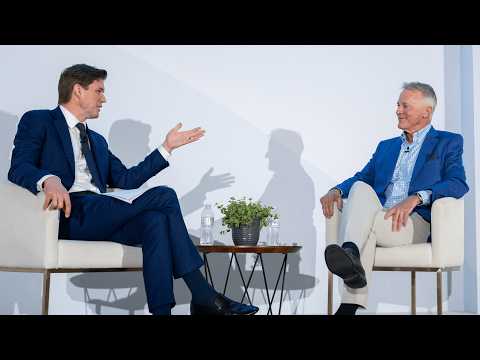
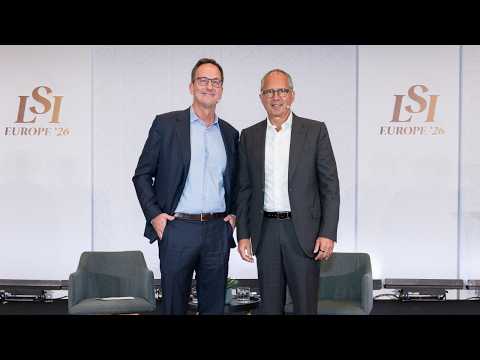
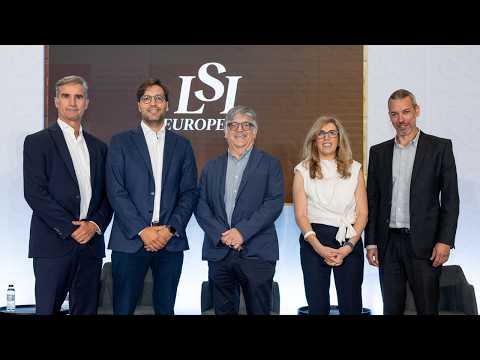
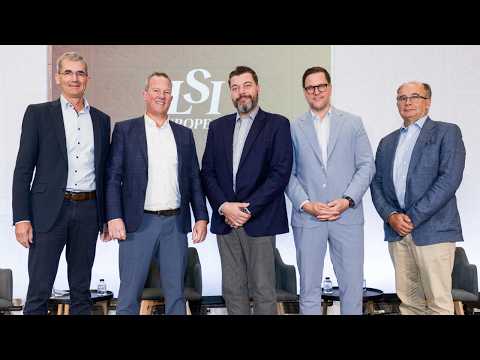
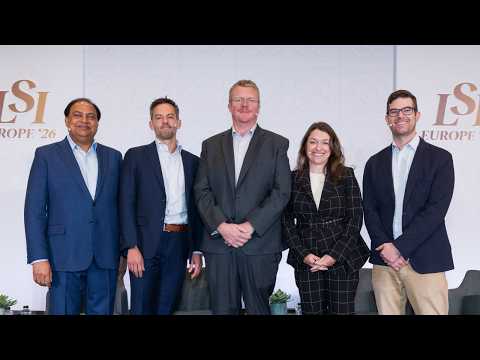
Okay, hi everyone. Welcome to this panel, which is going to talk about. We're going to talk about neuro tech and neuroscience The next way, the latest trend on the investment side, but most importantly, on innovation, more in general, we are definitely as a turning point in neuroscience and neurotech that's been latest development where treatment are being replaced, have been replaced, are being replaced or complemented, of drugs are being replaced or complemented with neuro steam that becomes more and more important for patient treatment, not only addressing local, specific local treatments, but also coming more and more into important disease and having a more systemic approach to the patient and that is going through the Brain, the very important organ that we survive on, and neuro steam has a specific role in that. So we gonna, I'm gonna share this panel with a set of very exciting stories and innovators and leaders in the space that I'm going to shortly introduce, just as a start myself and a managing partner at Tana cash active fund in med tech and also in neuro tech. And I'm going to introduce Matt, maybe to start on my list here that has is the CEO of paradromics. Paradromics develops brain computer interface. We're going to use this acronymous BCI a lot in this panel, so become familiar with it and to restore communication and dependence for people with severe neurological disease. You're going to tell us more about it later on, Matt alongside Gil, who's also working on BCI with a group, is General Manager and working with the group of 40 people on a number of indication, specifically, BCI event support to mobility, other than alongside other that you will elaborate on. Gail, we have Ken, a CEO of synaptica here, and you is a pioneer synaptic as a pioneer on neuromodulation for treatment of Alzheimer very challenging, and you're going to tell us more also Ken about it. And Hickey, CEO of Van EVO here, and this is a wearable approach developing a platform to address chronic condition and improve patients quality of life. So thank you very much for being with us today and sharing your thought and discussing this list of questions that I'm going to start with. And to start I will ask you simply, the very simple in one sentence or in one minute, what is the biggest unmat need that your company address? I mentioned a number of conditions, but the one quick medical need that you're going to solve with your innovation and your companies. So I'm going to start to Dean nikhai, if you want to, if you want
Yi-Kai Lo 3:16
to start, Sure, thanks. Thanks, Diana for the introduction. So at endovo, we are focused on spinal cord injury. So are trying to help their patients with a spinal cord and many of them with complete injury, to regain their function and restore their involuntary movement. So as we as we know that for patients with spinal injuries, although they are clinically complete, but they are residual neurons connecting below and above the injury. So we are developing the non invasive spinal cord neuro maturation technology to reactivate those neural pathway so that the patient can regain their boundary control as far we are focusing on we are working on right
Diana Saraceni 3:55
now. Thank you very much. Matt, go next perfect.
Matt Angle 3:57
So our company makes a brain computer interface. It is basically a modem for the brain to move data between a brain and a computer and a computer to a brain. So it's a very powerful platform technology. And we could talk about individual conditions that we're going to address, but I think I would frame it a little more broadly, which is that there are a lot of unmeet medical needs in neuro in neuroscience, in neurology, where the cure for those conditions could be decades away, it might not occur in our lifetime. Biology is a really slow problem to work on. But what's interesting about the brain is that in addition to being a biological system, it's also a data system. And so the insight, in my opinion, about sort of modern BCI is that the brain can be addressed at the data level, so that something that is not curable, like blindness, can be reframed in the standpoint of data, where you have high resolution camera that actually sends data to the visual system. Paralysis, you cannot regrow a spinal cord right now. You cannot reverse the effects of something like ALS, but the activity in someone who's parallel. Eyes, the activity in their motor cortex is intact, so a brain computer interface can grab that data and allow them to regain autonomy in their life. Even things like mental health right now or paradigms for mental health kind of suck right now, because you have to go see a psychiatrist and they ask you questions and they fill out a checklist, they give you a bunch of drugs, and you come back and do the same checklist. That's a very data impoverished way of working with the brain, but a brain computer interface can read out brain states in real time at high resolution and change the way that we see how medications work, how traditional neuromodulation works. So BCI as a platform is really about taking biological problems and reframing them as solvable technology solutions,
Diana Saraceni 5:40
fascinating platform approach, but nevertheless, you mentioned al s and mental health in your speech, so we come back to that. Maybe. Gil, yeah, hi everyone.
Gil Mandelbaum 5:50
So you know, I'm a neuroscientist, and training, and the way we think about therapies in the brain is really, there's there's the top of the brain, the cortical structures, and then there's a lot under them. And the way I think about it is that really, to solve the problem and the challenges of pathologies related to the brain, one needs to build therapies that allow for interaction between those subcortical, those deep part of the brain, and those superficial parts, those cortical structures. So at Iota, we're building technologies of exactly that sort. And in the context of therapy, we're developing therapies that really empower stroke survivors to gain back their mobility after they've exhausted all options. Currently in the US alone, there's hundreds of 1000s of stroke survivors that would apply under the criteria of what I just mentioned. Excited to talk with you all today.
Diana Saraceni 6:50
Thank you, Gil and Ken,
Ken Mariash 6:52
yeah, thanks, Diana and thanks everyone for being here. The unmet need that we're solving is a holy grail of medicine. It's Alzheimer's. Currently, there are two approved drugs for Alzheimer's. After 20 years of chasing the amyloid hypothesis, we finally have two drugs that do clear amyloid and the disease continues relentlessly. So these drugs barely work and they have dangerous side effects. There have been deaths in the active arms of both. So there's an enormous unmet need. But think about it from the human perspective. We're talking about Alzheimer's, right? It's a death sentence. You will die, and it's one of the most gruesome, horrendous deaths that you can imagine, because you're slowly losing your sense of what it means to be a human and you're dragging the entire family into it. Now let's flip the perspective. What if it was your parent, right? What would you do? Would you drop out of your workplace to take care of your mother? Would you take the you know, the time to get 24 hour nursing care? Could you afford a nursing home at over $100,000 a year that's not reimbursed? This is some of the human toll on the survivors of Alzheimer's from the patient perspectives caregivers, and that's the unmet need that we're also addressing with our brain stimulation therapy. It's a personalized approach to brain stimulation. We're using a safe, effective technology, TMS. We're pairing it with EEG in real time, and we're delivering it in a highly personalized way to the networks that drive human memory in the brain. By stimulating those brain networks that drive human memory, we strengthen them, and that's how our therapy works. We have two phase two is done and completed with completely successful results in Alzheimer's. And when was the last time you heard that completely successful results in Alzheimer's at six months and at 12 months on, all the gold standard end points that the FDA requires for drug approvals today? Wow.
Diana Saraceni 8:36
Okay, okay, guys, so let's start with giving a little bit of setting up, a little bit the scene on the investment side. On the investment world, right? The ecosystem, there are some in neuro tech in general, there's some segments which are attracting a lot of capital, a lot of money. Should probably mention the big raise in BCI, or company that I'll let you maybe mention Matt, but there was, there are a number of big raises in the space too, that you can also refer to. But what's your take on the investment landscape? Why are the investors so hot on anything that's PCI?
Matt Angle 9:16
So the thing I that I would say maybe in a more kind of conservative crowd like this, a kind of medical device crowd. I think a lot of people are looking at BCI and seeing the market enthusiasm as an act of extrapolation. And I'll explain that from the standpoint of people who are working in BCI and are enthusiastic about it and are expert in it, the reason why there's so much investment in BCI right now is actually because valuations are coming from an act of interpolation. And here's what I mean, we know what BCI can do today. We have one data point that says that people who are paralyzed can get brain implants that allow them to control a computer again speak again if they've lost. Ability to speak control robotic arms, we see early evidence that you can stimulate images in the brain with stimulating BCIs. We have another data point, which is that, just from a first principles perspective, the brain is the material substrate for all thought. Everything that we experience comes in through our sensory cortices, and everything we do leads our brain through our motor court, through our motor cortex, and we understand how neurons in these areas, roughly speaking, behave, and we know that if we capture enough of these neurons in the motor and sensory areas that we can provide a completely immersive experience for a person that would substitute for their sensory inputs and motor outputs. We know that every mental health condition, in the end, is taking place in the brain, and with a sufficient number of neurons that you can talk to, you can address a lot of mental health conditions. So what we see is that there are already markets where you can solve an unmet need and access like multi billion dollar markets with low clinical risk. And the future of BCI is one where devices are getting better. They're doubling, just like the semiconductor industry, just like downloads, beans for home internet, and they're moving toward this future that everyone gets really excited about, and people write sci fi movies about, and so there's this classic, like asymmetric, asymmetric risk profile for investors, where they say, worst case scenario. I buy in and I have a single digit billion dollar med device, kind of blockbuster exit. But that's like worst case scenario. But like, the future is uncapped. This could be the next internet it could be the next these companies. Could be the next Nvidia and Apple tech companies. And so I think that's why you're seeing people like Sam Altman leaning in, people like Elon leaning in is because they recognize this really interesting spread of opportunities.
Diana Saraceni 11:57
So that's how you raised 100 plus million right?
Matt Angle 12:01
Yeah, and $100 million is what poultry for the opportunities at ndci, and you see like the races are going to keep getting bigger,
Diana Saraceni 12:10
well, congratulations, because in this market conditions is not, is not obvious in general, but definitely must be the size of the addressable market that makes it a big and beyond what's imaginable today, right?
Matt Angle 12:23
Probably it's the combination of having this really, really big tam that everyone gets excited about, and also having first steps and beach head markets that are actually really defined from a clinical perspective, where you have unmet needs, you have high expectation for reimbursement. So it isn't just people aren't just like, spraying money out their brain. And I think there's a really good pathway.
Diana Saraceni 12:46
Thank you. And Ken, we've seen a number of good raise also on the Alzheimer's side. But it seems like it's despite the opportunity being very interesting, it's slowing down a bit at the moment. Is not like, big race like in on the BCI front. Why do you think it is? I mean, Al Siros is, is a, certainly, a huge medical need, right?
Ken Mariash 13:08
So I have a little bit of a, you know, a different perspective on the BCI space. And it's, it's hard to ever bet against Ilan. So I won't say there's no opportunity there. But, you know, we've been in the brain for a long time. We've been sensing in the brain for a long time. There have been companies that have attacked restoring site, like Second Sight, which unfortunately went bankrupt, but they were able to, to some degree, restore some site. So the BCI space has been around for a while. The cyborg promise of the BCI space is really interesting, and it's far over the future. Can you easily show a pathway to billions in sales? It's hard. It's over the horizon. It's difficult to see in a lot of areas of medicine, unless you're really addressing underlying root pathology of some of the biggest diseases in the world. And, you know, it's a terrible curse, the locked in syndrome. It's a small market, though we're talking about on the other side of that. You know, diseases like Alzheimer's that have 7 million affected lives in just the United States. As I said before, each one of those 7 million people has been handed a death sentence, so the difference in the time horizon is a lot shorter for Alzheimer's. But I'll address your question, Diana, by saying, you know, there's this thing called FOMO, and that's real, and there's this thing I call full list, which is maybe different. It's fear of looking stupid. Alzheimer's is such a tough space, such as tough space, there's been 99% failure rate in Alzheimer's, right? So investors are extremely, as you'd expect, you know, very sanguine about that failure rate, and so approach everything with a lot of caution and probably some bias, probably some bias. But here's what I would say. 20 years ago, I had my first phase three experience at Baxter, chasing the amyloid hypothesis. $20 billion in 20 years have gone by chasing the wrong. Target, cleaning up amyloid is like cleaning up the ashes after the house is burned down. Amyloid is not the rude pathology. We know that now, but it took 20 years to get to that realization. Also, in clinical trials, we have better inclusion criteria. It turns out that some of the trials before didn't enroll Alzheimer's patients. They were suspected Alzheimer's patients. What could go wrong? So there's been a lot of failures. We've learned a lot. We have better endpoints. We have better inclusion criteria. We have the ability to monitor endpoints that are more tied to dementia. Surprisingly, we used to measure cognition. In fact, that was my primary endpoint. My Baxter trial was ATIS cog. That is a 40 year old endpoint. We have better endpoints now, and we have better understanding of disease pathology. It's not perfect, but the way we're attacking Alzheimer's is completely different. We're inducing neuroplasticity, which strengthens the brain against the some of the pathology that it's the root of the pathology. So we've seen two successes now that are marginal successes of drugs getting over the line in Alzheimer's. I think it's starting to change. We're starting to see that it is possible to have approvals in this space. The biomarkers are a lot more helpful now too. There didn't used to be any biomarkers. Now I have too few fingers to count the number of biomarkers that we can track, as well as imaging and electrophysiology. So I think the tide is changing. Diana, we just have to see a few more successes.
Diana Saraceni 16:20
I hear it, yes. I mean, sometimes investors are, as myself, are not. They are not so much risk takers. I tend to agree with that, and there's certainly the approval on the drug side is, is a good encouragement for for the industry, okay, but now let's move on into a different a different question, neurotech invasive versus non invasive? Right? Non invasive, sometimes compliance issues, sometimes it's more visible to handle invasive by itself is more invasive. Implantable solutions are so clinical, viability, scalability, and, most importantly, reimbursement. Guys, how is that different in the two approaches? Gil? You want to start with
Gil Mandelbaum 17:09
that, sure. So, viability, scalability and reimbursement? Oh, that's a tough one. Okay. So, viability, viability, I think, I think invasive BCIs, when there. I think the ability to restore functions and the promise of restoring functions is outweigh the risk associated with the invasiveness. And I think as we gain more understanding of how to do that, right, I think that viability will only grow. I think in scalability, it's quite, quite the opposite. I think, as it goes without saying, non invasive neurotech is, by definition, more safe. I think there's more pathways to get that to patients and survivors at need, and ultimately the cost associated with those type of technologies are lower. So I would say, in the context of scalability, non invasive winds, I think that the hard one really is reimbursement. And there, I think, I think the jury is still out. I think, you know, when you think about invasive technologies, which is something I focus on more, I think we're kind of starting to see the third wave of what that is. So the first one was very academic heavy, understanding of decoding principles of the brain, mainly in universities across the globe. And then the second one, and you know, Matt, you've been part of that kind of a decade. Ish, a little more, you know, how do we try to translate that knowledge into what will be one day commercial technologies? And I think now we're starting to see the third, which is, how do we take that knowledge, and how do we take those technologies and really translate them into into viable businesses that are long term and to the non invasive? I won't speak to that path as I'm less familiar, but I think we're at a point where both of those are kind of the technology is ripe to go into that third phase. So there's technologies, but as we all know, you know, speaking about the US healthcare system, the US healthcare system does not buy technologies, right? The US healthcare system buys solutions to unmet clinical needs that are better than the current standard of care, and in that have the potential for long term to be viable economically. And I think that that's where the both technology is invasive and non invasive are going to be put to the test in the next few years of how to be able to to get there,
Diana Saraceni 19:41
yeah, you want to advocate for the non invasive wearable, maybe.
Yi-Kai Lo 19:47
So from who I really see, this is for both approaches, they have to be safe and effective, right? So for the patient, for the reimbursement, and they have to know they must deliver. A measurable, successful clinical outcome to be clinical viable. And then in terms of scalability, I think actually that depends on ease of use, cost, reliability, and whether the technology can be integrated seamlessly into the care pathway. And I do see that for the investor approach, probably the hurdle, or the barrier, is higher, because that no is higher is riskier, it requires surgery and probably more expensive must in terms of not investor approach, the barrier no for scalability will probably lower because it's not easy to deploy, and should be less expensive compared to compared to implantable technologies, but I think the similar to what kids say, right? The biggest hurdle is still reimbursement. I'm not sure you guys are aware of this or not, but there's only one nine basic BCI technology from neuro lucidion. The product is called FC hand. They got the CMS reimbursement coverage. So I think this kind of deliver message that as long as a product or B setting analogy can know, provide solid evidence to show clinical benefit to the patients, there's a likelihood that CMS will know, cover the cost, yeah, bring the know, the product into
Matt Angle 21:15
the coverage. And, okay, I think we need to reframe the concept of invasiveness and what is, in my opinion, a little bit more mature, like risk and harm based way, so are opioids invasive? I mean, like, yeah, you're really scalable. They're doing really well commercially. But I would argue that opioids are actually quite invasive. Recently, there was a published paper coming out of UCSF where someone received a DPS based approach for pain management that significantly reduces their pain levels. It's a surgery, but I don't know if I were suffering from chronic pain. I would sooner get the surgery than start taking opiates, electroconvulsive therapy. That was a really good non investment. But I think, like, obviously, you need to think about, what are you getting and what risks are you exposing yourself to? And surgical risk is just one of the possible types of risk. I mean, you can go on Amazon and buy TMS units that can stimulate your brain that aren't regulated by the FDA and can be make profound changes inside of your brain. I would say that that possibility is more dangerous than enrolling yourself in a clinical trial and being implanted by a neurosurgeon.
Diana Saraceni 22:33
I totally agree, by the way, and I looking for some regulatory changes in that as as a matter, as a part, as a parent above all, because, I mean, any kids can buy one online and stimulate and there's a whole trend of, yes, let's make us more efficient, more memory, more proficient. Oh, my God, no. That's without any prescriber being around any doctor.
Yi-Kai Lo 22:56
That's I may add a small note. So what I mean, no investments compete. Know, the risk compared between invasive and non invasive. I think there's a huge difference, right? One require surgery. One, one doesn't require surgery. And in terms of dB, as you mentioned, now, most of the DBS, they do not, you know, they implant the device in the chest. They open the pocket here, instead of open your scalp to put the device. I think there's different surgical procedure, different. No technique to note for the implantable devices. Yeah. Just want to add a note, yeah.
Diana Saraceni 23:27
Now, whether the question is, obviously the drugs can be much more invasive than what we think of, but on the device side, I mean stimulating nerves sometimes, or getting to to brain through through magnetic, magnetic approach, you somehow can do that with implantable and non implantable. That was more the question. Drugs, yes. Drugs, I definitely think
Matt Angle 23:50
LSD is really easy to deliver, right? Yeah, not surgical at all.
Diana Saraceni 23:55
Okay, so when one question to you, to you all with given that we we kind of touched on drugs, and how do we position device towards drag? Are we becoming more compared? Are we going to compete? Are we becoming more an add on? Are we on? Is it different indication by the indication within the within? Recently approval for neurosim devices on autoimmune to treat autoimmune diseases like arthritis, and that, to me, is a very much of a competing approach to very systemic drugs. And so you are addressing a market that is today is only addressable Alzheimer's. It's only addressable with drugs. So that's competing or
Ken Mariash 24:43
simple answer. Simple answer. It's not competing with drugs, no non invasive brain stimulation of the default mode network. What we're doing is we're inducing neuroplasticity network wide. Again. When you stimulate networks, they strengthen. That's the simple answer. She want the detailed answer. We just published an MOA paper in the top journal. On how this stimulation actually works, and it's totally complementary to the drugs. Alzheimer's is a freight train. We're not going to do much more than slow it down, but the hope is through synergistic combinations of stimulation and drugs, maybe one plus one equals three or four. So we'll see what the combinations bring. But just like HIV or some forms of cancer, most experts, in fact, almost all experts in the Alzheimer's space agree it's a combinatorial approach that will finally win the day and slow the disease to a halt. So we are the perfect substrate upon which to add a drug. Given we're non invasive, almost no side effects, we can add any drug on top of our stimulation.
Gil Mandelbaum 25:40
Thanks, Gail, yeah, I think in the context of BCI, specifically invasive BCIs, I don't think there's a drug alternative. I think we're going towards a new market that invasive BCIs ultimately will dominate, since no type of pharmacology, or at least not the way we deliver pharmacology today, or planning to deliver pharmacology in the next decade, we'll be able to compete with that said, I think generally speaking about about neurotech, I think you can actually compare it quite well, specifically the deep brain stimulation. In Deep Brain Stimulation patients that receive sub thalamic nucleus stimulation, their medication can be reduced between 30 to 60% global spill the stimulation, medication is usually reduced by less than that, and then overall, there's a back and forth between the treatment team, the neurologist and The patient to really tune both the technology and the drugs that are given. So I think that's going to be the prevailing notion when thinking about neurotech at large, but I do think in the context specifically of invasive BCIs that are listening to the brain, that are listening to information and utilizing that information to do things that have not been possible. I do not see how that electrical activity, how that translation into connecting with the world, is
Diana Saraceni 27:11
a competition. Sorry, Matt, you mentioned ALS and mental health. Dear, markets ALS, I don't think there's any drug approval. Maybe that's just one reason.
Matt Angle 27:23
There's a lot of work going on in that space right now. But there hasn't been a slim right. So I see, okay, on one hand on, there's an obvious place like neural prosthetics, where there's not a drug alternative, just on its face. I think what's more interesting is that there's a synergy between devices and drugs, you can see like pairing neuromodulation with plastinogens. So this is a way of enhancing the effect of neuromodulation by priming the body with small molecules. But you can also think of BCI as closing the loop on whether or not your small molecule is working in the brain right now, we don't have very good feedback on like, how these molecules are modulating neural states the we kind of estimate pharma kinetics based in a clinical trial, and then we just throw it out to a large population. And you know, a doctor gives people a standardized dose, but in a world of BCI, you could imagine closing the loop on these medications and people knowing what medicine to take when you could do things that you would never do in a current neuropharmacology paradigm, like mix drugs, there's a woman who work I really respect, Mariam shaneke, and she is a control theorist, and she came into neuroscience and originally designed a closed loop anesthesia controller, and now she's working in how to understand mood disorders and how to think about applying control theory to mood and other mental states. And I think that's the direction that this combination of BCI and and pharmacology could be going.
Ken Mariash 28:56
Can I just jump on that? This is this is so important, too. I love the idea that now we can measure brain states, whether you can do it passively with EEG, or in our case, we're perturbing the system with pulses, and seeing where the pulses travel in the brain, thus revealing the excitability of all parts of the brain. This is a great tool for the drug industry now to see the effects. You know, usually it's an indirect biomarker or some imprecise measure of mood, especially in depression, right? Which will be very subjective by definition, but now we can actually see the excitability of the brain in spatial, temporal domains with exquisite precision. TMS, evoked potentials are part of what we do, and they reveal the brain in a way nothing else does but tools like that, I think, are going to speed the runway for a lot of these drugs.
Diana Saraceni 29:43
Okay, I just gonna rephrase the question for you, because, I mean, we know the drugs when they're prescribed by clinicians, technicians are used like to prescribe and take a pill, and then somehow it's already hard and difficult to switch their mindset and say, go. Go to surgery, right? Instead of taking the pill, go to surgery, have the device implanted. But the one thing that's really not visible on the market, that doesn't happen very much in other indication, is prescribing a wearable that is an association that, for example, in migraine, there are a number of devices. It has taken a lot of time for the physician, even with good, very good data, to associate a wearable specifically to something that is treating a disease, right? How is that and what can you do to accelerate I mean, the wearable thing true.
Yi-Kai Lo 30:41
So I think the most important part will be to have the condition, to see the solid evidence right, the benefit, the clinical benefit that can, that can be, I would say, produced by the hardware intervention. So just a quick example. I think this kind of echoes the previous question. So, in our our our patients who in our pivotal trial, so we got a few patients who received the treatment without device for two months, and then after the two months, the her pen level got reduced, and then which allow the patients of probably more than one that they can decrease the use of the pain medication for a few couple months. And another example is that in June, I mean, I believe it's on June 20. We have a patient by Ukraine who got spinal injury, and I think Asia C or HD, and he is only 18 years old, and he got enrolled in one of our European side that on August, 25 and then simply, after five sections of treatment, he was able to move his left left leg. And then just few days ago, I was told that he got even better, improvement on his four fingers, a thumb and forefingers. And then he was first time able to use a fork, fork to to to eat a cake by himself. So I would say by showing this evidence to the clinician to the hospital, that's a key driver for the no to adopt the new technology and be willing to prescribe that to the patients.
Diana Saraceni 32:12
Thank you. Very interesting. We are left with five minutes to the end of the panel. So I'm going to jump on the sort of, the kind of the closing futuristic question for you all, yeah, I mean, we're seeing BCI. We are, as you, imaging sort of futuristic indications, even in not necessarily only on patients, but eventually on healthy individuals like the bionic man, but human enhancement in general. But it's really difficult to see how this is possible and what is, what is the time frame, and also, I mean figuring out what FDA has, where, where do they stand and what do they have to say about it? I'd be really interesting to hear your your thought on that, and maybe we start with the closer PCI people. Matt, you want to start it.
Matt Angle 33:13
So I think in some ways, from a technology standpoint, it isn't hard to see how it would happen. We're going to start developing systems. We're already building a speech prosthesis, this system that will also allows for direct computer control. So the same system that we provide to someone with ALS or spinal cord injury to interact with their computer is the kind of device that you might use to interact with the computer, if you were healthy and you didn't want to touch the computer. There will be a few generations from now better visual implants, better than Second Sight implants, the ones that are a minimal viable product. Those will continue to get better. And when you start approaching the acuity of, you know, 2020 vision, then you've just built the best AR VR system in the world. People are working on memory right now. Like the same kind of interventions that are helping people who are losing their memory enhance their memory, might end up being interventions that help people with normal levels of memory have super memory. And so I actually think these things will come about naturally, and it'll be a societal and regulatory question, how we handle it,
Diana Saraceni 34:26
and Gill or
Ken Mariash 34:29
I mean, we're boosting memory today, right where you don't have to imagine a future. We published it just a few months ago. Our second generation brain stimulation, the default mode network, boosts human memory by pretty astonishing amounts, 40, 50% more recall. Would you like to remember 40 to 50% more we did. We did the face name association test. I call it the cocktail party test. Can you remember someone's name? Most of us are pretty bad at that. Can you remember their face? Most of us are pretty good at that. Can you remember something about them like, oh, that's Ken. He's the CEO. Of synaptica, like, can you do that? That is what we're able to boost by something like 40 to 50% and it's durable to a week. So the questions that raises, Diana though, what disease are we treating? How is it regulated? You know,
Diana Saraceni 35:13
that is that a disease?
Ken Mariash 35:16
What's the indication for use? It's definitely not reimbursed. So it's cash pay. You know, it's human enhancement. It raises ethical questions on a societal level, only those who could pay for it could boost their kids SATs by, I don't know, 30 40% what is that worth? Well, now you have, you know, ethical dilemmas too, at a societal level. So this is where the world is going now, and we have to face it head on. Because, you know, the the idea that we're able to combine these different therapies to enhance human cognition, it's right here, happening now.
Diana Saraceni 35:47
But how is FDA approved the magnetic device to be on the market and deliver at home, bought online by kids, just to boost, to boost the memory eventually, without How is that even possible? Tell me about the FDA. Look, I said that must have been deck on anything else.
Ken Mariash 36:07
I talked to the former head of neuro stim for CD Rh, who happens to be our consultant, and even he's perplexed, it's a gray area we he still doesn't even know how FDA is going to view this. If you want claims, sure you have to go through an FDA submission, but if you want to, you know, allude to brain health, you know, maybe there's ways to circumvent. I'm a fan of doing things the right way, the scientific way. Do a rigorous study get your claims back, your claims with real data. But there will be those who don't,
Matt Angle 36:35
yeah, okay, you'll see a lot of wellness devices marketed online.
Diana Saraceni 36:42
By the way, I open the same
Matt Angle 36:46
under the skin wellness device,
Diana Saraceni 36:49
an identical thing in Europe. By the way, I'm you can buy it online here too. Okay, Gil, sorry, your your take on the bionic man of the future.
Gil Mandelbaum 37:00
I think, I think, as Matt said, I think that the boundaries already blurred. And you said this as well, and I think there continued to be blurred. I think in the context of invasive systems, the the FDA is still, of course, focused on therapeutic value, and correctly so. And I think there will need to be a more societal discussion of what is defined as healthy, what is defined as boosting. Of course, when we think about Alzheimer's, changing a memory and Alzheimer's is a therapeutic need, doing that for a high school student that is defined as healthy, of course, is not that will continue to be blurred, and ultimately, what I think will win is data, data and clinical trials, data that shows clear efficacy, data that shows right health economic outcomes. And I hope we can use that data to really build a robust view of how to utilize these technologies, sure.
Yi-Kai Lo 38:04
So, you know, in terms of human human enhancement for the healthy individuals, I think there's still probably a few more years for this to come. So if I, you know, I'm now think about this human enhancement in a broader sense, I'll point out to the elderly population. So how can we use a new technology to help the area people to work faster, work better, right, regain the mobility longer? I think that is like the problem that will be all face in the future. I think it's, from my perspective, probably more interesting to work on this area.
Diana Saraceni 38:36
Very good. I think we're just perfectly on time. So I'm going to thank you all for your very interesting point in the panel, and thank you all in the audience for listening to us and looking forward next, next, next opportunity. Thank you. Thank you.
Diana Saraceni 0:06
Okay, hi everyone. Welcome to this panel, which is going to talk about. We're going to talk about neuro tech and neuroscience The next way, the latest trend on the investment side, but most importantly, on innovation, more in general, we are definitely as a turning point in neuroscience and neurotech that's been latest development where treatment are being replaced, have been replaced, are being replaced or complemented, of drugs are being replaced or complemented with neuro steam that becomes more and more important for patient treatment, not only addressing local, specific local treatments, but also coming more and more into important disease and having a more systemic approach to the patient and that is going through the Brain, the very important organ that we survive on, and neuro steam has a specific role in that. So we gonna, I'm gonna share this panel with a set of very exciting stories and innovators and leaders in the space that I'm going to shortly introduce, just as a start myself and a managing partner at Tana cash active fund in med tech and also in neuro tech. And I'm going to introduce Matt, maybe to start on my list here that has is the CEO of paradromics. Paradromics develops brain computer interface. We're going to use this acronymous BCI a lot in this panel, so become familiar with it and to restore communication and dependence for people with severe neurological disease. You're going to tell us more about it later on, Matt alongside Gil, who's also working on BCI with a group, is General Manager and working with the group of 40 people on a number of indication, specifically, BCI event support to mobility, other than alongside other that you will elaborate on. Gail, we have Ken, a CEO of synaptica here, and you is a pioneer synaptic as a pioneer on neuromodulation for treatment of Alzheimer very challenging, and you're going to tell us more also Ken about it. And Hickey, CEO of Van EVO here, and this is a wearable approach developing a platform to address chronic condition and improve patients quality of life. So thank you very much for being with us today and sharing your thought and discussing this list of questions that I'm going to start with. And to start I will ask you simply, the very simple in one sentence or in one minute, what is the biggest unmat need that your company address? I mentioned a number of conditions, but the one quick medical need that you're going to solve with your innovation and your companies. So I'm going to start to Dean nikhai, if you want to, if you want
Yi-Kai Lo 3:16
to start, Sure, thanks. Thanks, Diana for the introduction. So at endovo, we are focused on spinal cord injury. So are trying to help their patients with a spinal cord and many of them with complete injury, to regain their function and restore their involuntary movement. So as we as we know that for patients with spinal injuries, although they are clinically complete, but they are residual neurons connecting below and above the injury. So we are developing the non invasive spinal cord neuro maturation technology to reactivate those neural pathway so that the patient can regain their boundary control as far we are focusing on we are working on right
Diana Saraceni 3:55
now. Thank you very much. Matt, go next perfect.
Matt Angle 3:57
So our company makes a brain computer interface. It is basically a modem for the brain to move data between a brain and a computer and a computer to a brain. So it's a very powerful platform technology. And we could talk about individual conditions that we're going to address, but I think I would frame it a little more broadly, which is that there are a lot of unmeet medical needs in neuro in neuroscience, in neurology, where the cure for those conditions could be decades away, it might not occur in our lifetime. Biology is a really slow problem to work on. But what's interesting about the brain is that in addition to being a biological system, it's also a data system. And so the insight, in my opinion, about sort of modern BCI is that the brain can be addressed at the data level, so that something that is not curable, like blindness, can be reframed in the standpoint of data, where you have high resolution camera that actually sends data to the visual system. Paralysis, you cannot regrow a spinal cord right now. You cannot reverse the effects of something like ALS, but the activity in someone who's parallel. Eyes, the activity in their motor cortex is intact, so a brain computer interface can grab that data and allow them to regain autonomy in their life. Even things like mental health right now or paradigms for mental health kind of suck right now, because you have to go see a psychiatrist and they ask you questions and they fill out a checklist, they give you a bunch of drugs, and you come back and do the same checklist. That's a very data impoverished way of working with the brain, but a brain computer interface can read out brain states in real time at high resolution and change the way that we see how medications work, how traditional neuromodulation works. So BCI as a platform is really about taking biological problems and reframing them as solvable technology solutions,
Diana Saraceni 5:40
fascinating platform approach, but nevertheless, you mentioned al s and mental health in your speech, so we come back to that. Maybe. Gil, yeah, hi everyone.
Gil Mandelbaum 5:50
So you know, I'm a neuroscientist, and training, and the way we think about therapies in the brain is really, there's there's the top of the brain, the cortical structures, and then there's a lot under them. And the way I think about it is that really, to solve the problem and the challenges of pathologies related to the brain, one needs to build therapies that allow for interaction between those subcortical, those deep part of the brain, and those superficial parts, those cortical structures. So at Iota, we're building technologies of exactly that sort. And in the context of therapy, we're developing therapies that really empower stroke survivors to gain back their mobility after they've exhausted all options. Currently in the US alone, there's hundreds of 1000s of stroke survivors that would apply under the criteria of what I just mentioned. Excited to talk with you all today.
Diana Saraceni 6:50
Thank you, Gil and Ken,
Ken Mariash 6:52
yeah, thanks, Diana and thanks everyone for being here. The unmet need that we're solving is a holy grail of medicine. It's Alzheimer's. Currently, there are two approved drugs for Alzheimer's. After 20 years of chasing the amyloid hypothesis, we finally have two drugs that do clear amyloid and the disease continues relentlessly. So these drugs barely work and they have dangerous side effects. There have been deaths in the active arms of both. So there's an enormous unmet need. But think about it from the human perspective. We're talking about Alzheimer's, right? It's a death sentence. You will die, and it's one of the most gruesome, horrendous deaths that you can imagine, because you're slowly losing your sense of what it means to be a human and you're dragging the entire family into it. Now let's flip the perspective. What if it was your parent, right? What would you do? Would you drop out of your workplace to take care of your mother? Would you take the you know, the time to get 24 hour nursing care? Could you afford a nursing home at over $100,000 a year that's not reimbursed? This is some of the human toll on the survivors of Alzheimer's from the patient perspectives caregivers, and that's the unmet need that we're also addressing with our brain stimulation therapy. It's a personalized approach to brain stimulation. We're using a safe, effective technology, TMS. We're pairing it with EEG in real time, and we're delivering it in a highly personalized way to the networks that drive human memory in the brain. By stimulating those brain networks that drive human memory, we strengthen them, and that's how our therapy works. We have two phase two is done and completed with completely successful results in Alzheimer's. And when was the last time you heard that completely successful results in Alzheimer's at six months and at 12 months on, all the gold standard end points that the FDA requires for drug approvals today? Wow.
Diana Saraceni 8:36
Okay, okay, guys, so let's start with giving a little bit of setting up, a little bit the scene on the investment side. On the investment world, right? The ecosystem, there are some in neuro tech in general, there's some segments which are attracting a lot of capital, a lot of money. Should probably mention the big raise in BCI, or company that I'll let you maybe mention Matt, but there was, there are a number of big raises in the space too, that you can also refer to. But what's your take on the investment landscape? Why are the investors so hot on anything that's PCI?
Matt Angle 9:16
So the thing I that I would say maybe in a more kind of conservative crowd like this, a kind of medical device crowd. I think a lot of people are looking at BCI and seeing the market enthusiasm as an act of extrapolation. And I'll explain that from the standpoint of people who are working in BCI and are enthusiastic about it and are expert in it, the reason why there's so much investment in BCI right now is actually because valuations are coming from an act of interpolation. And here's what I mean, we know what BCI can do today. We have one data point that says that people who are paralyzed can get brain implants that allow them to control a computer again speak again if they've lost. Ability to speak control robotic arms, we see early evidence that you can stimulate images in the brain with stimulating BCIs. We have another data point, which is that, just from a first principles perspective, the brain is the material substrate for all thought. Everything that we experience comes in through our sensory cortices, and everything we do leads our brain through our motor court, through our motor cortex, and we understand how neurons in these areas, roughly speaking, behave, and we know that if we capture enough of these neurons in the motor and sensory areas that we can provide a completely immersive experience for a person that would substitute for their sensory inputs and motor outputs. We know that every mental health condition, in the end, is taking place in the brain, and with a sufficient number of neurons that you can talk to, you can address a lot of mental health conditions. So what we see is that there are already markets where you can solve an unmet need and access like multi billion dollar markets with low clinical risk. And the future of BCI is one where devices are getting better. They're doubling, just like the semiconductor industry, just like downloads, beans for home internet, and they're moving toward this future that everyone gets really excited about, and people write sci fi movies about, and so there's this classic, like asymmetric, asymmetric risk profile for investors, where they say, worst case scenario. I buy in and I have a single digit billion dollar med device, kind of blockbuster exit. But that's like worst case scenario. But like, the future is uncapped. This could be the next internet it could be the next these companies. Could be the next Nvidia and Apple tech companies. And so I think that's why you're seeing people like Sam Altman leaning in, people like Elon leaning in is because they recognize this really interesting spread of opportunities.
Diana Saraceni 11:57
So that's how you raised 100 plus million right?
Matt Angle 12:01
Yeah, and $100 million is what poultry for the opportunities at ndci, and you see like the races are going to keep getting bigger,
Diana Saraceni 12:10
well, congratulations, because in this market conditions is not, is not obvious in general, but definitely must be the size of the addressable market that makes it a big and beyond what's imaginable today, right?
Matt Angle 12:23
Probably it's the combination of having this really, really big tam that everyone gets excited about, and also having first steps and beach head markets that are actually really defined from a clinical perspective, where you have unmet needs, you have high expectation for reimbursement. So it isn't just people aren't just like, spraying money out their brain. And I think there's a really good pathway.
Diana Saraceni 12:46
Thank you. And Ken, we've seen a number of good raise also on the Alzheimer's side. But it seems like it's despite the opportunity being very interesting, it's slowing down a bit at the moment. Is not like, big race like in on the BCI front. Why do you think it is? I mean, Al Siros is, is a, certainly, a huge medical need, right?
Ken Mariash 13:08
So I have a little bit of a, you know, a different perspective on the BCI space. And it's, it's hard to ever bet against Ilan. So I won't say there's no opportunity there. But, you know, we've been in the brain for a long time. We've been sensing in the brain for a long time. There have been companies that have attacked restoring site, like Second Sight, which unfortunately went bankrupt, but they were able to, to some degree, restore some site. So the BCI space has been around for a while. The cyborg promise of the BCI space is really interesting, and it's far over the future. Can you easily show a pathway to billions in sales? It's hard. It's over the horizon. It's difficult to see in a lot of areas of medicine, unless you're really addressing underlying root pathology of some of the biggest diseases in the world. And, you know, it's a terrible curse, the locked in syndrome. It's a small market, though we're talking about on the other side of that. You know, diseases like Alzheimer's that have 7 million affected lives in just the United States. As I said before, each one of those 7 million people has been handed a death sentence, so the difference in the time horizon is a lot shorter for Alzheimer's. But I'll address your question, Diana, by saying, you know, there's this thing called FOMO, and that's real, and there's this thing I call full list, which is maybe different. It's fear of looking stupid. Alzheimer's is such a tough space, such as tough space, there's been 99% failure rate in Alzheimer's, right? So investors are extremely, as you'd expect, you know, very sanguine about that failure rate, and so approach everything with a lot of caution and probably some bias, probably some bias. But here's what I would say. 20 years ago, I had my first phase three experience at Baxter, chasing the amyloid hypothesis. $20 billion in 20 years have gone by chasing the wrong. Target, cleaning up amyloid is like cleaning up the ashes after the house is burned down. Amyloid is not the rude pathology. We know that now, but it took 20 years to get to that realization. Also, in clinical trials, we have better inclusion criteria. It turns out that some of the trials before didn't enroll Alzheimer's patients. They were suspected Alzheimer's patients. What could go wrong? So there's been a lot of failures. We've learned a lot. We have better endpoints. We have better inclusion criteria. We have the ability to monitor endpoints that are more tied to dementia. Surprisingly, we used to measure cognition. In fact, that was my primary endpoint. My Baxter trial was ATIS cog. That is a 40 year old endpoint. We have better endpoints now, and we have better understanding of disease pathology. It's not perfect, but the way we're attacking Alzheimer's is completely different. We're inducing neuroplasticity, which strengthens the brain against the some of the pathology that it's the root of the pathology. So we've seen two successes now that are marginal successes of drugs getting over the line in Alzheimer's. I think it's starting to change. We're starting to see that it is possible to have approvals in this space. The biomarkers are a lot more helpful now too. There didn't used to be any biomarkers. Now I have too few fingers to count the number of biomarkers that we can track, as well as imaging and electrophysiology. So I think the tide is changing. Diana, we just have to see a few more successes.
Diana Saraceni 16:20
I hear it, yes. I mean, sometimes investors are, as myself, are not. They are not so much risk takers. I tend to agree with that, and there's certainly the approval on the drug side is, is a good encouragement for for the industry, okay, but now let's move on into a different a different question, neurotech invasive versus non invasive? Right? Non invasive, sometimes compliance issues, sometimes it's more visible to handle invasive by itself is more invasive. Implantable solutions are so clinical, viability, scalability, and, most importantly, reimbursement. Guys, how is that different in the two approaches? Gil? You want to start with
Gil Mandelbaum 17:09
that, sure. So, viability, scalability and reimbursement? Oh, that's a tough one. Okay. So, viability, viability, I think, I think invasive BCIs, when there. I think the ability to restore functions and the promise of restoring functions is outweigh the risk associated with the invasiveness. And I think as we gain more understanding of how to do that, right, I think that viability will only grow. I think in scalability, it's quite, quite the opposite. I think, as it goes without saying, non invasive neurotech is, by definition, more safe. I think there's more pathways to get that to patients and survivors at need, and ultimately the cost associated with those type of technologies are lower. So I would say, in the context of scalability, non invasive winds, I think that the hard one really is reimbursement. And there, I think, I think the jury is still out. I think, you know, when you think about invasive technologies, which is something I focus on more, I think we're kind of starting to see the third wave of what that is. So the first one was very academic heavy, understanding of decoding principles of the brain, mainly in universities across the globe. And then the second one, and you know, Matt, you've been part of that kind of a decade. Ish, a little more, you know, how do we try to translate that knowledge into what will be one day commercial technologies? And I think now we're starting to see the third, which is, how do we take that knowledge, and how do we take those technologies and really translate them into into viable businesses that are long term and to the non invasive? I won't speak to that path as I'm less familiar, but I think we're at a point where both of those are kind of the technology is ripe to go into that third phase. So there's technologies, but as we all know, you know, speaking about the US healthcare system, the US healthcare system does not buy technologies, right? The US healthcare system buys solutions to unmet clinical needs that are better than the current standard of care, and in that have the potential for long term to be viable economically. And I think that that's where the both technology is invasive and non invasive are going to be put to the test in the next few years of how to be able to to get there,
Diana Saraceni 19:41
yeah, you want to advocate for the non invasive wearable, maybe.
Yi-Kai Lo 19:47
So from who I really see, this is for both approaches, they have to be safe and effective, right? So for the patient, for the reimbursement, and they have to know they must deliver. A measurable, successful clinical outcome to be clinical viable. And then in terms of scalability, I think actually that depends on ease of use, cost, reliability, and whether the technology can be integrated seamlessly into the care pathway. And I do see that for the investor approach, probably the hurdle, or the barrier, is higher, because that no is higher is riskier, it requires surgery and probably more expensive must in terms of not investor approach, the barrier no for scalability will probably lower because it's not easy to deploy, and should be less expensive compared to compared to implantable technologies, but I think the similar to what kids say, right? The biggest hurdle is still reimbursement. I'm not sure you guys are aware of this or not, but there's only one nine basic BCI technology from neuro lucidion. The product is called FC hand. They got the CMS reimbursement coverage. So I think this kind of deliver message that as long as a product or B setting analogy can know, provide solid evidence to show clinical benefit to the patients, there's a likelihood that CMS will know, cover the cost, yeah, bring the know, the product into
Matt Angle 21:15
the coverage. And, okay, I think we need to reframe the concept of invasiveness and what is, in my opinion, a little bit more mature, like risk and harm based way, so are opioids invasive? I mean, like, yeah, you're really scalable. They're doing really well commercially. But I would argue that opioids are actually quite invasive. Recently, there was a published paper coming out of UCSF where someone received a DPS based approach for pain management that significantly reduces their pain levels. It's a surgery, but I don't know if I were suffering from chronic pain. I would sooner get the surgery than start taking opiates, electroconvulsive therapy. That was a really good non investment. But I think, like, obviously, you need to think about, what are you getting and what risks are you exposing yourself to? And surgical risk is just one of the possible types of risk. I mean, you can go on Amazon and buy TMS units that can stimulate your brain that aren't regulated by the FDA and can be make profound changes inside of your brain. I would say that that possibility is more dangerous than enrolling yourself in a clinical trial and being implanted by a neurosurgeon.
Diana Saraceni 22:33
I totally agree, by the way, and I looking for some regulatory changes in that as as a matter, as a part, as a parent above all, because, I mean, any kids can buy one online and stimulate and there's a whole trend of, yes, let's make us more efficient, more memory, more proficient. Oh, my God, no. That's without any prescriber being around any doctor.
Yi-Kai Lo 22:56
That's I may add a small note. So what I mean, no investments compete. Know, the risk compared between invasive and non invasive. I think there's a huge difference, right? One require surgery. One, one doesn't require surgery. And in terms of dB, as you mentioned, now, most of the DBS, they do not, you know, they implant the device in the chest. They open the pocket here, instead of open your scalp to put the device. I think there's different surgical procedure, different. No technique to note for the implantable devices. Yeah. Just want to add a note, yeah.
Diana Saraceni 23:27
Now, whether the question is, obviously the drugs can be much more invasive than what we think of, but on the device side, I mean stimulating nerves sometimes, or getting to to brain through through magnetic, magnetic approach, you somehow can do that with implantable and non implantable. That was more the question. Drugs, yes. Drugs, I definitely think
Matt Angle 23:50
LSD is really easy to deliver, right? Yeah, not surgical at all.
Diana Saraceni 23:55
Okay, so when one question to you, to you all with given that we we kind of touched on drugs, and how do we position device towards drag? Are we becoming more compared? Are we going to compete? Are we becoming more an add on? Are we on? Is it different indication by the indication within the within? Recently approval for neurosim devices on autoimmune to treat autoimmune diseases like arthritis, and that, to me, is a very much of a competing approach to very systemic drugs. And so you are addressing a market that is today is only addressable Alzheimer's. It's only addressable with drugs. So that's competing or
Ken Mariash 24:43
simple answer. Simple answer. It's not competing with drugs, no non invasive brain stimulation of the default mode network. What we're doing is we're inducing neuroplasticity network wide. Again. When you stimulate networks, they strengthen. That's the simple answer. She want the detailed answer. We just published an MOA paper in the top journal. On how this stimulation actually works, and it's totally complementary to the drugs. Alzheimer's is a freight train. We're not going to do much more than slow it down, but the hope is through synergistic combinations of stimulation and drugs, maybe one plus one equals three or four. So we'll see what the combinations bring. But just like HIV or some forms of cancer, most experts, in fact, almost all experts in the Alzheimer's space agree it's a combinatorial approach that will finally win the day and slow the disease to a halt. So we are the perfect substrate upon which to add a drug. Given we're non invasive, almost no side effects, we can add any drug on top of our stimulation.
Gil Mandelbaum 25:40
Thanks, Gail, yeah, I think in the context of BCI, specifically invasive BCIs, I don't think there's a drug alternative. I think we're going towards a new market that invasive BCIs ultimately will dominate, since no type of pharmacology, or at least not the way we deliver pharmacology today, or planning to deliver pharmacology in the next decade, we'll be able to compete with that said, I think generally speaking about about neurotech, I think you can actually compare it quite well, specifically the deep brain stimulation. In Deep Brain Stimulation patients that receive sub thalamic nucleus stimulation, their medication can be reduced between 30 to 60% global spill the stimulation, medication is usually reduced by less than that, and then overall, there's a back and forth between the treatment team, the neurologist and The patient to really tune both the technology and the drugs that are given. So I think that's going to be the prevailing notion when thinking about neurotech at large, but I do think in the context specifically of invasive BCIs that are listening to the brain, that are listening to information and utilizing that information to do things that have not been possible. I do not see how that electrical activity, how that translation into connecting with the world, is
Diana Saraceni 27:11
a competition. Sorry, Matt, you mentioned ALS and mental health. Dear, markets ALS, I don't think there's any drug approval. Maybe that's just one reason.
Matt Angle 27:23
There's a lot of work going on in that space right now. But there hasn't been a slim right. So I see, okay, on one hand on, there's an obvious place like neural prosthetics, where there's not a drug alternative, just on its face. I think what's more interesting is that there's a synergy between devices and drugs, you can see like pairing neuromodulation with plastinogens. So this is a way of enhancing the effect of neuromodulation by priming the body with small molecules. But you can also think of BCI as closing the loop on whether or not your small molecule is working in the brain right now, we don't have very good feedback on like, how these molecules are modulating neural states the we kind of estimate pharma kinetics based in a clinical trial, and then we just throw it out to a large population. And you know, a doctor gives people a standardized dose, but in a world of BCI, you could imagine closing the loop on these medications and people knowing what medicine to take when you could do things that you would never do in a current neuropharmacology paradigm, like mix drugs, there's a woman who work I really respect, Mariam shaneke, and she is a control theorist, and she came into neuroscience and originally designed a closed loop anesthesia controller, and now she's working in how to understand mood disorders and how to think about applying control theory to mood and other mental states. And I think that's the direction that this combination of BCI and and pharmacology could be going.
Ken Mariash 28:56
Can I just jump on that? This is this is so important, too. I love the idea that now we can measure brain states, whether you can do it passively with EEG, or in our case, we're perturbing the system with pulses, and seeing where the pulses travel in the brain, thus revealing the excitability of all parts of the brain. This is a great tool for the drug industry now to see the effects. You know, usually it's an indirect biomarker or some imprecise measure of mood, especially in depression, right? Which will be very subjective by definition, but now we can actually see the excitability of the brain in spatial, temporal domains with exquisite precision. TMS, evoked potentials are part of what we do, and they reveal the brain in a way nothing else does but tools like that, I think, are going to speed the runway for a lot of these drugs.
Diana Saraceni 29:43
Okay, I just gonna rephrase the question for you, because, I mean, we know the drugs when they're prescribed by clinicians, technicians are used like to prescribe and take a pill, and then somehow it's already hard and difficult to switch their mindset and say, go. Go to surgery, right? Instead of taking the pill, go to surgery, have the device implanted. But the one thing that's really not visible on the market, that doesn't happen very much in other indication, is prescribing a wearable that is an association that, for example, in migraine, there are a number of devices. It has taken a lot of time for the physician, even with good, very good data, to associate a wearable specifically to something that is treating a disease, right? How is that and what can you do to accelerate I mean, the wearable thing true.
Yi-Kai Lo 30:41
So I think the most important part will be to have the condition, to see the solid evidence right, the benefit, the clinical benefit that can, that can be, I would say, produced by the hardware intervention. So just a quick example. I think this kind of echoes the previous question. So, in our our our patients who in our pivotal trial, so we got a few patients who received the treatment without device for two months, and then after the two months, the her pen level got reduced, and then which allow the patients of probably more than one that they can decrease the use of the pain medication for a few couple months. And another example is that in June, I mean, I believe it's on June 20. We have a patient by Ukraine who got spinal injury, and I think Asia C or HD, and he is only 18 years old, and he got enrolled in one of our European side that on August, 25 and then simply, after five sections of treatment, he was able to move his left left leg. And then just few days ago, I was told that he got even better, improvement on his four fingers, a thumb and forefingers. And then he was first time able to use a fork, fork to to to eat a cake by himself. So I would say by showing this evidence to the clinician to the hospital, that's a key driver for the no to adopt the new technology and be willing to prescribe that to the patients.
Diana Saraceni 32:12
Thank you. Very interesting. We are left with five minutes to the end of the panel. So I'm going to jump on the sort of, the kind of the closing futuristic question for you all, yeah, I mean, we're seeing BCI. We are, as you, imaging sort of futuristic indications, even in not necessarily only on patients, but eventually on healthy individuals like the bionic man, but human enhancement in general. But it's really difficult to see how this is possible and what is, what is the time frame, and also, I mean figuring out what FDA has, where, where do they stand and what do they have to say about it? I'd be really interesting to hear your your thought on that, and maybe we start with the closer PCI people. Matt, you want to start it.
Matt Angle 33:13
So I think in some ways, from a technology standpoint, it isn't hard to see how it would happen. We're going to start developing systems. We're already building a speech prosthesis, this system that will also allows for direct computer control. So the same system that we provide to someone with ALS or spinal cord injury to interact with their computer is the kind of device that you might use to interact with the computer, if you were healthy and you didn't want to touch the computer. There will be a few generations from now better visual implants, better than Second Sight implants, the ones that are a minimal viable product. Those will continue to get better. And when you start approaching the acuity of, you know, 2020 vision, then you've just built the best AR VR system in the world. People are working on memory right now. Like the same kind of interventions that are helping people who are losing their memory enhance their memory, might end up being interventions that help people with normal levels of memory have super memory. And so I actually think these things will come about naturally, and it'll be a societal and regulatory question, how we handle it,
Diana Saraceni 34:26
and Gill or
Ken Mariash 34:29
I mean, we're boosting memory today, right where you don't have to imagine a future. We published it just a few months ago. Our second generation brain stimulation, the default mode network, boosts human memory by pretty astonishing amounts, 40, 50% more recall. Would you like to remember 40 to 50% more we did. We did the face name association test. I call it the cocktail party test. Can you remember someone's name? Most of us are pretty bad at that. Can you remember their face? Most of us are pretty good at that. Can you remember something about them like, oh, that's Ken. He's the CEO. Of synaptica, like, can you do that? That is what we're able to boost by something like 40 to 50% and it's durable to a week. So the questions that raises, Diana though, what disease are we treating? How is it regulated? You know,
Diana Saraceni 35:13
that is that a disease?
Ken Mariash 35:16
What's the indication for use? It's definitely not reimbursed. So it's cash pay. You know, it's human enhancement. It raises ethical questions on a societal level, only those who could pay for it could boost their kids SATs by, I don't know, 30 40% what is that worth? Well, now you have, you know, ethical dilemmas too, at a societal level. So this is where the world is going now, and we have to face it head on. Because, you know, the the idea that we're able to combine these different therapies to enhance human cognition, it's right here, happening now.
Diana Saraceni 35:47
But how is FDA approved the magnetic device to be on the market and deliver at home, bought online by kids, just to boost, to boost the memory eventually, without How is that even possible? Tell me about the FDA. Look, I said that must have been deck on anything else.
Ken Mariash 36:07
I talked to the former head of neuro stim for CD Rh, who happens to be our consultant, and even he's perplexed, it's a gray area we he still doesn't even know how FDA is going to view this. If you want claims, sure you have to go through an FDA submission, but if you want to, you know, allude to brain health, you know, maybe there's ways to circumvent. I'm a fan of doing things the right way, the scientific way. Do a rigorous study get your claims back, your claims with real data. But there will be those who don't,
Matt Angle 36:35
yeah, okay, you'll see a lot of wellness devices marketed online.
Diana Saraceni 36:42
By the way, I open the same
Matt Angle 36:46
under the skin wellness device,
Diana Saraceni 36:49
an identical thing in Europe. By the way, I'm you can buy it online here too. Okay, Gil, sorry, your your take on the bionic man of the future.
Gil Mandelbaum 37:00
I think, I think, as Matt said, I think that the boundaries already blurred. And you said this as well, and I think there continued to be blurred. I think in the context of invasive systems, the the FDA is still, of course, focused on therapeutic value, and correctly so. And I think there will need to be a more societal discussion of what is defined as healthy, what is defined as boosting. Of course, when we think about Alzheimer's, changing a memory and Alzheimer's is a therapeutic need, doing that for a high school student that is defined as healthy, of course, is not that will continue to be blurred, and ultimately, what I think will win is data, data and clinical trials, data that shows clear efficacy, data that shows right health economic outcomes. And I hope we can use that data to really build a robust view of how to utilize these technologies, sure.
Yi-Kai Lo 38:04
So, you know, in terms of human human enhancement for the healthy individuals, I think there's still probably a few more years for this to come. So if I, you know, I'm now think about this human enhancement in a broader sense, I'll point out to the elderly population. So how can we use a new technology to help the area people to work faster, work better, right, regain the mobility longer? I think that is like the problem that will be all face in the future. I think it's, from my perspective, probably more interesting to work on this area.
Diana Saraceni 38:36
Very good. I think we're just perfectly on time. So I'm going to thank you all for your very interesting point in the panel, and thank you all in the audience for listening to us and looking forward next, next, next opportunity. Thank you. Thank you.
17011 Beach Blvd, Suite 500 Huntington Beach, CA 92647
714-847-3540© 2026 Life Science Intelligence, Inc., All Rights Reserved. | Privacy Policy