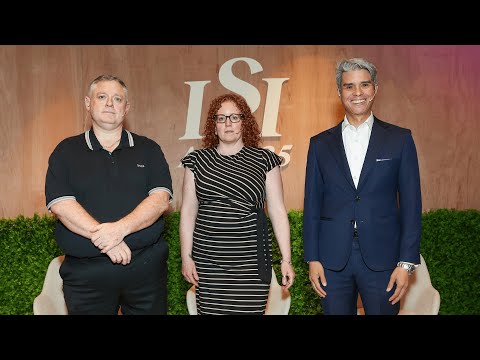
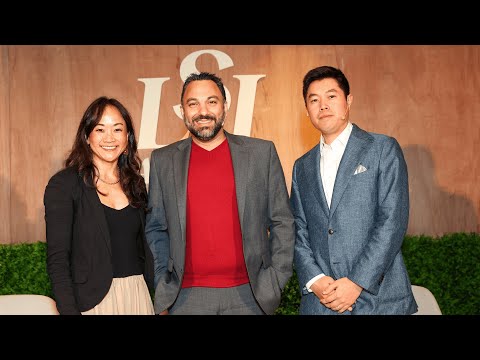
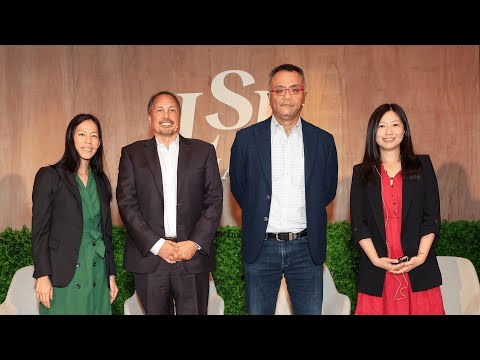
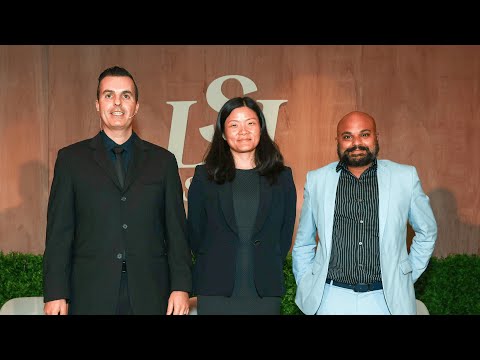
David Hochman 0:05
Or so we're here to talk about the resilient engine of Israeli med tech innovation. And I think we are very privileged to have Dr Rafi Bayar here, who is a friend and I think, a mentor to many of those Israeli innovators. So maybe Rafi, you could kick us off with some thoughts and some comments, and then we'll open it up to a discussion with our panel. Thanks, David.
Rafi Beyar 0:36
I'll share with you. Let's see we have a presentation here. So maybe I'll stand here so I can see and refer to that. So actually, I'll share with you the history of really how things started in Israel from in the last 30 years. It's interesting that 30 years ago we started this ici meeting in Israel 1995 this is one of the first one with a group of physicians. And then since then, we continue to have this meeting going on. The mission is really to view frontiers of cardiovascular interventions. Focus on innovations, focus on unmet need, focus on technology. With the technology parade, very unique at that time. Very few meetings in the world had the world innovation there, and we really started with that. And over if we look at the whole this in the camp focusing, since I'm a cardiologist, I'll focus on the cardiovascular. If you look at over the years, the all the exits out of Israel. Interesting to see. You can see instant, one of my initial twin, biosense, major things that became verbal. But Lucas, very interesting. 2020 24 which is last year, and 2025 we have four major exits, Innova V wave, Sony V and victorious just last week. So major innovations brought to the world. This just some historic pictures with Martin Leon with instant, the first one of the first bare metal stands on the market. This is the the first one, the B stint acquired by Medtronic 1996 I think this was really the big, the biggest, first exit out of Israel in in in those years, biosense came a year later on again, from from the north, from Rambam and Technion. It was one of the major disrupting technologies in the world in cardiology in general, we brought in also the robotics 2019 bought by Siemens robotic assets. There are many robotic companies that are now trying to get into this space to make an impact and and I think that if you look at, for example, Medtech for heart failure as an example, you see, you see all the different things, from therapeutics to diagnostics to remote sensing to pumping. You see, we have, really, within Israel, the whole series and things are on the cardiovascular area. If you look at the life science industry over the over the years, even until this year, you see it's growing. They've been a flat growth in the last two, three years. It's understandable, but it's still there. There's still a digital head. 30% of that medical device, 36% of that. That's the distribution I've published this paper in the Lancet. And why is a startup life's nation? What keeps it? And it's very interesting to see that it's really this is the core of you have to have a technology infrastructure. You have to have human capital. You have to have government support, very important, the private funding. These are important things. But on the on the right side, you see the incubators, the defense industry, academic research, academic medical centers, very important. On the left side you see the needs of innovation, the and other hospital system and immigration wave that came at that time was very important in promoting innovation. Very proud of the first Nobel out of Israel and in 2004 out of Technion. I was the dean at that time of the Faculty of Medicine. Really, the idea is to combine everything in one big short, the hospital, the academia, the industry, together here we bring an innovation building, specifically between faculty of medicine and the hospital, extremely important, and that's one of the advantages that we have within our system at the Technion. But this is also widely applied to Israel, but the Technion not. Next to amban is one of the strength here, education. Extremely important. We have Biodesign. We have, we have a contract with, with Stanford. We're doing Biodesign with them, and we have expanded to Biodesign as well to really educate how to innovate, for physicians, for entrepreneurs, for students. Very important. This is alive in funding is extremely important. Also, you can see alive is one of the funds that invest in digital health and medical devices a relatively later stage, and now we gazing alive three very important to continue the funding, both from the government at early stages and also supporting later stages. This is a very important part for the resilience that we continue to see in his just examples of a live companies. You can see out of that two exits, innovault exit last year in scenario, which was just, it's cyber security for hospital bought just recently by axonos. And, you know, I'm not going to go into many details, Innova magenta scenario are shown here, append, very input, and they are here, we can we hear from nada, probably about about a pen funding over the years. You see there was a huge surge of funding 22 to 22 there is decreased funding in the last two years. That's a problem, and that's something that we're trying to actually help as much as possible. That's where we see our role, also in alive to part of the ecosystem that's raising the actually alive free, which is a go for total. I mean, it's going to be one 80 million, not this number, the total fund. So the ingredients of resistance, strong engineering experience, directors, entrepreneur spirit, free academia, industrial infrastructure, innovation, authority, financial support, extremely important, strong commitment of the companies and everybody during all the difficult years that we have going for and strong local and international investors. So with this, I open it up to continue the discussion.
David Hochman 7:25
Thank you, Rafi. So Laurent. Ron Nadav, I think just to get us started, maybe I could ask each of you to briefly introduce yourself and the company that you lead, what the unmet need you're focused on and the technology and just what stage that company is at, then we can open it up to some discussions. Maybe Laurence, you could start. I know the answer for you is a little more complicated, but I'll let you choose in terms of where you want to focus this discussion. Of course, of course.
Laurent Choppe 7:56
Laurent Choppe, raised in, born in France, Swiss and Israel as well. After that, I am veterinary surgeon by training, 15 years of experience in the Big Pharma, and for the last 17 years, I'm leading the lifescience activity of Hooker and CO investment house, which is the largest privately owned investment banking in Israel. Our activities to support startups, to find partners, buyers, investors. We are, of course, all the spectrum of license, including Medtech, obviously, and we do MNA and fundraising. Half of our focus is in Israel. So we are very specialized in Israel. I have a team of 12 people there. And the we are as well, working half in with the rest of the world, Asia, Europe and US, which is giving us good balance in terms of exposure, reach out and mixing of of practices, and know how? So that's what I do. And I came here. Of course, I'm always coming to this conference with with some clients. I came with three clients, and one specifically in stem cells extractions that they can describe a little bit later. That's the nature.
David Hochman 9:19
Thank you. Ron,
Ron Davidson 9:22
Hi. My name is Ron Davidson. I'm the CEO of Trisol Medical. Tris develops transcatheter tricuspid valve replacement. Maybe you know that the whole field of transcatheter valves was started in Israel in a company called PVT about 25 years ago, later, acquired by Edwards Lifesciences, and it really laid down the ground for for this fascinating and very large field. A our company started in the Shimon echoes incubator called Allon metech, and. We grew since then, and we left the incubator quite, quite early after we started. We are currently in a clinical, advanced clinical stage. We implant our valve in 27 patients, the last 18 of them in the US, EFS, a our valve is totally different from any other valves. That is a three leaflets. Maybe some of you know a Val has one leaflet with two comistors, so it functions as a bi leaf valve that opens to the middle and closes to the sides. There is many, many advantages to this dedicated design. It's probably the only valve that was initially invented for the tricuspid position. One of the main advantages is that a we eliminate TR, and at the same time we improve the right ventricle function. And the other other technologies are eliminating TR or reducing TR, but reducing the right ventricle function, and this goes directly into clinical results. We are very lucky to have a team of people with a lot of experience in valve development, regulatory manufacturing that have worked before in a various valve companies such as a in the next step for us is to complete our EFS by the beginning of next year, and then start a apply and start for pivotal trial in the US.
David Hochman 11:35
Thank you, Ron. Thanks so much. Nadav.
Nadav Agian 11:37
Hi. I'm Nadav. I'm the CEO of appen medical for the last three and a half years. My background is mechanical engineering. I'm been around in the medical device industry in Israel since 2002 most of the project that I did are in the cardiovascular space. So appened Medical has developed a very differentiated solution, transcatheter system for left atrial appendage occlusion, or actually elimination, for atrial fibrillation patients, for stroke prevention. What is so unique about appends approach is that actually we are doing it without any device being left in the heart after the procedure. So it's only a procedure based and on the device based and we are doing that by kind of manipulating the tissue using our vacuum technology in order to invert the left atrial appendage tissue into the left atrium and by ligating a very standard, simple surgical Suture around the base of the inverted tissue, we are keeping it as it is, while the left arterial appendage opening is kept closed and sealed, we are already entered into the clinical stage back in 2024 we are currently at the end of our first in human trial, treated with, currently with 23 patients, and follow up of some of the patients of above one year. Results, looks amazing, and our next goal is to enter to the US trial. We already hold, received an approval by the FDA for EFS, so we are now in preparation for our next challenge, entering the US in 2026 and focusing on achieving data sufficient for a large pivotal trial. Thank you.
David Hochman 13:50
So the title of this discussion is the resilient engine of Medtech innovation, which is Israel and Rafi. Your comments, you know, and your talk covered a whole range of cardiovascular fields where Israeli innovators made fundamental contributions. Ron you talked about PVT really being the birth of structural cardiology and structural interventions. So I want to talk about the engine aspect first, actually, and we have with us four people who have spent more than two decades and in this field of innovation in Israel, wanted to start with you, na Dave, what do you think really makes, and building on some of rafi's comments, Israel a powerhouse as a small country for med tech innovation, what are the elements that really allow that engine To, you know, be be so powerful.
Nadav Agian 14:42
I think that from my experience and what I see with my colleagues and all the ecosystem in Israel is that there are few important topics. One is the team and the experience. Science that every Israeli has as in their DNA, as survivors. Okay, so this is one important key factor for any startup, anyone that deals with with startups and innovations. So even though there are some tough times, mostly in Israel. Lately, each of of the people that are dealing with this space are kept focusing on keeping going, keep going with the with the project, although of the tough times. But on top of what every startup person around the world is challenging with, I mean, financing, technological, clinical, Israel has his unique challenges as well. So I think that it's mostly generated in our DNA as people that know how to survive tough tough times.
David Hochman 16:15
So we're focusing on resilience, which has really taken a very special meaning in Israel. The last couple years, I have a dear friend who actually recently was founded the resilience Center at Reichman university that they're building. So building on these comments, Ron, maybe you could talk about this difficult period, and how has your company exhibited that word of resilience in the current time. And maybe it's, you know, not just this time, but you can maybe give us a sense of how try souls shown resilience in your team. Yes.
Ron Davidson 16:52
So actually, you know, looking at the past, not just two years, but the past four or five years, we had actually two different, two difficult period. One was covid, the other one was the geopolitical situation in Israel. So for us to say that we are not progressing just by these factors, will not be a good excuse. We have to keep on going. And we managed, with our great team to keep on going, although in covid, it was sometimes very difficult to travel. Then we did clinical trials. We changed our strategy very quickly, and started with clinical trials in Israel, and we did very well, and we managed to progress. And then, based on these trials, when it opened, we're able to go and do clinical trials in the US with the geopolitical situation the same. You know, we are developing a medical device. Yes, we cannot work from home. We have to work from the office, develop manufacture, and we have to travel to perform clinical trials in the US. So we find different ways. For instance, in a couple of weeks we opened a very small additional office to do some important manufacturing to make it easier for employees to come to the office. We use our airlines to travel. They always travel all the time. So we kept on going as if there was no covid And as if there was no geopolitical situation,
David Hochman 18:24
the common theme of keep on going and survive. And you know, it's a startup theme, but one where Israel's had to deal with challenges. Laurence, you talked about your firm's role as a private bank, as well as working on different projects. So how has both the power of Israel for innovation as well as the challenges that we're talking about affected the companies you're working with from a fundraising standpoint and from an operational standpoint,
Laurent Choppe 18:51
I will give I will talk about one example to be concrete, just the end of 23 Yes, after the covid, we took over a license from the hill of major main hospital of Tel Aviv in and created a startup in stem cells with a very specific extraction methodology from the fat. It's called a stromalvascular fraction, which is helping the stem cells extracted to be high viability, viability and lasting long time through a very unique mechanical system. So we established this company in end of 23 and in, yes, in beginning of 23 sorry, and over, over the time we were supposed to raise fund and build a team, etc. And then what you call the joke, political situation occurs a light work, yes, yes. In in October 23 and we, we, so we were in the middle of building up this company. I'm personally in the board and as well as a shareholder. So we, we, we exemplify the startup Mindset by adding those difficulties, not being able to travel all the time, and activated a very, very strong, different solution from friends and families to help we had, as well to replace people inside the team that were going to Military Reserve. So there is a lot of internal solidarity in order to make the boat floating whatever, whatever it takes. It's one of the, one of the motto we are using regularly. So we as well use something that we were not ready to use, and that is working well in Israel today is crowd funding, meaning leveraging. Instead of going to funds or to to private money, we went directly to the public without being a public companies. So there are several companies in Israel doing crowd funding, not necessarily in the medical side. And we did several rounds. It has some cost, but at the end of the day, the population as well is is willing to support local initiative we start up that are talking to the public. So so I would say that all this combination and being half of the time in Europe, I as well leverage the maximum my network in order to help the company find the right money and the right the right partners to work with. Roughly name of the company, cell, lipo. I didn't mention it because it's one of the activity. I have said, like Paul, like
David Hochman 21:44
Rafi, you have a rich perspective on the evolution of the Israeli Medtech innovation sector. How have you talked about some of the recent extraordinary exits, some of the most celebrated exits in the industry, certainly cardiovascular devices. Have you seen that grow as you now have serial generation of experienced entrepreneurs, business leaders, engineers? How has that changed and evolved? How has that impacted the relationship between Israeli companies and innovators and strategics? And ultimately, want to, want to talk about that role Israel is playing, and your outlook on it, but, but talk about the evolution that you think.
Rafi Beyar 22:29
Well, if I go back 30 years ago, the first, I would say, wave of, you know, startup companies in innovation, really the first Wolf. I mean, before that, there were only 400 life science companies. Now there are 1900 so you see the huge growth over the last three decades. So at the beginning, there was a first line of CEOs, and you know, entrepreneurs. There were some of them successful, some of them are not successful, and there was much less expertise in directing companies. I mean, the CEOs were novice. They didn't know the world that way. They needed help from from friends and colleagues, from United States, from the world, from other countries, from Europe, and I think, and there was, but there were successes, like the examples I showed you, but there are many more I showed you, only in cardiovascular but successes and and this brought in, you know, once a company is brought, I guess, if they keep it in Israel, for example. If you take biosense, once they were bought, they kept the R and D system in Israel, and did continue to go until today. But for example, take Medtronic initial acquisition of instant. They closed it after a year, and they moved everything to Ireland, and they saw all the rest of the of the people actually got they had to find another job, and they, each one of them, almost of the workers of the initial company, became CEOs of other companies over the years, you have a third generation today of CEOs, people who have experience, people who have worked there were collections that made through The world. Something very important is the fact that there was a constant flow of of entrepreneurs, investors and strategics coming to Israel, and that's where ICI has a role every year to have Medtronic, Boston Scientific, Edwards and other companies about come to Israel. When they come to Israel, they mostly visit all the all the different startups. They go to the incubators. They see ideas, and they love some of them. And so this, in this unidirectional flow, is. Extremely important. I think that's why, for example, in Israel, cardiovascular is one of the strongest field that you see a lot of exists and innovations there. So, so this is very important to bring in the strategic not only to sell but and it took them time. I mean, initially they said, well, Israel is a small market. Why should I come but once they understand that is, it's not a small it's small market, but it's aiming to the world, not to the Israeli market. Israel may be a small incubator field that actually what goes then funding is important. Funding came also, along with the with the strategics, with the innovators, with the entrepreneurs, and with the successes that generated, obviously millionaires and billionaires and continued funding, but especially major funds from outside Israel that continue to support to bring Money to Israel. And you know, we had difficult years, not only the last few years, but but people learned how to live with it, how to walk around it. And I can tell you example, even during the last take, example of magenta, say, a company with 130 employees. Now they're doing a pivot in the US. So they are, there are at least 10 employees in the US, but the rest are in Israel, and they have companies there, and they have the produce to have to make sure that they produce at the same pace that they needed for the clinical study that you do continue to do r, d, people are completely devoted, while maybe sometimes five or six years out, six people are drafted. The rest are coming, taking the place. They they there is interchange of information between everybody. So that's part of the resilience. So I think that's how you see this evolution. In addition to that, I think we have a very strong hospitals and academic medical centers
David Hochman 26:59
and certainly built this very Yeah, so
Rafi Beyar 27:03
one house is one example. An house is a unique combination with the Technion next to it, which is, I think, a very unique even in the world situation. And we build on that, we invest in that, and we are continue, we will continue to invest in that. So I think these are the major elements. And on top of that, we have the Israeli innovation authority, which act actually gives non dilutive funding and helps a lot we need more. Obviously, these years are still difficult. I know that Israel companies are still I mean, in difficult use, even from from, from a funding point of view, but I'm optimistic that things will continue to develop in that way.
David Hochman 27:55
Creativity is essential to innovation. I want to think, ask the Dave to talk a little bit about, you know, you're playing, everyone here is playing in large markets, emerging market, in terms of tricuspid, structural intervention, intervention, you're in a large, established market going and trying to disrupt the market leader with a very different approach. And maybe just as an example, in terms of a pen thinking about, what is your solution represent of the maybe uniquely Israeli perspective of thinking outside the box or challenging a convention in terms of the solution you talked about eliminating left atrial appendage, maybe just talk about the device. But what do you think that really reflects in what you see in terms of Israeli innovation, Israeli entrepreneurship.
Nadav Agian 28:44
Yeah, I think that append is a good example for what Rafi just described, of, you know, collaboration between hospitals, med, physicians and engineers. Append, it's, actually, is the second project that I'm involved in that was initially developed, or the main idea, the main concept, came from a cardiac surgeon in a in a hospital in Sheba Medical Center in Israel. So this was the basic of of the concept. And as you know, the main advantages for cardiac surgeons to have those kind of out of the box ideas or concept is that you know their hands are in this, you know heart every day that they just don't just see it in an imaging or or in a fluoroscopy. And appen took this concept and took this idea and actually translate it into a minimal, invasive transcatheter solution. So the basic idea is to by doing a simple manipulation to the tissue, you actually can seal it so. You, you focus on my intention to use a different terminology than occlusion. We are actually not occlusion. We are eliminating the the left at will appendage at all. So this, this, this is the basic of of the technology.
David Hochman 30:18
Ron, you're challenging some major competitors as well in your field. It's something that has always struck me, having now spent two decades myself traveling to Israel. We look at a lot of opportunities. 20% of them come from Israel. Similar to Nadav, I see a fearlessness when I meet Israeli entrepreneurs, a willingness to take on something where you're up against big competitors and take a totally different approach. Is that something you've seen, I know you've been involved in different aspects of innovation over your career in med tech, maybe comment on something uniquely Israeli about that approach?
Ron Davidson 30:56
Yes, so first of all, just commenting, in our case, it's again, thinking out of the box. You know, a physician, in our case, Professor MOLLI Hy vaturi, came with an idea that is totally different than the other, based on his experience, on many years of experience in the in the clinic, and thinking about how to do things better. And so this is the basic. And after that, you need to take the idea, turn it into a real product, bring the team of engineers that will take it all the way, starting from a first prototype, then animals, etc, etc, and also in the in the business level. You know, you mentioned my career, didn't talk about before twice, but you have to take it to the world. Yes, it doesn't have Israel is a great innovation place, but it's as if you mentioned a small market. You have to take it to the international market. In our medical device cardiology field, the main market is mostly in the US. You have to go and engage into US investors, US strategics, etc. And I think there is a growing expertise of doing so within a within the Israeli Medtech leaders, and we are getting gain more and more experience. So we are helping each other. In our case, we are helping the experience of our chairman, Dr Shimon eco is and others, and we have been able to bring investors from the US, and we're coming also here to meet international investor, not just us, but international ones. And we are spending a lot of time outside. And that's really key to grow your company, to be a successful international company.
David Hochman 32:47
Let's see. With our time left, I wanted to check if anyone has some questions for our panel from the room. Bill
Audience Question 32:56
asked of our Phil, if you look at the history of the last 25 years, I'll mention Israel, and the thought leaders, the connection between Israel and the thought leaders that really developed the field in the US. So I look at guys like Ron Waxman and the CRT meeting. I look at Greg Stone, I look at Marty Leon, all of whom had deep connections to Israel. How do we keep that going moving forward as those guys age out, and they've been terrific, and they're going to have statues for every one of them, but at some point, how do we keep that connection strong?
Rafi Beyar 33:31
Well, I think it's it's it's it is. We have to keep up the connection. We have to actually keep up the the ongoing meetings in Israel, bi directional, to keep on the communication extremely important. You know, Israeli Israelis are keeping also sending our fellows abroad, to England, to United States for things. I think these fellows that are going either direction, extremely important to actually help also keep up the, you know, kind of integrate between the systems, understand the needs of each system, which may be different. But I think this international collaboration and and connection with with the leaders in in in each field is extremely important and and I think that the Israel has done it very successfully over the last decades. And I'm sure it will continue. We'll have to keep up the spirit and tenacity. And I see that spirit everywhere. I mean, we will seeing in right now, in a live we have seen 900 companies to select the investor. So there, the people are there, the enthusiasm is there. The the drive is there, the and the flexibility of mind is there. I think that's something that we have to keep on.
David Hochman 35:10
Anyone else want to add anything? To tweet another? Any other questions, sir.
Ron Davidson 35:20
2425 those years or bad years for Foreign Affairs in Israel. So what do you think will be the impact, and when we will see the impact?
Laurent Choppe 35:36
In fact, we see today in terms of investment, much more difficult period to have investor coming. So everyone is going outside in order to continue the discussion. This is happening in terms of MNAs, we saw some exit, and I and I seen different field, including in the food tech and in the biotech. I don't see a major impact for the MNA part, the exit. And in my in my dream, the two element that could re start or compensate for the difficult period I have one I see many entrepreneurs, and that did some good exit in the tech side, in the tech side that are diverting part of their reinvestment or restarting businesses. We have many example from the high tech, from the cyber in in our field, and there is an overlap with all the AI entrepreneur. So I believe this sector of the Israeli startup ecosystem will be very active in like in life science on one hand and on the other hand, I'm dreaming that the day the Saudi Arabia will enter India accord. I see a very, very strong collaboration, and I know there is already under the table some competition between the emirates that are doing some, some investment in, some business with Israel and the Saudi Arabia, which is much bigger. So I'm relying on that. I don't have a timeline. I don't know when, but it will happen.
David Hochman 37:13
Yeah, that's actually the question I was going to ask if you didn't bring it up, which is, you know, thinking hopefully about the possibility for recalibration, normalization in the region we see, I think you hit on a key point, extraordinary possibility to create within the region, with capital, with the expertise in Israel, and with the intention that we're Seeing from Saudi Arabia, from the emirates to build infrastructure within medical technology. Anyone else agree that that that's the vision we should imagine five or 10 years from now, a very different dynamic much be much sooner. Okay, we won't be much more optimistic,
Rafi Beyar 37:58
and there are a lot of ongoing discussions about that. We hope that the politics will allow it soon. But there is a drive. It's there the I mean, all sides want it, want it to happen. There is even money that is prepared to be invested. So I think that that that's a pathway that we should actually all hope for, and not only hope, but act towards that.
David Hochman 38:23
So our conclusion is the resilient engine is surviving. It's going to thrive, and it's still going to be one of the powerhouses that really help continue to contribute solutions to the global medical field. So I really appreciate all of you being with us here today for this panel and thank you. Rafi, Laurent, thank you. Ron the Dave, thank you so much.
Laurent Choppe 38:48
Thank you. Thank you very much.
David Hochman 0:05
Or so we're here to talk about the resilient engine of Israeli med tech innovation. And I think we are very privileged to have Dr Rafi Bayar here, who is a friend and I think, a mentor to many of those Israeli innovators. So maybe Rafi, you could kick us off with some thoughts and some comments, and then we'll open it up to a discussion with our panel. Thanks, David.
Rafi Beyar 0:36
I'll share with you. Let's see we have a presentation here. So maybe I'll stand here so I can see and refer to that. So actually, I'll share with you the history of really how things started in Israel from in the last 30 years. It's interesting that 30 years ago we started this ici meeting in Israel 1995 this is one of the first one with a group of physicians. And then since then, we continue to have this meeting going on. The mission is really to view frontiers of cardiovascular interventions. Focus on innovations, focus on unmet need, focus on technology. With the technology parade, very unique at that time. Very few meetings in the world had the world innovation there, and we really started with that. And over if we look at the whole this in the camp focusing, since I'm a cardiologist, I'll focus on the cardiovascular. If you look at over the years, the all the exits out of Israel. Interesting to see. You can see instant, one of my initial twin, biosense, major things that became verbal. But Lucas, very interesting. 2020 24 which is last year, and 2025 we have four major exits, Innova V wave, Sony V and victorious just last week. So major innovations brought to the world. This just some historic pictures with Martin Leon with instant, the first one of the first bare metal stands on the market. This is the the first one, the B stint acquired by Medtronic 1996 I think this was really the big, the biggest, first exit out of Israel in in in those years, biosense came a year later on again, from from the north, from Rambam and Technion. It was one of the major disrupting technologies in the world in cardiology in general, we brought in also the robotics 2019 bought by Siemens robotic assets. There are many robotic companies that are now trying to get into this space to make an impact and and I think that if you look at, for example, Medtech for heart failure as an example, you see, you see all the different things, from therapeutics to diagnostics to remote sensing to pumping. You see, we have, really, within Israel, the whole series and things are on the cardiovascular area. If you look at the life science industry over the over the years, even until this year, you see it's growing. They've been a flat growth in the last two, three years. It's understandable, but it's still there. There's still a digital head. 30% of that medical device, 36% of that. That's the distribution I've published this paper in the Lancet. And why is a startup life's nation? What keeps it? And it's very interesting to see that it's really this is the core of you have to have a technology infrastructure. You have to have human capital. You have to have government support, very important, the private funding. These are important things. But on the on the right side, you see the incubators, the defense industry, academic research, academic medical centers, very important. On the left side you see the needs of innovation, the and other hospital system and immigration wave that came at that time was very important in promoting innovation. Very proud of the first Nobel out of Israel and in 2004 out of Technion. I was the dean at that time of the Faculty of Medicine. Really, the idea is to combine everything in one big short, the hospital, the academia, the industry, together here we bring an innovation building, specifically between faculty of medicine and the hospital, extremely important, and that's one of the advantages that we have within our system at the Technion. But this is also widely applied to Israel, but the Technion not. Next to amban is one of the strength here, education. Extremely important. We have Biodesign. We have, we have a contract with, with Stanford. We're doing Biodesign with them, and we have expanded to Biodesign as well to really educate how to innovate, for physicians, for entrepreneurs, for students. Very important. This is alive in funding is extremely important. Also, you can see alive is one of the funds that invest in digital health and medical devices a relatively later stage, and now we gazing alive three very important to continue the funding, both from the government at early stages and also supporting later stages. This is a very important part for the resilience that we continue to see in his just examples of a live companies. You can see out of that two exits, innovault exit last year in scenario, which was just, it's cyber security for hospital bought just recently by axonos. And, you know, I'm not going to go into many details, Innova magenta scenario are shown here, append, very input, and they are here, we can we hear from nada, probably about about a pen funding over the years. You see there was a huge surge of funding 22 to 22 there is decreased funding in the last two years. That's a problem, and that's something that we're trying to actually help as much as possible. That's where we see our role, also in alive to part of the ecosystem that's raising the actually alive free, which is a go for total. I mean, it's going to be one 80 million, not this number, the total fund. So the ingredients of resistance, strong engineering experience, directors, entrepreneur spirit, free academia, industrial infrastructure, innovation, authority, financial support, extremely important, strong commitment of the companies and everybody during all the difficult years that we have going for and strong local and international investors. So with this, I open it up to continue the discussion.
David Hochman 7:25
Thank you, Rafi. So Laurent. Ron Nadav, I think just to get us started, maybe I could ask each of you to briefly introduce yourself and the company that you lead, what the unmet need you're focused on and the technology and just what stage that company is at, then we can open it up to some discussions. Maybe Laurence, you could start. I know the answer for you is a little more complicated, but I'll let you choose in terms of where you want to focus this discussion. Of course, of course.
Laurent Choppe 7:56
Laurent Choppe, raised in, born in France, Swiss and Israel as well. After that, I am veterinary surgeon by training, 15 years of experience in the Big Pharma, and for the last 17 years, I'm leading the lifescience activity of Hooker and CO investment house, which is the largest privately owned investment banking in Israel. Our activities to support startups, to find partners, buyers, investors. We are, of course, all the spectrum of license, including Medtech, obviously, and we do MNA and fundraising. Half of our focus is in Israel. So we are very specialized in Israel. I have a team of 12 people there. And the we are as well, working half in with the rest of the world, Asia, Europe and US, which is giving us good balance in terms of exposure, reach out and mixing of of practices, and know how? So that's what I do. And I came here. Of course, I'm always coming to this conference with with some clients. I came with three clients, and one specifically in stem cells extractions that they can describe a little bit later. That's the nature.
David Hochman 9:19
Thank you. Ron,
Ron Davidson 9:22
Hi. My name is Ron Davidson. I'm the CEO of Trisol Medical. Tris develops transcatheter tricuspid valve replacement. Maybe you know that the whole field of transcatheter valves was started in Israel in a company called PVT about 25 years ago, later, acquired by Edwards Lifesciences, and it really laid down the ground for for this fascinating and very large field. A our company started in the Shimon echoes incubator called Allon metech, and. We grew since then, and we left the incubator quite, quite early after we started. We are currently in a clinical, advanced clinical stage. We implant our valve in 27 patients, the last 18 of them in the US, EFS, a our valve is totally different from any other valves. That is a three leaflets. Maybe some of you know a Val has one leaflet with two comistors, so it functions as a bi leaf valve that opens to the middle and closes to the sides. There is many, many advantages to this dedicated design. It's probably the only valve that was initially invented for the tricuspid position. One of the main advantages is that a we eliminate TR, and at the same time we improve the right ventricle function. And the other other technologies are eliminating TR or reducing TR, but reducing the right ventricle function, and this goes directly into clinical results. We are very lucky to have a team of people with a lot of experience in valve development, regulatory manufacturing that have worked before in a various valve companies such as a in the next step for us is to complete our EFS by the beginning of next year, and then start a apply and start for pivotal trial in the US.
David Hochman 11:35
Thank you, Ron. Thanks so much. Nadav.
Nadav Agian 11:37
Hi. I'm Nadav. I'm the CEO of appen medical for the last three and a half years. My background is mechanical engineering. I'm been around in the medical device industry in Israel since 2002 most of the project that I did are in the cardiovascular space. So appened Medical has developed a very differentiated solution, transcatheter system for left atrial appendage occlusion, or actually elimination, for atrial fibrillation patients, for stroke prevention. What is so unique about appends approach is that actually we are doing it without any device being left in the heart after the procedure. So it's only a procedure based and on the device based and we are doing that by kind of manipulating the tissue using our vacuum technology in order to invert the left atrial appendage tissue into the left atrium and by ligating a very standard, simple surgical Suture around the base of the inverted tissue, we are keeping it as it is, while the left arterial appendage opening is kept closed and sealed, we are already entered into the clinical stage back in 2024 we are currently at the end of our first in human trial, treated with, currently with 23 patients, and follow up of some of the patients of above one year. Results, looks amazing, and our next goal is to enter to the US trial. We already hold, received an approval by the FDA for EFS, so we are now in preparation for our next challenge, entering the US in 2026 and focusing on achieving data sufficient for a large pivotal trial. Thank you.
David Hochman 13:50
So the title of this discussion is the resilient engine of Medtech innovation, which is Israel and Rafi. Your comments, you know, and your talk covered a whole range of cardiovascular fields where Israeli innovators made fundamental contributions. Ron you talked about PVT really being the birth of structural cardiology and structural interventions. So I want to talk about the engine aspect first, actually, and we have with us four people who have spent more than two decades and in this field of innovation in Israel, wanted to start with you, na Dave, what do you think really makes, and building on some of rafi's comments, Israel a powerhouse as a small country for med tech innovation, what are the elements that really allow that engine To, you know, be be so powerful.
Nadav Agian 14:42
I think that from my experience and what I see with my colleagues and all the ecosystem in Israel is that there are few important topics. One is the team and the experience. Science that every Israeli has as in their DNA, as survivors. Okay, so this is one important key factor for any startup, anyone that deals with with startups and innovations. So even though there are some tough times, mostly in Israel. Lately, each of of the people that are dealing with this space are kept focusing on keeping going, keep going with the with the project, although of the tough times. But on top of what every startup person around the world is challenging with, I mean, financing, technological, clinical, Israel has his unique challenges as well. So I think that it's mostly generated in our DNA as people that know how to survive tough tough times.
David Hochman 16:15
So we're focusing on resilience, which has really taken a very special meaning in Israel. The last couple years, I have a dear friend who actually recently was founded the resilience Center at Reichman university that they're building. So building on these comments, Ron, maybe you could talk about this difficult period, and how has your company exhibited that word of resilience in the current time. And maybe it's, you know, not just this time, but you can maybe give us a sense of how try souls shown resilience in your team. Yes.
Ron Davidson 16:52
So actually, you know, looking at the past, not just two years, but the past four or five years, we had actually two different, two difficult period. One was covid, the other one was the geopolitical situation in Israel. So for us to say that we are not progressing just by these factors, will not be a good excuse. We have to keep on going. And we managed, with our great team to keep on going, although in covid, it was sometimes very difficult to travel. Then we did clinical trials. We changed our strategy very quickly, and started with clinical trials in Israel, and we did very well, and we managed to progress. And then, based on these trials, when it opened, we're able to go and do clinical trials in the US with the geopolitical situation the same. You know, we are developing a medical device. Yes, we cannot work from home. We have to work from the office, develop manufacture, and we have to travel to perform clinical trials in the US. So we find different ways. For instance, in a couple of weeks we opened a very small additional office to do some important manufacturing to make it easier for employees to come to the office. We use our airlines to travel. They always travel all the time. So we kept on going as if there was no covid And as if there was no geopolitical situation,
David Hochman 18:24
the common theme of keep on going and survive. And you know, it's a startup theme, but one where Israel's had to deal with challenges. Laurence, you talked about your firm's role as a private bank, as well as working on different projects. So how has both the power of Israel for innovation as well as the challenges that we're talking about affected the companies you're working with from a fundraising standpoint and from an operational standpoint,
Laurent Choppe 18:51
I will give I will talk about one example to be concrete, just the end of 23 Yes, after the covid, we took over a license from the hill of major main hospital of Tel Aviv in and created a startup in stem cells with a very specific extraction methodology from the fat. It's called a stromalvascular fraction, which is helping the stem cells extracted to be high viability, viability and lasting long time through a very unique mechanical system. So we established this company in end of 23 and in, yes, in beginning of 23 sorry, and over, over the time we were supposed to raise fund and build a team, etc. And then what you call the joke, political situation occurs a light work, yes, yes. In in October 23 and we, we, so we were in the middle of building up this company. I'm personally in the board and as well as a shareholder. So we, we, we exemplify the startup Mindset by adding those difficulties, not being able to travel all the time, and activated a very, very strong, different solution from friends and families to help we had, as well to replace people inside the team that were going to Military Reserve. So there is a lot of internal solidarity in order to make the boat floating whatever, whatever it takes. It's one of the, one of the motto we are using regularly. So we as well use something that we were not ready to use, and that is working well in Israel today is crowd funding, meaning leveraging. Instead of going to funds or to to private money, we went directly to the public without being a public companies. So there are several companies in Israel doing crowd funding, not necessarily in the medical side. And we did several rounds. It has some cost, but at the end of the day, the population as well is is willing to support local initiative we start up that are talking to the public. So so I would say that all this combination and being half of the time in Europe, I as well leverage the maximum my network in order to help the company find the right money and the right the right partners to work with. Roughly name of the company, cell, lipo. I didn't mention it because it's one of the activity. I have said, like Paul, like
David Hochman 21:44
Rafi, you have a rich perspective on the evolution of the Israeli Medtech innovation sector. How have you talked about some of the recent extraordinary exits, some of the most celebrated exits in the industry, certainly cardiovascular devices. Have you seen that grow as you now have serial generation of experienced entrepreneurs, business leaders, engineers? How has that changed and evolved? How has that impacted the relationship between Israeli companies and innovators and strategics? And ultimately, want to, want to talk about that role Israel is playing, and your outlook on it, but, but talk about the evolution that you think.
Rafi Beyar 22:29
Well, if I go back 30 years ago, the first, I would say, wave of, you know, startup companies in innovation, really the first Wolf. I mean, before that, there were only 400 life science companies. Now there are 1900 so you see the huge growth over the last three decades. So at the beginning, there was a first line of CEOs, and you know, entrepreneurs. There were some of them successful, some of them are not successful, and there was much less expertise in directing companies. I mean, the CEOs were novice. They didn't know the world that way. They needed help from from friends and colleagues, from United States, from the world, from other countries, from Europe, and I think, and there was, but there were successes, like the examples I showed you, but there are many more I showed you, only in cardiovascular but successes and and this brought in, you know, once a company is brought, I guess, if they keep it in Israel, for example. If you take biosense, once they were bought, they kept the R and D system in Israel, and did continue to go until today. But for example, take Medtronic initial acquisition of instant. They closed it after a year, and they moved everything to Ireland, and they saw all the rest of the of the people actually got they had to find another job, and they, each one of them, almost of the workers of the initial company, became CEOs of other companies over the years, you have a third generation today of CEOs, people who have experience, people who have worked there were collections that made through The world. Something very important is the fact that there was a constant flow of of entrepreneurs, investors and strategics coming to Israel, and that's where ICI has a role every year to have Medtronic, Boston Scientific, Edwards and other companies about come to Israel. When they come to Israel, they mostly visit all the all the different startups. They go to the incubators. They see ideas, and they love some of them. And so this, in this unidirectional flow, is. Extremely important. I think that's why, for example, in Israel, cardiovascular is one of the strongest field that you see a lot of exists and innovations there. So, so this is very important to bring in the strategic not only to sell but and it took them time. I mean, initially they said, well, Israel is a small market. Why should I come but once they understand that is, it's not a small it's small market, but it's aiming to the world, not to the Israeli market. Israel may be a small incubator field that actually what goes then funding is important. Funding came also, along with the with the strategics, with the innovators, with the entrepreneurs, and with the successes that generated, obviously millionaires and billionaires and continued funding, but especially major funds from outside Israel that continue to support to bring Money to Israel. And you know, we had difficult years, not only the last few years, but but people learned how to live with it, how to walk around it. And I can tell you example, even during the last take, example of magenta, say, a company with 130 employees. Now they're doing a pivot in the US. So they are, there are at least 10 employees in the US, but the rest are in Israel, and they have companies there, and they have the produce to have to make sure that they produce at the same pace that they needed for the clinical study that you do continue to do r, d, people are completely devoted, while maybe sometimes five or six years out, six people are drafted. The rest are coming, taking the place. They they there is interchange of information between everybody. So that's part of the resilience. So I think that's how you see this evolution. In addition to that, I think we have a very strong hospitals and academic medical centers
David Hochman 26:59
and certainly built this very Yeah, so
Rafi Beyar 27:03
one house is one example. An house is a unique combination with the Technion next to it, which is, I think, a very unique even in the world situation. And we build on that, we invest in that, and we are continue, we will continue to invest in that. So I think these are the major elements. And on top of that, we have the Israeli innovation authority, which act actually gives non dilutive funding and helps a lot we need more. Obviously, these years are still difficult. I know that Israel companies are still I mean, in difficult use, even from from, from a funding point of view, but I'm optimistic that things will continue to develop in that way.
David Hochman 27:55
Creativity is essential to innovation. I want to think, ask the Dave to talk a little bit about, you know, you're playing, everyone here is playing in large markets, emerging market, in terms of tricuspid, structural intervention, intervention, you're in a large, established market going and trying to disrupt the market leader with a very different approach. And maybe just as an example, in terms of a pen thinking about, what is your solution represent of the maybe uniquely Israeli perspective of thinking outside the box or challenging a convention in terms of the solution you talked about eliminating left atrial appendage, maybe just talk about the device. But what do you think that really reflects in what you see in terms of Israeli innovation, Israeli entrepreneurship.
Nadav Agian 28:44
Yeah, I think that append is a good example for what Rafi just described, of, you know, collaboration between hospitals, med, physicians and engineers. Append, it's, actually, is the second project that I'm involved in that was initially developed, or the main idea, the main concept, came from a cardiac surgeon in a in a hospital in Sheba Medical Center in Israel. So this was the basic of of the concept. And as you know, the main advantages for cardiac surgeons to have those kind of out of the box ideas or concept is that you know their hands are in this, you know heart every day that they just don't just see it in an imaging or or in a fluoroscopy. And appen took this concept and took this idea and actually translate it into a minimal, invasive transcatheter solution. So the basic idea is to by doing a simple manipulation to the tissue, you actually can seal it so. You, you focus on my intention to use a different terminology than occlusion. We are actually not occlusion. We are eliminating the the left at will appendage at all. So this, this, this is the basic of of the technology.
David Hochman 30:18
Ron, you're challenging some major competitors as well in your field. It's something that has always struck me, having now spent two decades myself traveling to Israel. We look at a lot of opportunities. 20% of them come from Israel. Similar to Nadav, I see a fearlessness when I meet Israeli entrepreneurs, a willingness to take on something where you're up against big competitors and take a totally different approach. Is that something you've seen, I know you've been involved in different aspects of innovation over your career in med tech, maybe comment on something uniquely Israeli about that approach?
Ron Davidson 30:56
Yes, so first of all, just commenting, in our case, it's again, thinking out of the box. You know, a physician, in our case, Professor MOLLI Hy vaturi, came with an idea that is totally different than the other, based on his experience, on many years of experience in the in the clinic, and thinking about how to do things better. And so this is the basic. And after that, you need to take the idea, turn it into a real product, bring the team of engineers that will take it all the way, starting from a first prototype, then animals, etc, etc, and also in the in the business level. You know, you mentioned my career, didn't talk about before twice, but you have to take it to the world. Yes, it doesn't have Israel is a great innovation place, but it's as if you mentioned a small market. You have to take it to the international market. In our medical device cardiology field, the main market is mostly in the US. You have to go and engage into US investors, US strategics, etc. And I think there is a growing expertise of doing so within a within the Israeli Medtech leaders, and we are getting gain more and more experience. So we are helping each other. In our case, we are helping the experience of our chairman, Dr Shimon eco is and others, and we have been able to bring investors from the US, and we're coming also here to meet international investor, not just us, but international ones. And we are spending a lot of time outside. And that's really key to grow your company, to be a successful international company.
David Hochman 32:47
Let's see. With our time left, I wanted to check if anyone has some questions for our panel from the room. Bill
Audience Question 32:56
asked of our Phil, if you look at the history of the last 25 years, I'll mention Israel, and the thought leaders, the connection between Israel and the thought leaders that really developed the field in the US. So I look at guys like Ron Waxman and the CRT meeting. I look at Greg Stone, I look at Marty Leon, all of whom had deep connections to Israel. How do we keep that going moving forward as those guys age out, and they've been terrific, and they're going to have statues for every one of them, but at some point, how do we keep that connection strong?
Rafi Beyar 33:31
Well, I think it's it's it's it is. We have to keep up the connection. We have to actually keep up the the ongoing meetings in Israel, bi directional, to keep on the communication extremely important. You know, Israeli Israelis are keeping also sending our fellows abroad, to England, to United States for things. I think these fellows that are going either direction, extremely important to actually help also keep up the, you know, kind of integrate between the systems, understand the needs of each system, which may be different. But I think this international collaboration and and connection with with the leaders in in in each field is extremely important and and I think that the Israel has done it very successfully over the last decades. And I'm sure it will continue. We'll have to keep up the spirit and tenacity. And I see that spirit everywhere. I mean, we will seeing in right now, in a live we have seen 900 companies to select the investor. So there, the people are there, the enthusiasm is there. The the drive is there, the and the flexibility of mind is there. I think that's something that we have to keep on.
David Hochman 35:10
Anyone else want to add anything? To tweet another? Any other questions, sir.
Ron Davidson 35:20
2425 those years or bad years for Foreign Affairs in Israel. So what do you think will be the impact, and when we will see the impact?
Laurent Choppe 35:36
In fact, we see today in terms of investment, much more difficult period to have investor coming. So everyone is going outside in order to continue the discussion. This is happening in terms of MNAs, we saw some exit, and I and I seen different field, including in the food tech and in the biotech. I don't see a major impact for the MNA part, the exit. And in my in my dream, the two element that could re start or compensate for the difficult period I have one I see many entrepreneurs, and that did some good exit in the tech side, in the tech side that are diverting part of their reinvestment or restarting businesses. We have many example from the high tech, from the cyber in in our field, and there is an overlap with all the AI entrepreneur. So I believe this sector of the Israeli startup ecosystem will be very active in like in life science on one hand and on the other hand, I'm dreaming that the day the Saudi Arabia will enter India accord. I see a very, very strong collaboration, and I know there is already under the table some competition between the emirates that are doing some, some investment in, some business with Israel and the Saudi Arabia, which is much bigger. So I'm relying on that. I don't have a timeline. I don't know when, but it will happen.
David Hochman 37:13
Yeah, that's actually the question I was going to ask if you didn't bring it up, which is, you know, thinking hopefully about the possibility for recalibration, normalization in the region we see, I think you hit on a key point, extraordinary possibility to create within the region, with capital, with the expertise in Israel, and with the intention that we're Seeing from Saudi Arabia, from the emirates to build infrastructure within medical technology. Anyone else agree that that that's the vision we should imagine five or 10 years from now, a very different dynamic much be much sooner. Okay, we won't be much more optimistic,
Rafi Beyar 37:58
and there are a lot of ongoing discussions about that. We hope that the politics will allow it soon. But there is a drive. It's there the I mean, all sides want it, want it to happen. There is even money that is prepared to be invested. So I think that that that's a pathway that we should actually all hope for, and not only hope, but act towards that.
David Hochman 38:23
So our conclusion is the resilient engine is surviving. It's going to thrive, and it's still going to be one of the powerhouses that really help continue to contribute solutions to the global medical field. So I really appreciate all of you being with us here today for this panel and thank you. Rafi, Laurent, thank you. Ron the Dave, thank you so much.
Laurent Choppe 38:48
Thank you. Thank you very much.
17011 Beach Blvd, Suite 500 Huntington Beach, CA 92647
714-847-3540© 2026 Life Science Intelligence, Inc., All Rights Reserved. | Privacy Policy