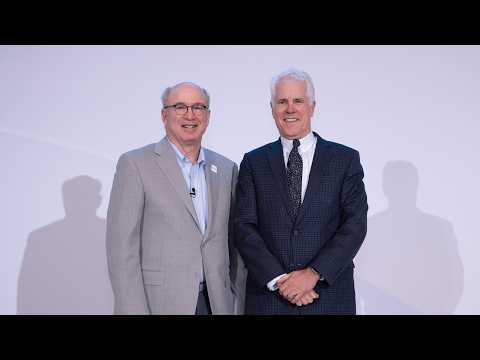
Carol Stafford 0:06
Right Good morning and welcome to our workshop. I'm Carol Stafford. I'm here with my colleague Sarah Westall. We both from Medidata, but before we tell you a little bit more about ourselves, I was just wondering how many of you here are a start up? So yeah, we have, we have a few. That's great. So well, then you know the journey. It's a marathon from that brilliant idea to the patient's bedside, and it can take about a decade or longer, and it demands a mountain of evidence to secure the funding, regulatory approval, market access, and, of course, a successful exit as well. So as a start up, you're juggling a lot, so it's natural to outsource the choice of a clinical technology vendor, of course, and your initial choice isn't actually just for that first trial. It's really the foundation of your entire evidence strategy. So today, we're hoping to shift your mindset and have you think about what happens after that first patient and you know, you have to think about what happens when you start to scale, when you have to prove real world value, and you have to enter new markets. So, you know, think about the post market surveillance as well. So today we're going to talk about how you choose a partner that turns all that data you you collecting into your most powerful asset and not your biggest mistake. So just briefly, I've been in the med tech industry for 30 years, and I've seen it from every single angle. I've worked for in product market and business development for strategics like Medtronic. I've been in the trenches. I've built a start up to a successful exit, and then I've also worked in integrating complex health systems in connected devices, and in the last six years in clinical evidence. So this was first with the CRO and now with Medidata. And now I'd like to introduce you to my colleague, Sarah. Yes.
Sarah Westall 2:37
So very nice to meet you all today. Sarah Westall, similarly, I've been in the market for about 25 years now, working again, lots of different angles with a variety of different companies, whether that is startups right up to kind of an enterprise size, so kind of seen it from all the different angles, and so fairly experienced in the pitfalls that can happen when it comes to acquiring data, managing data, and my role at Medidata is I work with a team of specialists who help partners like yourself to look at how we best collect the data, how we manage that, and then how you can present that for regulatory purposes. So throughout today, we're going to hopefully cover the current challenges that you will face, how to how to address them, how to leverage AI as a tool to to enable and to support your trials, the regulatory considerations, Karl is going to cover some of that. And then also, we'll talk a little bit about the tools to capture these very diverse data sets that we're now faced with. Because if we go back 510, years, the amount of data we were capturing was much, much lower. So you know, you've really got to consider how, how we're captioned data, the value of that data, and what you're going to do with it. So and we'll take you through some of the considerations in selecting a vendor and the advantages of working with either single platforms or actually a platform that can cover off multiple different uses.
Carol Stafford 4:24
Okay, so looking at some of the failure rates of medical device trials, and you can see the statistics are quite stark. Approximately 40% of medical device trials fail to meet their end points. And this isn't just a challenge in terms of scientific progress, it obviously has significant financial implications. So if we look at the breakdown of these failure rates, feasibility trials, see about a 40 to 50% failure rate, and this is often due to safety. Usability or technical issues as well. Pivotal trials have a failure rate of about 30 to 40% typically linked to challenges with efficacy regulatory hurdles. You know, they may require additional data or adverse events where the safety concerns just outweigh the benefits of the device, and even in post market studies, can fail sort of between 10 to 20% of the time, and this is often due to long term data issues that long term follow up of the patient, and another contributing factor is recruitment. So approximately 80% of trials are delayed or even closed due to problems with with enrolling patients, and actually 37% of sites under enroll. So that's also a huge consideration. And then they also may be reasons such as statistic statistical challenges, perhaps of sample size is too small. And then, of course, the device, you know, depending on those those surges and operate the actual operators of the device, where there's variability in procedures. So again, as I said, the these delays are, you know, can cost sponsors anywhere between 600,000 and 8 million for each day's delay. And so this just again, underscores the critical need for for robust strategies and technologies to improve trial success. And why do these statistics matter? You know, apart from the financial implications. Well, you know, just when selecting your clinical trial technology partner, think about their capabilities. So the corporate strength and and the med tech expertise are really critical to trial success, efficacy, speed, and then compliance right with it, with the regulations such as 21 CFR, think about their familiarity and credibility with sites. So this will will help for effective training and your future partnerships with those sites. And then there's scalability as well, because if you're going to switch a technology provider later on, this is actually really time consuming. You got to think about integration. You got to think about seamless data flows and process realignments again, which obviously will require significant effort and resources. So also, when you transferring existing data from one system to another, you risk corrupting that data, losing data so and then on top of this, they also the ever changing regulations, which we'll touch on in in a bit, and the amount of data that you actually also having to capture. It's it's data management is much more complex now than it was 20 years ago. So you really do need a partner with proven med tech experience, a strong track record in reliability and a commitment to innovation, right? So just building on this challenge of data volume that I've just touched on, this increase is further accelerated by the rise in decentralized trials and the use of sensors, e source data collection, and Increasingly, we also see combination biologic device studies. So we're not just collecting more data, we also collecting it from more complex trials with, you know, ever increasing number of data collection sources. So it's actually common to see over 25 different systems being used for a single clinical trial, and this leads to a significant problem, which is a lack of a unified experience, right? So patients are having to interact with multiple applications in a single. Study, you have the sites burned, burdened by multiple disparate systems, and this actually disrupts their patient their patient care. And then, of course, you know yourselves as sponsors, and the CROs are managing trials across multiple locations, potentially and adding complexity to the oversight of these trials. So the solution to these pressing challenges is clear. You really need a technology partner that is data centric and that is potentially AI powered to speed up a lot of these, these processes and the hand offs between the different workflows, and that's unified, so you can have a single, cohesive system that brings everything together. And Sarah, perhaps you can speak a little bit about the setting that right foundation.
Sarah Westall 11:07
So I think if, ultimately, we have a lot of people now coming to us and asking about, about AI, how, how do we leverage AI? It's it scares a lot of people, you know, they want to know how to leverage it, but not kind of make things more difficult and, and this is also a really important thing that, you know, you've covered a lot about, you know, making sure that we're not, you know, overburdening sites with lots of different systems. We're not overburdening patients. And it's the same with AI. You need to work with a vendor that has the capabilities to then use AI to streamline, to streamline workflows. So when you're kind of selecting a supplier, you want to ensure that it allows, for instance, system administrators to centrally manage sites where they roll out updates, and it can go out to everybody you know, you want to make sure it's as easy as possible, because then you can get much, much cleaner data and much faster as well. You talked about, if a study is delayed, if to market, the cost of that is huge, but to solve that problem, you need to front end it. And I have a lot of conversations with people about which approach to take. Do you take an already, you know, maybe best in class for one solution and you have multiples, or do you look at a platform approach that actually meets 99% of your needs and then allow sites and patients to have far less burden, and then also it empowers AI. So AI is most powerful when you feed it good data, but if you're taking data from multiple different places, it's really difficult to then empower it. And I've done a lot of talks around AI in the arena, and ultimately, I think we're only just scratching the surface. I asked an audience the other day, how many people use AI in their day to day work. I held, I think I'm doing a panel in a couple of weeks where I use Gemini to help me ask the questions. And it was quite relevant, because we were like, hang on a minute, where we're using AI in our day to day lives. Are we really utilizing it to help streamline our clinical trials, to help bring devices to the market much, much faster, and ultimately, you want to work with a provider that can help you, you know, leverage that intelligence and assistance. This isn't about replacing people. It's about giving them the right tools to do more. You know, automating some of those really mundane tasks that can be done much, much faster. I'll go back to my point about using Gemini to make the questions. Those questions don't look the same as what Gemini created, but it gave me a skeleton. So I didn't have to sit and spend an hour going, right, what am I going to ask as part of this panel? And that's where I started to see the real the real value of it. You know, when we're doing meetings now, having them transcribed and summarized, it's all assistive, and it makes things a lot easier. My expertise is actually imaging. And more and more we're using AI to be able to give a radiologist kind of pre annotated images, instead of having to have them go round and annotate an image, they have it pre presented to them, that's where AI becomes really powerful. And I think it's really just important to work with vendors that understand AI, that are investing in AI and are not kind of running away from it because. And if they are the problem that the chances are they don't understand its power. And I think genuinely that the true impact on a clinical trial, it's only just being starting to be realized. And I think in a similar way to how decentralized trials you know that was, that was very big for obvious reasons, and was sped up. I think AI is now following a fairly similar curve. So if you look on the screen, there's, there's a lot of different data sets. I think Karl mentioned this earlier. You have your EDC data, recoa data, imaging data, real world data, which is something we'll talk a bit more about later. EMR to EHRs, sensors, labs, this data is coming at us at a rate it's never come at us this quickly before. And you know, these are driven by key trends, right? One we have the technology to capture the data decentralized trials is hap is helping, but it's it's not just the variety of data, it's the velocity of data, and helping your sites have very seamless tools that can manage that is really very important. We have we've done a I think I'll probably touch on this later, but we've done a great job of supporting and reducing patient burden. But this increase in data is kind of increasing the site burden. Is that part of the problem when it comes to not keeping patients because sites are so overwhelmed. So we we have to consider all of this when, when planning trials, and I think that's really important to to consider, see if we can get on to the next slide.
Carol Stafford 16:59
Yes, I think we mentioned the the regulator's so and the real world data, and we we see agencies like the FDA, FDA actively encouraging the capture of real world datas from electronic health records, from medical claims and billing data from products and disease registries. As Sarah mentioned, this patient generator data, including from in home use settings. And then there's all the wearables as well. There's the data generated by the medical devices themselves, such as implantable sensors, right? And the FDA is now actively using this to support their decisions. If you could just click that on, yes. So the the they thinking about this data collection and evidence generation and how to use real world evidence to support regulatory decision making for many medical devices in and you can find this in a guideline they they published, and there were actually 90 examples in there of how they doing this. Then another revision that that is coming is the revision of the good clinical practice guideline I, ch, e6 and version r2 has actually been the standard for years, but the clinical research landscape has changed so dramatically that the new version, which is I, ch, e6, r3, represents a fundamental shift towards more flexible, innovative and efficient trial conduct. So actually, the update is so substantial that the ich has split its release into a main guideline, and then it has two annexes, and the implementation of this new guideline will mark the biggest change in clinical trial operations in over two decades, in fact. So yeah, we see a real shift away from this one size fits all approach, and it really encourages sponsors to implement risk based strategies from the outset, and it explicitly acknowledges the role of digital technologies, of electronic records and decentralized clinical trial elements, providing a really robust framework for ensuring. Data integrity, traceability, security and this regardless of the systems used, so it will definitely more clearly define the responsibilities that you will have as sponsors, as well as the investigators and and other stakeholders. So we also see there a heightened emphasis on involving patients in your actual trial design. So these are all just things to think about as as you move into your clinical stage,
Sarah Westall 20:39
I think that that real world data is something that is quite often overlooked at the moment, making sure that you can work with a vendor that can connect to the real world data, giving you that much more longitudinal view. I think it was one of the key issues you you pointed out right at the start is, well, can have we captured enough of that long term data to know that this is really very valuable as a treatment to a patient, and I think that's becoming more and more important now. Being able to to get that pre and post trial data build a better picture. I think that's so incredibly important. I I know that I've looked at kind of very short term views of patients and how much that can change dependent on the day and what's happening with a patient. And that you can actually, if you just look at that snapshot, you can actually get that treatments just not working. But actually, when you just start to expand it out a little bit more and use these different data points, whether that's at home, whether that's in the clinic, whatever it is, but then if you just go outside of, you know this, this set timeframe of the trial, and look a little bit further, I think you can get a much, a much bigger view of what's actually happening, because, you know, you have almost, like an artificial time in this, like they're in the trial for this period, and that's what we're monitoring them for. And I think this is, this is definitely an area that a lot of sponsors I'm working on are now heavily investing in. I mentioned this earlier, but patient and site experience, this is something that you really need to consider when selecting your vendors. I think you said earlier, 25 different platforms for a site to use. I've been to quite a few sites where I've just sat there and they're like, this is how many platforms we have to access. That makes it incredibly difficult for them to to upload the data. That's where human errors happen, whether it's transferring data from one to the other. You want to avoid that pitfall that is incredibly important to avoid it, and then, you know, patient experience. I talk about these as experiences, because ultimately, your patient will experience a journey through the clinical trial. It's incredibly important to make sure that each touch that you have with them is a positive experience. You know, they're some of these patients are very unwell, and it needs to be a positive experience in what can be a very difficult time for them. So, you know, giving them, giving them much easier tools to use, making sure it's not an additional burden to them is, I think it's one of the things that, as an industry, we are improving at a rate of knots, but there's some spec. There's definitely some room to go, I would say. So look, these are a few different things to consider when, when selecting a vendor, I think obviously having a deep domain experience is one of the key things you said at the start, right, understanding who they're working with, that that kind of, that med tech experience is really important, because, you know, if you're just working with a vendor that doesn't have that experience, you can then end up having technologies that aren't fit for purpose, and that's that's obviously a problem. And you know, we can work our way through these. You know, accessibility, I think, would be the biggest thing for me, making sure that they have 24 hour seven support, especially if you have a global study, you need to make sure it's just not on a set time zones that would that would cause major issues if they can't get support, whether that's training, whether it's just be they're having an issue uploading something, you need a team behind them to be able to troubleshoot and to work through that with them. Yeah.
Carol Stafford 24:58
And then I think, just to add to that. That I mean you as the sponsor, you may want to build your studies yourself. Perhaps you have some some data managers or people that are tech savvy in your team, and you want to take ownership. So definitely having a vendor that can can support that as well. You know, they can either build for you, or they can enable you and support you in that way to build your own studies. So, yeah, so we, we just have a video here we'd like to show you so not to just take our word, but to hear the word of some of the sponsors we are working with and their experience of the Medidata technology,
Video Playing 25:57
it's been wonderful to see within the Medidata team, there are people who have long, long, 10 years of experience from med vice so we can speak the same language,
Video Playing 26:08
having the kind of experience that Medidata does, and how it's not just the experience that Medidata has, it's how they use that experience and Apply it they learn, they continually make things better.
Video Playing 26:22
One of the reasons that we work with Medidata is because our customers demand it. They've worked in the system for many years, so it's important for us to ensure our customers are happy and comfortable and they have a good usability experience
Video Playing 26:35
in the sites with whom we engage. Medidata, it's a very well known name. If a person sees the Medidata screen splash up on their page, they're familiar with it. They've used it. That's important to us, because there's less of a barrier to entry.
Video Playing 26:53
It's great support. This trial would not be running if it wasn't to figure out how to do this. Medidata was instrumental in figuring out a way to meet the protocol.
Video Playing 27:13
I love the the ability to look at some of the new products that Medidata has to assess how well our study sites doing encourage newer sites, maybe, or foster relationships with newer hospitals to participate in our research.
Video Playing 27:28
We need a platform that we can use to continue to be agile. I value the partnership with Medidata in helping us see what are some extra things coming around the corner, and think how we might start to feather that into our longer term roadmap.
Sarah Westall 27:50
And I think that video leads really nicely on to when you're looking for vendors, is you should be looking for vendors that kind of focus on giving you different experiences, and not just that, that one one hit wonder, if you will, so making sure that they can give a good patient experience, making sure that the study experience, enabling your study teams to to really be able To, you know, build the workflows to be able to streamline some critical activities like protocol design and site feasibility. I think that's really important. You know, as I said, with the patient experience, the ability to have hybrid trials, the ability for them to access the poor portals and empowering the patients and sites, I think, is incredibly important. And then ultimately, what underlies all of that is, is a good data experience. All of this different data can come in, but ultimately, good data in, good, good data out. But if, if poor data is coming in, it just doesn't, it doesn't give you a good, a good end result. And that's where you see the delays. And I think this slide, if it comes up right, I think we've got lots of dots on there. Is a great example of all of the different areas that you can end up having different platforms to manage all of these, which is an awful lot to manage for yourselves internally to be working with this many different vendors. So I think it's really important to look at, you know, can your vendor manage end to end? Can they manage all areas of your trials.
Carol Stafford 29:45
Yeah, and just to add to that, then, is also just to think beyond that first early feasibility study and think about, you know, as I said in the beginning, what happens when you start scaling, when you start entering new mark? It's when you start entering new like label extensions or new therapy areas, for example. So it's just to really make the decision a real strategic one, rather than just a quick win to get it done, because it really should be the foundation of your evidence strategy, right? So yes, so we've we brought up here the QR codes for a checklist to sort of take you through some of the things we've discussed today. And we also have a white paper on navigating the funding challenges right in in the med tech space. So you know, please, please feel free to to scan and download those. And I think on the next slide, again, it's just in summary, these are sort of the 10 most important considerations when selecting your clinical trial technology partner. Don't let bad technology derail your trial. That first one and the future ones, de risk and future proof your clinical data from day one, and turn your evidence into a strategic asset. And you know, rather than just see it as a as a sort of current and and critical liability. And I think with that, we are done, and have some time for questions. And
Sarah Westall 31:48
if you don't want to ask questions now, I think we are at booth number one, so some of the team will be there, and you can always come over and have a chat with us, slightly less informally. And you know, Karl will have the QR code so you can download further information and connect with our team.
Carol Stafford 32:09
Yep, thank you. Thank you. Thanks for your time. Bye.
Carol Stafford 0:06
Right Good morning and welcome to our workshop. I'm Carol Stafford. I'm here with my colleague Sarah Westall. We both from Medidata, but before we tell you a little bit more about ourselves, I was just wondering how many of you here are a start up? So yeah, we have, we have a few. That's great. So well, then you know the journey. It's a marathon from that brilliant idea to the patient's bedside, and it can take about a decade or longer, and it demands a mountain of evidence to secure the funding, regulatory approval, market access, and, of course, a successful exit as well. So as a start up, you're juggling a lot, so it's natural to outsource the choice of a clinical technology vendor, of course, and your initial choice isn't actually just for that first trial. It's really the foundation of your entire evidence strategy. So today, we're hoping to shift your mindset and have you think about what happens after that first patient and you know, you have to think about what happens when you start to scale, when you have to prove real world value, and you have to enter new markets. So, you know, think about the post market surveillance as well. So today we're going to talk about how you choose a partner that turns all that data you you collecting into your most powerful asset and not your biggest mistake. So just briefly, I've been in the med tech industry for 30 years, and I've seen it from every single angle. I've worked for in product market and business development for strategics like Medtronic. I've been in the trenches. I've built a start up to a successful exit, and then I've also worked in integrating complex health systems in connected devices, and in the last six years in clinical evidence. So this was first with the CRO and now with Medidata. And now I'd like to introduce you to my colleague, Sarah. Yes.
Sarah Westall 2:37
So very nice to meet you all today. Sarah Westall, similarly, I've been in the market for about 25 years now, working again, lots of different angles with a variety of different companies, whether that is startups right up to kind of an enterprise size, so kind of seen it from all the different angles, and so fairly experienced in the pitfalls that can happen when it comes to acquiring data, managing data, and my role at Medidata is I work with a team of specialists who help partners like yourself to look at how we best collect the data, how we manage that, and then how you can present that for regulatory purposes. So throughout today, we're going to hopefully cover the current challenges that you will face, how to how to address them, how to leverage AI as a tool to to enable and to support your trials, the regulatory considerations, Karl is going to cover some of that. And then also, we'll talk a little bit about the tools to capture these very diverse data sets that we're now faced with. Because if we go back 510, years, the amount of data we were capturing was much, much lower. So you know, you've really got to consider how, how we're captioned data, the value of that data, and what you're going to do with it. So and we'll take you through some of the considerations in selecting a vendor and the advantages of working with either single platforms or actually a platform that can cover off multiple different uses.
Carol Stafford 4:24
Okay, so looking at some of the failure rates of medical device trials, and you can see the statistics are quite stark. Approximately 40% of medical device trials fail to meet their end points. And this isn't just a challenge in terms of scientific progress, it obviously has significant financial implications. So if we look at the breakdown of these failure rates, feasibility trials, see about a 40 to 50% failure rate, and this is often due to safety. Usability or technical issues as well. Pivotal trials have a failure rate of about 30 to 40% typically linked to challenges with efficacy regulatory hurdles. You know, they may require additional data or adverse events where the safety concerns just outweigh the benefits of the device, and even in post market studies, can fail sort of between 10 to 20% of the time, and this is often due to long term data issues that long term follow up of the patient, and another contributing factor is recruitment. So approximately 80% of trials are delayed or even closed due to problems with with enrolling patients, and actually 37% of sites under enroll. So that's also a huge consideration. And then they also may be reasons such as statistic statistical challenges, perhaps of sample size is too small. And then, of course, the device, you know, depending on those those surges and operate the actual operators of the device, where there's variability in procedures. So again, as I said, the these delays are, you know, can cost sponsors anywhere between 600,000 and 8 million for each day's delay. And so this just again, underscores the critical need for for robust strategies and technologies to improve trial success. And why do these statistics matter? You know, apart from the financial implications. Well, you know, just when selecting your clinical trial technology partner, think about their capabilities. So the corporate strength and and the med tech expertise are really critical to trial success, efficacy, speed, and then compliance right with it, with the regulations such as 21 CFR, think about their familiarity and credibility with sites. So this will will help for effective training and your future partnerships with those sites. And then there's scalability as well, because if you're going to switch a technology provider later on, this is actually really time consuming. You got to think about integration. You got to think about seamless data flows and process realignments again, which obviously will require significant effort and resources. So also, when you transferring existing data from one system to another, you risk corrupting that data, losing data so and then on top of this, they also the ever changing regulations, which we'll touch on in in a bit, and the amount of data that you actually also having to capture. It's it's data management is much more complex now than it was 20 years ago. So you really do need a partner with proven med tech experience, a strong track record in reliability and a commitment to innovation, right? So just building on this challenge of data volume that I've just touched on, this increase is further accelerated by the rise in decentralized trials and the use of sensors, e source data collection, and Increasingly, we also see combination biologic device studies. So we're not just collecting more data, we also collecting it from more complex trials with, you know, ever increasing number of data collection sources. So it's actually common to see over 25 different systems being used for a single clinical trial, and this leads to a significant problem, which is a lack of a unified experience, right? So patients are having to interact with multiple applications in a single. Study, you have the sites burned, burdened by multiple disparate systems, and this actually disrupts their patient their patient care. And then, of course, you know yourselves as sponsors, and the CROs are managing trials across multiple locations, potentially and adding complexity to the oversight of these trials. So the solution to these pressing challenges is clear. You really need a technology partner that is data centric and that is potentially AI powered to speed up a lot of these, these processes and the hand offs between the different workflows, and that's unified, so you can have a single, cohesive system that brings everything together. And Sarah, perhaps you can speak a little bit about the setting that right foundation.
Sarah Westall 11:07
So I think if, ultimately, we have a lot of people now coming to us and asking about, about AI, how, how do we leverage AI? It's it scares a lot of people, you know, they want to know how to leverage it, but not kind of make things more difficult and, and this is also a really important thing that, you know, you've covered a lot about, you know, making sure that we're not, you know, overburdening sites with lots of different systems. We're not overburdening patients. And it's the same with AI. You need to work with a vendor that has the capabilities to then use AI to streamline, to streamline workflows. So when you're kind of selecting a supplier, you want to ensure that it allows, for instance, system administrators to centrally manage sites where they roll out updates, and it can go out to everybody you know, you want to make sure it's as easy as possible, because then you can get much, much cleaner data and much faster as well. You talked about, if a study is delayed, if to market, the cost of that is huge, but to solve that problem, you need to front end it. And I have a lot of conversations with people about which approach to take. Do you take an already, you know, maybe best in class for one solution and you have multiples, or do you look at a platform approach that actually meets 99% of your needs and then allow sites and patients to have far less burden, and then also it empowers AI. So AI is most powerful when you feed it good data, but if you're taking data from multiple different places, it's really difficult to then empower it. And I've done a lot of talks around AI in the arena, and ultimately, I think we're only just scratching the surface. I asked an audience the other day, how many people use AI in their day to day work. I held, I think I'm doing a panel in a couple of weeks where I use Gemini to help me ask the questions. And it was quite relevant, because we were like, hang on a minute, where we're using AI in our day to day lives. Are we really utilizing it to help streamline our clinical trials, to help bring devices to the market much, much faster, and ultimately, you want to work with a provider that can help you, you know, leverage that intelligence and assistance. This isn't about replacing people. It's about giving them the right tools to do more. You know, automating some of those really mundane tasks that can be done much, much faster. I'll go back to my point about using Gemini to make the questions. Those questions don't look the same as what Gemini created, but it gave me a skeleton. So I didn't have to sit and spend an hour going, right, what am I going to ask as part of this panel? And that's where I started to see the real the real value of it. You know, when we're doing meetings now, having them transcribed and summarized, it's all assistive, and it makes things a lot easier. My expertise is actually imaging. And more and more we're using AI to be able to give a radiologist kind of pre annotated images, instead of having to have them go round and annotate an image, they have it pre presented to them, that's where AI becomes really powerful. And I think it's really just important to work with vendors that understand AI, that are investing in AI and are not kind of running away from it because. And if they are the problem that the chances are they don't understand its power. And I think genuinely that the true impact on a clinical trial, it's only just being starting to be realized. And I think in a similar way to how decentralized trials you know that was, that was very big for obvious reasons, and was sped up. I think AI is now following a fairly similar curve. So if you look on the screen, there's, there's a lot of different data sets. I think Karl mentioned this earlier. You have your EDC data, recoa data, imaging data, real world data, which is something we'll talk a bit more about later. EMR to EHRs, sensors, labs, this data is coming at us at a rate it's never come at us this quickly before. And you know, these are driven by key trends, right? One we have the technology to capture the data decentralized trials is hap is helping, but it's it's not just the variety of data, it's the velocity of data, and helping your sites have very seamless tools that can manage that is really very important. We have we've done a I think I'll probably touch on this later, but we've done a great job of supporting and reducing patient burden. But this increase in data is kind of increasing the site burden. Is that part of the problem when it comes to not keeping patients because sites are so overwhelmed. So we we have to consider all of this when, when planning trials, and I think that's really important to to consider, see if we can get on to the next slide.
Carol Stafford 16:59
Yes, I think we mentioned the the regulator's so and the real world data, and we we see agencies like the FDA, FDA actively encouraging the capture of real world datas from electronic health records, from medical claims and billing data from products and disease registries. As Sarah mentioned, this patient generator data, including from in home use settings. And then there's all the wearables as well. There's the data generated by the medical devices themselves, such as implantable sensors, right? And the FDA is now actively using this to support their decisions. If you could just click that on, yes. So the the they thinking about this data collection and evidence generation and how to use real world evidence to support regulatory decision making for many medical devices in and you can find this in a guideline they they published, and there were actually 90 examples in there of how they doing this. Then another revision that that is coming is the revision of the good clinical practice guideline I, ch, e6 and version r2 has actually been the standard for years, but the clinical research landscape has changed so dramatically that the new version, which is I, ch, e6, r3, represents a fundamental shift towards more flexible, innovative and efficient trial conduct. So actually, the update is so substantial that the ich has split its release into a main guideline, and then it has two annexes, and the implementation of this new guideline will mark the biggest change in clinical trial operations in over two decades, in fact. So yeah, we see a real shift away from this one size fits all approach, and it really encourages sponsors to implement risk based strategies from the outset, and it explicitly acknowledges the role of digital technologies, of electronic records and decentralized clinical trial elements, providing a really robust framework for ensuring. Data integrity, traceability, security and this regardless of the systems used, so it will definitely more clearly define the responsibilities that you will have as sponsors, as well as the investigators and and other stakeholders. So we also see there a heightened emphasis on involving patients in your actual trial design. So these are all just things to think about as as you move into your clinical stage,
Sarah Westall 20:39
I think that that real world data is something that is quite often overlooked at the moment, making sure that you can work with a vendor that can connect to the real world data, giving you that much more longitudinal view. I think it was one of the key issues you you pointed out right at the start is, well, can have we captured enough of that long term data to know that this is really very valuable as a treatment to a patient, and I think that's becoming more and more important now. Being able to to get that pre and post trial data build a better picture. I think that's so incredibly important. I I know that I've looked at kind of very short term views of patients and how much that can change dependent on the day and what's happening with a patient. And that you can actually, if you just look at that snapshot, you can actually get that treatments just not working. But actually, when you just start to expand it out a little bit more and use these different data points, whether that's at home, whether that's in the clinic, whatever it is, but then if you just go outside of, you know this, this set timeframe of the trial, and look a little bit further, I think you can get a much, a much bigger view of what's actually happening, because, you know, you have almost, like an artificial time in this, like they're in the trial for this period, and that's what we're monitoring them for. And I think this is, this is definitely an area that a lot of sponsors I'm working on are now heavily investing in. I mentioned this earlier, but patient and site experience, this is something that you really need to consider when selecting your vendors. I think you said earlier, 25 different platforms for a site to use. I've been to quite a few sites where I've just sat there and they're like, this is how many platforms we have to access. That makes it incredibly difficult for them to to upload the data. That's where human errors happen, whether it's transferring data from one to the other. You want to avoid that pitfall that is incredibly important to avoid it, and then, you know, patient experience. I talk about these as experiences, because ultimately, your patient will experience a journey through the clinical trial. It's incredibly important to make sure that each touch that you have with them is a positive experience. You know, they're some of these patients are very unwell, and it needs to be a positive experience in what can be a very difficult time for them. So, you know, giving them, giving them much easier tools to use, making sure it's not an additional burden to them is, I think it's one of the things that, as an industry, we are improving at a rate of knots, but there's some spec. There's definitely some room to go, I would say. So look, these are a few different things to consider when, when selecting a vendor, I think obviously having a deep domain experience is one of the key things you said at the start, right, understanding who they're working with, that that kind of, that med tech experience is really important, because, you know, if you're just working with a vendor that doesn't have that experience, you can then end up having technologies that aren't fit for purpose, and that's that's obviously a problem. And you know, we can work our way through these. You know, accessibility, I think, would be the biggest thing for me, making sure that they have 24 hour seven support, especially if you have a global study, you need to make sure it's just not on a set time zones that would that would cause major issues if they can't get support, whether that's training, whether it's just be they're having an issue uploading something, you need a team behind them to be able to troubleshoot and to work through that with them. Yeah.
Carol Stafford 24:58
And then I think, just to add to that. That I mean you as the sponsor, you may want to build your studies yourself. Perhaps you have some some data managers or people that are tech savvy in your team, and you want to take ownership. So definitely having a vendor that can can support that as well. You know, they can either build for you, or they can enable you and support you in that way to build your own studies. So, yeah, so we, we just have a video here we'd like to show you so not to just take our word, but to hear the word of some of the sponsors we are working with and their experience of the Medidata technology,
Video Playing 25:57
it's been wonderful to see within the Medidata team, there are people who have long, long, 10 years of experience from med vice so we can speak the same language,
Video Playing 26:08
having the kind of experience that Medidata does, and how it's not just the experience that Medidata has, it's how they use that experience and Apply it they learn, they continually make things better.
Video Playing 26:22
One of the reasons that we work with Medidata is because our customers demand it. They've worked in the system for many years, so it's important for us to ensure our customers are happy and comfortable and they have a good usability experience
Video Playing 26:35
in the sites with whom we engage. Medidata, it's a very well known name. If a person sees the Medidata screen splash up on their page, they're familiar with it. They've used it. That's important to us, because there's less of a barrier to entry.
Video Playing 26:53
It's great support. This trial would not be running if it wasn't to figure out how to do this. Medidata was instrumental in figuring out a way to meet the protocol.
Video Playing 27:13
I love the the ability to look at some of the new products that Medidata has to assess how well our study sites doing encourage newer sites, maybe, or foster relationships with newer hospitals to participate in our research.
Video Playing 27:28
We need a platform that we can use to continue to be agile. I value the partnership with Medidata in helping us see what are some extra things coming around the corner, and think how we might start to feather that into our longer term roadmap.
Sarah Westall 27:50
And I think that video leads really nicely on to when you're looking for vendors, is you should be looking for vendors that kind of focus on giving you different experiences, and not just that, that one one hit wonder, if you will, so making sure that they can give a good patient experience, making sure that the study experience, enabling your study teams to to really be able To, you know, build the workflows to be able to streamline some critical activities like protocol design and site feasibility. I think that's really important. You know, as I said, with the patient experience, the ability to have hybrid trials, the ability for them to access the poor portals and empowering the patients and sites, I think, is incredibly important. And then ultimately, what underlies all of that is, is a good data experience. All of this different data can come in, but ultimately, good data in, good, good data out. But if, if poor data is coming in, it just doesn't, it doesn't give you a good, a good end result. And that's where you see the delays. And I think this slide, if it comes up right, I think we've got lots of dots on there. Is a great example of all of the different areas that you can end up having different platforms to manage all of these, which is an awful lot to manage for yourselves internally to be working with this many different vendors. So I think it's really important to look at, you know, can your vendor manage end to end? Can they manage all areas of your trials.
Carol Stafford 29:45
Yeah, and just to add to that, then, is also just to think beyond that first early feasibility study and think about, you know, as I said in the beginning, what happens when you start scaling, when you start entering new mark? It's when you start entering new like label extensions or new therapy areas, for example. So it's just to really make the decision a real strategic one, rather than just a quick win to get it done, because it really should be the foundation of your evidence strategy, right? So yes, so we've we brought up here the QR codes for a checklist to sort of take you through some of the things we've discussed today. And we also have a white paper on navigating the funding challenges right in in the med tech space. So you know, please, please feel free to to scan and download those. And I think on the next slide, again, it's just in summary, these are sort of the 10 most important considerations when selecting your clinical trial technology partner. Don't let bad technology derail your trial. That first one and the future ones, de risk and future proof your clinical data from day one, and turn your evidence into a strategic asset. And you know, rather than just see it as a as a sort of current and and critical liability. And I think with that, we are done, and have some time for questions. And
Sarah Westall 31:48
if you don't want to ask questions now, I think we are at booth number one, so some of the team will be there, and you can always come over and have a chat with us, slightly less informally. And you know, Karl will have the QR code so you can download further information and connect with our team.
Carol Stafford 32:09
Yep, thank you. Thank you. Thanks for your time. Bye.
17011 Beach Blvd, Suite 500 Huntington Beach, CA 92647
714-847-3540© 2026 Life Science Intelligence, Inc., All Rights Reserved. | Privacy Policy