Mike Hobby 0:05
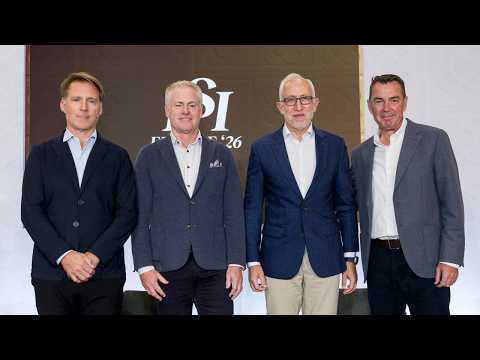
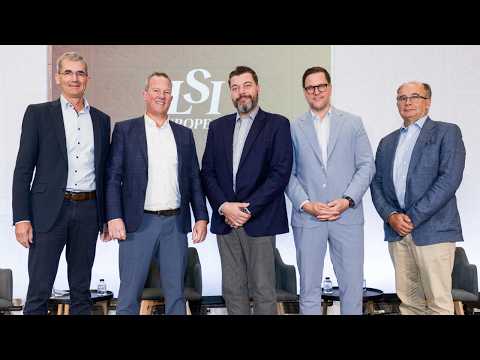
Right? Are we going to kick off? I guess the best place to start is a few introductions. My name is Mike hobby. I am a medical med tech innovator from Cambridge consultants, and tend to focus on helping our clients innovate at the very cutting edge of technology. And I'm very honored to be joined today by four really quite excellent people in their area of field. I'm joined by Antony Rix, CEO and co founder of lucider, looking at how AI can impact the future of cancer diagnostics and discovery. We also have with us, Sharon Hayman Gottlieb, and Sharon is looking at the predictive and preventative care of pregnancy and looking at how complications could be predicted in the early stages with the use of AI. We're also joined by, I was going to say, Kay roller. And Kay is looking at how the use of AI in building digital twin of the lung, and then using a combination of breath and and CT imaging, can actually use that to predict potential outcomes and disease and lung health. I take it and also. Lastly, we got Guan danguella. Danguella Altman, thank you. Dan Gula, who's also CEO and board member of precision diagnostics, CX precision, and is joining us on stage with her views on early diagnostic detection again, and with all my guests here, we've got an AI is the thread in terms of how they use that in a symbiotic way. I thought we'd start the conversation with something a little light hearted and something we can all relate to. And it was the French some 60 years ago who declared that they were the really only true artists of wine making. And what they said was, because they were the true artists, they made exceptional wines, but some years were good and some years were bad, and then the Australians and the South Africans and the Californians and the New Zealanders decided to apply science to the art of wine making, and what they got were very good wines every year. They then took some of the art from France and then discovered ways of making some exceptional wines. And what I'm interested to learn is the clinicians today. Are they hanging on to the art of clinician being clinicians, and in hanging on to that art, are they getting some good and excellent patient outcomes, and sometimes not so good patient outcomes, whereas maybe with AI and science, we could get good patient outcomes more often, and by then, leaving them Time to use their art of a clinician, we might actually get some exceptional patient care. So I'm going to put that question down the line. Start with you Antony, are clinicians resisting AI because they believe they're true artists of patient care?
Antony Rix 3:15
So five years ago, when I set lucid medical up with Professor salah, it was all, you're not going to replace radiologists, are you? But she and I shared this vision of bringing algorithms. I come from the AI side. I spent my career in that area, and she was a leading finish physician in cancer imaging. And we could see that if we actually put our skills together, we could create algorithms that could actually mean that your average, little you know, district hospital could be reporting and treating patients at the level of experts. And it's been super exciting in our journey to see now that actually our tech, when it's in the hands of doctors, brings that average level up. So we can take real physicians who can be hugely variable, and we see this in our data, and lift them all to the level of experts, which is exciting.
Mike Hobby 4:06
Yeah, that is exciting. Sharon, you are arguably in the oldest area of clinical care in the maternity sector, given that that was an art generated 1000s of years ago, how's that changing now? Is it still the art, or is now science, you must know, playing a bigger role?
Sharon Handelman-Gotlib 4:25
It's a great question. I'll say it's still in the art, but under the transition of moving into a science and bringing in the more experience and the know how of doing that. And I'll say to also address the question that you just asked, Anthony, is, when we started our journey, we thought we'd have pushback from clinicians, from OBS saying, well, we don't need tools, we don't need AI, we don't need a model to predict what we know how to deal with but on the contrary, we got the frustration from the clinicians, from the doctor, saying, so. Some, some patients, in some cases, are clear as sun and daylight that we can identify, but some just below the radar, if we have those tools, we can integrate those and we can perform at best performance that we have, and also provide, of course, the ultimate goal, which is healthy babies and better health outcomes, which I think a clinician will embrace at any given day. So we've we've been getting a lot of strong positive feedback to that. So it's not about just the art, it's a combination of that. So taking the beauty of science and technological capabilities is bringing in their artistic capabilities, their EQ and IQ together, the combination creates
Mike Hobby 5:46
magic, right? Okay, I think that's for me, that's a really solid message key. Now you're in the area of data and data combined with CT imaging and CT imaging, then looking at breath diagnosis, the breath analysis, that's a lot of data, but you've incorporated your AI to really rapidly look at how early detection, especially in the lung health, is so important. What's been the feedback you've been getting when you talk about the use of your AI capability.
Kei Müller 6:22
Thanks for the question, actually. So since we are pre clearance, we're working on a scientific level with some of the most advanced centers and KOLs on the field. The feedback that we've been getting is is overwhelmingly positive, because we tackle a problem with mechanical ventilation, where you basically have a myriad, if not infinite kind of different ways to deal and treat the patient, to deal with and treat the patient. And choosing something that really is beneficial to patient health, without immediately getting some sort of feedback from the patient is something that is impossible to actually optimize in a very short period of time, but it needs to be done so delivering a tool perspectively, that is capable of playing through 1000s or 10s of 1000s of scenarios in a very brief period of time and then provide this information before you actually go into serious therapy or a mechanical ventilation in our Barba case, is valuable information that is wanted, but not there right now. So need is felt.
Mike Hobby 7:39
You're at the other end of the life time scale, aren't you? So this is always a touchy subject, and some of us maybe got personal experience of this with our elder relatives. You're there to maybe detect the early onsets, the early signs of perhaps dementia or brain cognitive decline. It's a surprising area to bring AI in. What would you say to that?
Danguole Altman 8:04
I actually believe that it's an area that your question on the art and the science actually enables the physician to practice more of the science of the art by having more of the science. So we have a blood test that helps rule out dementia in age appropriate patients that have possible early symptoms. And the and the situation is that the primary care physicians really are overwhelmed in the healthcare system, and they really don't have the tools for what's a difficult diagnosis and not one that there is a single test that you can take, and it tells someone you have Parkinson's or you have Alzheimer's. It's really and yet it's one, especially in the last five years or so, that early detection can really lead to much better outcomes, because the drugs that are newly approved work better if patients are detected early. There are a lot of people actually think there's even more promise on a lot of the medical devices, some of whom are presenting here in this conference, to really make a big impact. And there's also even lifestyle modifications, things that are not therapeutics or drugs, but all of those work better if you can find that out early. So if you can rule out, and give the primary care physicians a tool that they can rule out the most feared disease, which is dementia, that also, if it is dementia, or higher probability of it, moves them up the diagnostic pathway, and then have the focus on, what are the other things that are causing symptoms at that primary care level. I think it actually enables more of the art by providing the data much more easily to patients. So I think that AI is an enabler of better care.
Mike Hobby 9:55
Yeah, I think that art of AI the. The I think the worry has been that somehow AI will take away the personalization of care. I'm interested in this, Sharon, because in your area, mums to be are very sensitive to now what's going to happen during their gestation. So do you think AI will de personalize the care.
Sharon Handelman-Gotlib 10:22
On the contrary, it provides the capability and the ability to provide specific, personalized and precision based recommendations and the journey. So for example, when we see in what we do at Sheila, our ability is not only to have the models to predict, for example, preeclampsia, but it's also to provide the precision based recommendation of what to do, what is the therapeutic journey and as as you mentioned as well, what are the lifestyle habits precisely based on the biological profile of the woman? Because that's what we take. We take not only clinical data, but also biological precision with personalized data. So when we have that, if we hadn't used our system or this type of mechanism, as we see in other areas, then it's a one size fits all, a very cookie cutter solution. And for preeclampsia, there's, we know what therapeutic is being given to women, many, many women do not adhere at preterm preeclampsia to what is given to them. So even if we are able to identify, determine that provide the right protocol and the right course of actions, the outcomes will remain the same what if we change the course of the process and say, not only, we can flag out, intervene in time and prevent those pregnancy complications, preeclampsia from occurring based on what you need to do? So that's kind of the art, and that's how we see that. So it's not, not, not any kind of obstacle in any shape or form,
Mike Hobby 12:04
right, right? Because I see a lot of people come to us talking about personalized health, and I think what scares off investors is, how do you capitalize that? How do you monetize it? How do you make that investable? And I think, I think Antony and kind is the key this. This might resonate with you, this idea of personalized medicines. And here we have this AI strand running through, how do you see that into play with what you're the work you're doing, in terms of your your cancer identification role.
Antony Rix 12:35
Thank you. So one of the challenges in prostate cancer, where we're working is that you know, a large proportion of older men have what we call the lowest grade or indolent prostate cancer, which you don't actually want to treat. So it's crucially important that we personalize the care of these individuals that diagnose the high grade cancers that need to be diagnosed, identify the men who are at intermediate risk, who you have to watch, and then the low risk ones go home. And it's super exciting that some of the hospitals that we've been working with, with our already approved products, are starting to put the first steps in place of prioritizing a biopsy, of actually, kind of immediately personalizing the care so that the highest risk individuals get treated first, and we see a long, a long, you know, journey. We've just had our first patent granted around personalized care that for us, giving the patient that report, that understanding of what is their disease, where is it at? What is the outcome? Is going to be super exciting. And it was interesting to see a company in breast, breast cancer prognostics being bought by lunet, a mammography, AI company, you know, seeing it is that about giving the personalized recommendation, okay?
Mike Hobby 13:54
And again, I suppose, in in the treatment of early diagnosis of lung disease, that personalization, that that art of treating that patient in the right way early on, is that investable key. Are you you seeing that what you're I mean, it's great. Tech Night. It's exciting. Technology do you see the investors understanding it enough for you to get that message across. Or do you think they still are heavily focused on clinical devices, as we tend to see at events like this?
Kei Müller 14:30
I mean, one first question is, actually, how do you make money with this? Yeah, and whether a better outcome that we propose actually leads to the important stakeholders making a profit off of that? Yeah, and so I believe that personalization has the potential of increasing effectiveness and efficiency of treatment, and if you can then translate that into a benefit to one of the stakeholders, you. Can basically put a price tag to that. So what we've been doing is that we've been studying the way that reimbursement schemes are executed, how in the ICU, this is our first application, how the DRGs and CPT codes are actually used to finance and drive, you know, execute on the the way treatment in the ICU, and we've identified certain aspects of that where actually an increase in efficiency by the doctor who then wants to really use the tool leads to significant cost savings for the provider, which is the hospital in the first place. Now you have alignment of two stakeholders, and the third one is actually hospital itself, because, or the hospital self, because it profits from, in many cases, a constant reimbursement income, right? So as long as the income stays the same and you give another stakeholder, like the provider, the possibility of optimizing internally their cost structure, increasing cost efficiency. That's a very good pitch, so, and that's been resonating well,
Mike Hobby 16:12
okay, and I think in your case, what we're seeing through your diagnostic work with the AI umbrella over it. Do you see now, in the next almost maybe now, but certainly in the next five years, with the shift in greater connectivity, the decentralization of the diagnostic work that you'll do, the democratization, if you like, of early detection of cognitive decline?
Danguole Altman 16:43
Yeah, there's, there's a lot of pieces to to that question. So I do think that the potential of personalized medicine and precision diagnostics as part of that to reduce health care costs overall is one of the few things I see that our tool that governments and large Payers can use to really decrease that cost. But the second part of your question has to do with patients and how they kind of advocate for themselves, and I do think that they're that with technology, there's greater opportunity, and I think there's a lot of interest on patients to be able to step up and not just be in a passive role of doing what their what their physicians recommend that they do, but by understanding that the personalization is really key to them, enable them through technology to do things like ordering different lab tests, get a telehealth consult from someone come in, not just with a bunch of Google searches, to a physician's office saying, Well, what do you think about this, but be able to have far more information at their disposal and even being able to act on that. So I think that the neuro field in general is really poised where oncology was 20 years ago, where it's not going to be you have Alzheimer's, it's going to be, what type are you going to be someone that's more of an amyloid is, you know, is an amyloid reduction therapy appropriate? Or is it going to be the GLP ones are showing some really good results in that area. Is it more of a neuro inflammatory response? You know, are there devices? So I think it will become personalized that will lead to better care. But I think patients will play a role of pushing for that far more than I think historically they've had.
Mike Hobby 18:38
I think my worry has been the last, certainly two years is, is all I've heard is Ai, ai, ai, ai. It repeats until I'm fed up with it. Do you think that saturation of that term has led to investors not understanding the subtleties of AI? Because we've got a diagnostics, we've got a digital twin, we've got early detection in maternity care, and we've got cancer, oncology sitting on the stage, very different areas of focus in terms of care. Yet, AI feels like, hey, such a broad term, which is banded around. It's not a one size fits all. It has so many stuff that genetic AI on the edge, however. You know, using baseline AI other things, do you think this puts investors in a different positions? They're not necessarily experts in AI to understand the value of it. What's your expense?
Antony Rix 19:36
Antony, so I think it's a real challenge. And I mean, how many investors are there in the room? Put your hand up if you're an investor, excellent, but where are all of the other investors? We had a panel session yesterday with investors talking about AI, which was all about how they use AI, but they weren't really experienced in investing. You need to understand AI is going to touch almost. Every area of medicine, the amount will vary. I see a huge scope for the art and the personal care. But when algorithms together with maybe low cost tests or imaging or even just a straightforward digital interface to a patient, when those become better than the human. The way we will change care will completely be upended. And you know, 25 years ago, cardiologists wouldn't treat a computer to read an ECG. Now no cardiologist would read an ECG. And we need to see where that's going to be going to be going. So AI is going to be absolutely huge. We need to be investing in it. The opportunity is fantastic, and we need to be visionary.
Mike Hobby 20:47
Thank you. Sharon, your experience.
Sharon Handelman-Gotlib 20:49
I mean, I think AI is here to stay, and we should not fear that. I mean, it's a commodity and to the benefit of the clinician, because the number of patients they come across on a daily basis is just going this way, or the fact that we are understaffed and under a resource. We need those technology to support health outcomes, not to decline, but hopefully to improve. So this is the opportunity to do more with less, but still keep the health quality of things in the proper condition. So it's here. It's for our benefit, and we cannot ignore that. I mean, it's it's like today's bread and butter. That's how I consider that. We've been doing an AI and very advanced machine learning before. It was a buzzword, because it was the future, but now is the present, and any place that you do not embed that is getting it wrong. That's my opinion.
Mike Hobby 21:45
We've had some pretty bad scare stories in the UK with maternity care. Is is that industry now open to this whole area, or are they still resistive?
Sharon Handelman-Gotlib 21:56
Absolutely, it's 100% open for that, and they need that. And again, the frustrations of clinicians seeing their patients and not being able to determine for new cases or women would you wouldn't suspect to be primary for preeclampsia or gestational diabetes, and the fact that we can provide those tools and give them to them listen your patient that you're seeing now will likely have with a risk war of this or that. It doesn't matter, high highly, she said, high risk for preeclampsia. You need to deal with this now, and when you deal with that now you're being you're going to be able to prevent that condition from occurring. And for them, it's not only a very short term win, it's also for the long term. So because pregnancy complications tell kind of like a crystal ball the future health outcomes of a woman, because they're highly correlated to potential future risks. So for preeclampsia, a huge market with cardio metabolic diseases, so a system as a whole has to see that and understand that if we tap in into the process and identify the risk in time, then you can prevent a lot of things from happening and going into the wrong direction.
Mike Hobby 23:14
Okay? And key software as a medical device is, I guess that's where you're playing, and then looking to maybe see how that fits with maybe a drug regime or a recovery process. Software as a medical device has been a hard investment battle in the past. What are you seeing currently? Is you seeing an understanding of digital twins? And I mean, I've seen digital twins applied and to various organs. You focusing on lung, but what's, what's the what's it feel like as you go out there looking for that investor or set of investors that really get it, what you're trying to do?
Kei Müller 23:54
It's still a hard battle. Yeah, there's no question about that, because it's still fairly new, there's some success stories out there. I mean, just recently, Hart floated as IPO, so you have a digital twin company that made it all the way from a spin out, from a university, all the way through IPO. That's very encouraging. It's helpful in both creating awareness and basically showing that there is a possibility of finding a way through the entire, you know, investment life cycle. What's hard about software as a medical device is, and I've been experiencing this quite for quite some time, is that you're sitting with, we are software as a service. You're sitting with this, you know, right between the chairs of the traditional Medtech investor and a tech investor. So they ask you different sets of questions which don't really fit your focus. So, I mean. I can't really change that, but I can try to basically communicate as well as possible for them to understand as quickly as possible before our money runs out, right? That is my task, but I'm seeing improvement, right? There have been, there have been events that have shown that you can't just proceed with the way we're doing things right now. Covid has been one of those, especially with respect to mechanical ventilation. You have had. It still is relevant, but this has been pivot moment in increasing awareness for a problem that maybe hasn't been you know, at the forefront of awareness before now you can say that you have a software device as a software as a medical device that will actually be able to provide the information that guides a physician or a respiratory therapist towards a better outcome. So that's the promise, right? And so with respect to coming back to the art aspect, it's it's about tooling, and we've heard the word tool a couple of times now, so an artist grows with their tools, right? So they started with cave art, and then all the way to Michelangelo, for example, right? So the tools change, the artists remain. And as you look at the symbiotic nature that is in our title of the of the of the session here, it's, I don't, I don't really feel that. I mean what you need to show and what need to demonstrate here both to investors, but also to physicians and the users, is credibility, right? So the it the tool that you provide, must be reliable and precise. Once you've shown that it will be used, and we're seeing uptake in usage, we're not quite there yet, but actually this is the path forward, and so I've never seen an artist that has, you know, decline better tools.
Mike Hobby 27:07
I like the fact you've picked up on the symbiotic aspect. Because I think Dan going, if we look forward 10 years time, and we think about the symbiotic effects of technologies which we know are coming, particularly around low latency communications. Ai on the edge, we know, you know, look at Nvidia and the work they're doing with their chip sets surgical robotics. There's no event you ever go to where there isn't a surgical robot somewhere. This decentralization and delivery of health, we know that's all coming. No one can deny, deny that. So those symbiotic impacts in the next 10 years, what do you see if you were an investor today? What? What do you see heading down our way and how that's going to impact health? So I
Danguole Altman 27:55
think that that investment opportunity lies in the intersection of all of those types of things. And I think that many of the investment community, and I've seen this through my career, sort of your healthcare services versus your life sciences. Now you're a tech investor, you're stage appropriate. But actually I think where the interesting things are happening is the pairing of the biology with the tech, which I think all of us on the panel represent, the symbiotic nature of the art and the science. So I think there actually is a tremendous amount of opportunity. And I think traditionally, folks have investors said, Well, you've got to deal with physician adoption, true, you've got to deal with reimbursement, true. I think there's answers to all of those, but I think there also has to be a kind of a innovation mindset to set aside from that and say, Wait a minute, all of these pieces together can work together for better solutions for patients that actually work within the healthcare system as a whole. So I think on the investor front, some investors are there looking at intersectionality, but many are not set up that way. They're set up on vertical so like you can see it here at this conference as well, it's just sort of how it's been organized.
Mike Hobby 29:22
So that intersection. Does that mean we're looking at the intersection where, say, your digital twin modeling of the lung now comes into play with robotics, so that now we're going to see people being operated on by robotic with a remote surgeon 3000 miles away using low latency communications. I mean, is that how you see it going in the future, Kei?
Kei Müller 29:47
It can be, well, all of that can lead to a higher degree of integration, right of different technologies. And I mean, obviously there needs to be kind of a combination of hardware and software products. I mean, I'm completely. Completely on the software side of things. But, yeah, that's the direction which which is promising. I know of not yet existing hospital projects in the US that push a digital and robotics first approach, and we'll see the benefits of this, right? So if you can think of something like that from the start, you can leverage all which has been proven to be incredibly beneficial and valuable in Well, I mean, you could basically see the history of mankind if you look at industrialization, all the efficiency gains, everything that's been shown to push civilization forward is just, I wouldn't say just, but it's reapplied in the hospital setting, if you get the opportunity of doing this from the start, I've seen this on Texas is working on that with UT, Austin. I'm I'm pretty sure that that Neom is working on something like that, and we'll see the benefits of it.
Mike Hobby 31:06
I'm pretty sure. I'm pretty sure too. I think in the case of maternity care, I don't think we're going to see robotic deliveries anytime soon. Are we? Do you think ultimately, mothers trust other humans, and it is that art of maternity care that will prevail probably the longest, given it you're actually the oldest in terms of clinical experience.
Sharon Handelman-Gotlib 31:27
Interesting question. I think that will still remain more human than robotics. But again, the robotics, or the AI, the modeling, will determine the type of delivery. Again, the pregnancy, the duration, when to come for, for for the delivery. These are things that we're seeing integrated. And of course, there are other solutions helping out for preterm so there are medical devices, again, also based AI. So it's a combination. I don't think robotics will exchange everything, but in in prenatal space or pregnancy complication, I see it different, in a different kind of formatting and infrastructure, the setting. So we know in the US, there's a very significant population that is underserved and under met, because they do not see the clinicians at time. And oftentimes very high numbers, they see the clinician when they give birth. So what if we meet those patients somewhere else and apply the technology there? That's the out of the box thinking involving AI, so identifying a woman pregnant or supporting those in you're talking about robotics or machinery in virtual care, in remote patient monitoring. So I'm throwing out the ideas of what we can potentially bring that's what we envision in the future for our company. Is Yes, well, identify a woman, regardless of where she is, because she needs to get that care in an affordable and accessible way. We have to play it out smartly and then say, but if she is in Utah, and we have the expert in Madrid, that's doable today, so that's what we're looking into, and that's the future of maternal health.
Antony Rix 33:12
And it's not just in surgery. So ready. The radiotherapy industry is now using AI routinely for tasks like organ segmentation that even four or five years ago were largely manual tasks. The cutting edge that we're at now is AI automatically identifying lesions and lesion extent. And there's really exciting data that suggests that we may well be able to do that dramatically more accurately than than individuals. But but you know, the studies have yet to be done, and in our space of in prostate cancer, robotic surgery has been very common, and they're there. It's not so much the AI controlling the robot, but the low hanging fruit is just the AI helping the surgeon to work out where to cut and where not to cut, because surgical outcomes in prostate cancer tend to be pretty poor, but if we know the disease extent, we can avoid damaging the nerves and the vascular bundles to really ensure function and continence preservation.
Mike Hobby 34:16
Yeah, and I think ultimately, what everybody here is on this stage and other stages, I'm sure have been talking about is the use of AI to get to that predictive, preventable stage a lot sooner. Do you think the challenge here and jump in? I'm not pushing this to anyone in particular, but feel free to jump in. Do you think the care system is broken here, because primarily the big investment and the money spend is on treating people who are not in a good place. And the idea of spending money in predictive from preventative care just isn't really it's not set up for that. I mean, what do you think is something got to change? Is the insurance company's got to step in and,
Danguole Altman 34:59
well, I think there's. Potential for more potential than in the US, where it's a single payer system that's trying to manage its cost so that if you can divert patients that would have other been otherwise been referred to specialists and keeping them a primary care, there can be a cost savings for for the system overall. In the US, it doesn't really work that way, because it is fragmented, and people jump from payer to payer in our space. However, Medicare is the payer for the elderly, and there is one, you know, one payer and Medicare Advantage mostly has to follow the rules the traditional Medicare has in terms of what they pay or they don't pay. There's also really interesting employer retiree plans and things that are on the hook for long periods of time for their pensioners and for their medical care. So we're actually seeing in discussions with those types of payers, a lot of interest in something like better predictive modeling for those patient populations, because they're not going to get younger anytime soon. You know, once they're in the system, they're going to be treated by that one payer. So it's an opportunity,
Antony Rix 36:10
and there's a self pay opportunity here. My co founder in Italy has launched a prostate cancer screening service. She calls it prostate wellness service, to avoid some of the controversies, but people are just coming forward in their droves and self paying. And you know, the cost is in the hundreds of euros, not even 1000 and shoot, you know, if you spend 500 euros a year servicing your car, well, why don't you, you know, and if you're a man over 50, why didn't you spend that much making sure your prostate doesn't kill you? I would, yeah.
Mike Hobby 36:40
So bypass CQ yourself. Is that profitable?
Antony Rix 36:45
It increases revenue. It's, you know, it's,
Danguole Altman 36:47
and these all have gone to high deductible plans and healthcare savings accounts in the US, and so they're banking money every month. And that's exactly right. I mean, maybe not. There are plenty of celebrities and folks who are getting full body MRIs with mixed results, but a lot of our tests are much less than something like that. So I agree with you that something really important people will pay okay.
Mike Hobby 37:12
And mothers are going to seek you out, aren't they?
Sharon Handelman-Gotlib 37:14
Absolutely
Mike Hobby 37:15
They just want peace of mind. They're going to want to know that they're they haven't got something coming down the line, which they're not prepared already for.
Sharon Handelman-Gotlib 37:22
It's like, say, one of the willing, the more willingness for, I'd say, as a population, to pay out of pocket money for specific testing. We've seen that with the the nipt testing, the genetic testing and others. So paying more for ultrasounds extra. So, yes, there's a balance, but I'd say also it's, it's, it's a, it's an excellent question, because there's nuance here. Who's willing to pay insurance companies, for sure, providers, it's a good question, yep. So you have to find the right balance of what they get out of that. What's their incentive? What, what is they gain from that? And there are ways to do that
Mike Hobby 38:01
so healthcare could go down a real commoditized route and bypass, if you like, some of the big players, if we can't find investors and take it to the people, as it were, and get those people to realize that if they invest in themselves, they could reap the benefits. And AI, surprisingly, could be the very thing that's serving them,
Antony Rix 38:21
but the clinicians have changed. So in our space, it's no longer, you know, AI, you know you're not going to replace doctors. Are you? It's now, can it? Can the AI, write the report and I'll sign here, and there's a real openness to this, and that's going to change the provider ecosystem. It's going to change the healthcare industry as a whole, and we need to be thinking about that now.
Mike Hobby 38:46
So I think the art of healing is still very much in your hands, and I think the symbiotic approach could well be led by the very people that want and expect to receive that care. Wow, that's interesting. Thank you ever so much. Thank you. It's been really interesting.
Danguole Altman 39:02
Thank you.
Mike Hobby 0:05
Right? Are we going to kick off? I guess the best place to start is a few introductions. My name is Mike hobby. I am a medical med tech innovator from Cambridge consultants, and tend to focus on helping our clients innovate at the very cutting edge of technology. And I'm very honored to be joined today by four really quite excellent people in their area of field. I'm joined by Antony Rix, CEO and co founder of lucider, looking at how AI can impact the future of cancer diagnostics and discovery. We also have with us, Sharon Hayman Gottlieb, and Sharon is looking at the predictive and preventative care of pregnancy and looking at how complications could be predicted in the early stages with the use of AI. We're also joined by, I was going to say, Kay roller. And Kay is looking at how the use of AI in building digital twin of the lung, and then using a combination of breath and and CT imaging, can actually use that to predict potential outcomes and disease and lung health. I take it and also. Lastly, we got Guan danguella. Danguella Altman, thank you. Dan Gula, who's also CEO and board member of precision diagnostics, CX precision, and is joining us on stage with her views on early diagnostic detection again, and with all my guests here, we've got an AI is the thread in terms of how they use that in a symbiotic way. I thought we'd start the conversation with something a little light hearted and something we can all relate to. And it was the French some 60 years ago who declared that they were the really only true artists of wine making. And what they said was, because they were the true artists, they made exceptional wines, but some years were good and some years were bad, and then the Australians and the South Africans and the Californians and the New Zealanders decided to apply science to the art of wine making, and what they got were very good wines every year. They then took some of the art from France and then discovered ways of making some exceptional wines. And what I'm interested to learn is the clinicians today. Are they hanging on to the art of clinician being clinicians, and in hanging on to that art, are they getting some good and excellent patient outcomes, and sometimes not so good patient outcomes, whereas maybe with AI and science, we could get good patient outcomes more often, and by then, leaving them Time to use their art of a clinician, we might actually get some exceptional patient care. So I'm going to put that question down the line. Start with you Antony, are clinicians resisting AI because they believe they're true artists of patient care?
Antony Rix 3:15
So five years ago, when I set lucid medical up with Professor salah, it was all, you're not going to replace radiologists, are you? But she and I shared this vision of bringing algorithms. I come from the AI side. I spent my career in that area, and she was a leading finish physician in cancer imaging. And we could see that if we actually put our skills together, we could create algorithms that could actually mean that your average, little you know, district hospital could be reporting and treating patients at the level of experts. And it's been super exciting in our journey to see now that actually our tech, when it's in the hands of doctors, brings that average level up. So we can take real physicians who can be hugely variable, and we see this in our data, and lift them all to the level of experts, which is exciting.
Mike Hobby 4:06
Yeah, that is exciting. Sharon, you are arguably in the oldest area of clinical care in the maternity sector, given that that was an art generated 1000s of years ago, how's that changing now? Is it still the art, or is now science, you must know, playing a bigger role?
Sharon Handelman-Gotlib 4:25
It's a great question. I'll say it's still in the art, but under the transition of moving into a science and bringing in the more experience and the know how of doing that. And I'll say to also address the question that you just asked, Anthony, is, when we started our journey, we thought we'd have pushback from clinicians, from OBS saying, well, we don't need tools, we don't need AI, we don't need a model to predict what we know how to deal with but on the contrary, we got the frustration from the clinicians, from the doctor, saying, so. Some, some patients, in some cases, are clear as sun and daylight that we can identify, but some just below the radar, if we have those tools, we can integrate those and we can perform at best performance that we have, and also provide, of course, the ultimate goal, which is healthy babies and better health outcomes, which I think a clinician will embrace at any given day. So we've we've been getting a lot of strong positive feedback to that. So it's not about just the art, it's a combination of that. So taking the beauty of science and technological capabilities is bringing in their artistic capabilities, their EQ and IQ together, the combination creates
Mike Hobby 5:46
magic, right? Okay, I think that's for me, that's a really solid message key. Now you're in the area of data and data combined with CT imaging and CT imaging, then looking at breath diagnosis, the breath analysis, that's a lot of data, but you've incorporated your AI to really rapidly look at how early detection, especially in the lung health, is so important. What's been the feedback you've been getting when you talk about the use of your AI capability.
Kei Müller 6:22
Thanks for the question, actually. So since we are pre clearance, we're working on a scientific level with some of the most advanced centers and KOLs on the field. The feedback that we've been getting is is overwhelmingly positive, because we tackle a problem with mechanical ventilation, where you basically have a myriad, if not infinite kind of different ways to deal and treat the patient, to deal with and treat the patient. And choosing something that really is beneficial to patient health, without immediately getting some sort of feedback from the patient is something that is impossible to actually optimize in a very short period of time, but it needs to be done so delivering a tool perspectively, that is capable of playing through 1000s or 10s of 1000s of scenarios in a very brief period of time and then provide this information before you actually go into serious therapy or a mechanical ventilation in our Barba case, is valuable information that is wanted, but not there right now. So need is felt.
Mike Hobby 7:39
You're at the other end of the life time scale, aren't you? So this is always a touchy subject, and some of us maybe got personal experience of this with our elder relatives. You're there to maybe detect the early onsets, the early signs of perhaps dementia or brain cognitive decline. It's a surprising area to bring AI in. What would you say to that?
Danguole Altman 8:04
I actually believe that it's an area that your question on the art and the science actually enables the physician to practice more of the science of the art by having more of the science. So we have a blood test that helps rule out dementia in age appropriate patients that have possible early symptoms. And the and the situation is that the primary care physicians really are overwhelmed in the healthcare system, and they really don't have the tools for what's a difficult diagnosis and not one that there is a single test that you can take, and it tells someone you have Parkinson's or you have Alzheimer's. It's really and yet it's one, especially in the last five years or so, that early detection can really lead to much better outcomes, because the drugs that are newly approved work better if patients are detected early. There are a lot of people actually think there's even more promise on a lot of the medical devices, some of whom are presenting here in this conference, to really make a big impact. And there's also even lifestyle modifications, things that are not therapeutics or drugs, but all of those work better if you can find that out early. So if you can rule out, and give the primary care physicians a tool that they can rule out the most feared disease, which is dementia, that also, if it is dementia, or higher probability of it, moves them up the diagnostic pathway, and then have the focus on, what are the other things that are causing symptoms at that primary care level. I think it actually enables more of the art by providing the data much more easily to patients. So I think that AI is an enabler of better care.
Mike Hobby 9:55
Yeah, I think that art of AI the. The I think the worry has been that somehow AI will take away the personalization of care. I'm interested in this, Sharon, because in your area, mums to be are very sensitive to now what's going to happen during their gestation. So do you think AI will de personalize the care.
Sharon Handelman-Gotlib 10:22
On the contrary, it provides the capability and the ability to provide specific, personalized and precision based recommendations and the journey. So for example, when we see in what we do at Sheila, our ability is not only to have the models to predict, for example, preeclampsia, but it's also to provide the precision based recommendation of what to do, what is the therapeutic journey and as as you mentioned as well, what are the lifestyle habits precisely based on the biological profile of the woman? Because that's what we take. We take not only clinical data, but also biological precision with personalized data. So when we have that, if we hadn't used our system or this type of mechanism, as we see in other areas, then it's a one size fits all, a very cookie cutter solution. And for preeclampsia, there's, we know what therapeutic is being given to women, many, many women do not adhere at preterm preeclampsia to what is given to them. So even if we are able to identify, determine that provide the right protocol and the right course of actions, the outcomes will remain the same what if we change the course of the process and say, not only, we can flag out, intervene in time and prevent those pregnancy complications, preeclampsia from occurring based on what you need to do? So that's kind of the art, and that's how we see that. So it's not, not, not any kind of obstacle in any shape or form,
Mike Hobby 12:04
right, right? Because I see a lot of people come to us talking about personalized health, and I think what scares off investors is, how do you capitalize that? How do you monetize it? How do you make that investable? And I think, I think Antony and kind is the key this. This might resonate with you, this idea of personalized medicines. And here we have this AI strand running through, how do you see that into play with what you're the work you're doing, in terms of your your cancer identification role.
Antony Rix 12:35
Thank you. So one of the challenges in prostate cancer, where we're working is that you know, a large proportion of older men have what we call the lowest grade or indolent prostate cancer, which you don't actually want to treat. So it's crucially important that we personalize the care of these individuals that diagnose the high grade cancers that need to be diagnosed, identify the men who are at intermediate risk, who you have to watch, and then the low risk ones go home. And it's super exciting that some of the hospitals that we've been working with, with our already approved products, are starting to put the first steps in place of prioritizing a biopsy, of actually, kind of immediately personalizing the care so that the highest risk individuals get treated first, and we see a long, a long, you know, journey. We've just had our first patent granted around personalized care that for us, giving the patient that report, that understanding of what is their disease, where is it at? What is the outcome? Is going to be super exciting. And it was interesting to see a company in breast, breast cancer prognostics being bought by lunet, a mammography, AI company, you know, seeing it is that about giving the personalized recommendation, okay?
Mike Hobby 13:54
And again, I suppose, in in the treatment of early diagnosis of lung disease, that personalization, that that art of treating that patient in the right way early on, is that investable key. Are you you seeing that what you're I mean, it's great. Tech Night. It's exciting. Technology do you see the investors understanding it enough for you to get that message across. Or do you think they still are heavily focused on clinical devices, as we tend to see at events like this?
Kei Müller 14:30
I mean, one first question is, actually, how do you make money with this? Yeah, and whether a better outcome that we propose actually leads to the important stakeholders making a profit off of that? Yeah, and so I believe that personalization has the potential of increasing effectiveness and efficiency of treatment, and if you can then translate that into a benefit to one of the stakeholders, you. Can basically put a price tag to that. So what we've been doing is that we've been studying the way that reimbursement schemes are executed, how in the ICU, this is our first application, how the DRGs and CPT codes are actually used to finance and drive, you know, execute on the the way treatment in the ICU, and we've identified certain aspects of that where actually an increase in efficiency by the doctor who then wants to really use the tool leads to significant cost savings for the provider, which is the hospital in the first place. Now you have alignment of two stakeholders, and the third one is actually hospital itself, because, or the hospital self, because it profits from, in many cases, a constant reimbursement income, right? So as long as the income stays the same and you give another stakeholder, like the provider, the possibility of optimizing internally their cost structure, increasing cost efficiency. That's a very good pitch, so, and that's been resonating well,
Mike Hobby 16:12
okay, and I think in your case, what we're seeing through your diagnostic work with the AI umbrella over it. Do you see now, in the next almost maybe now, but certainly in the next five years, with the shift in greater connectivity, the decentralization of the diagnostic work that you'll do, the democratization, if you like, of early detection of cognitive decline?
Danguole Altman 16:43
Yeah, there's, there's a lot of pieces to to that question. So I do think that the potential of personalized medicine and precision diagnostics as part of that to reduce health care costs overall is one of the few things I see that our tool that governments and large Payers can use to really decrease that cost. But the second part of your question has to do with patients and how they kind of advocate for themselves, and I do think that they're that with technology, there's greater opportunity, and I think there's a lot of interest on patients to be able to step up and not just be in a passive role of doing what their what their physicians recommend that they do, but by understanding that the personalization is really key to them, enable them through technology to do things like ordering different lab tests, get a telehealth consult from someone come in, not just with a bunch of Google searches, to a physician's office saying, Well, what do you think about this, but be able to have far more information at their disposal and even being able to act on that. So I think that the neuro field in general is really poised where oncology was 20 years ago, where it's not going to be you have Alzheimer's, it's going to be, what type are you going to be someone that's more of an amyloid is, you know, is an amyloid reduction therapy appropriate? Or is it going to be the GLP ones are showing some really good results in that area. Is it more of a neuro inflammatory response? You know, are there devices? So I think it will become personalized that will lead to better care. But I think patients will play a role of pushing for that far more than I think historically they've had.
Mike Hobby 18:38
I think my worry has been the last, certainly two years is, is all I've heard is Ai, ai, ai, ai. It repeats until I'm fed up with it. Do you think that saturation of that term has led to investors not understanding the subtleties of AI? Because we've got a diagnostics, we've got a digital twin, we've got early detection in maternity care, and we've got cancer, oncology sitting on the stage, very different areas of focus in terms of care. Yet, AI feels like, hey, such a broad term, which is banded around. It's not a one size fits all. It has so many stuff that genetic AI on the edge, however. You know, using baseline AI other things, do you think this puts investors in a different positions? They're not necessarily experts in AI to understand the value of it. What's your expense?
Antony Rix 19:36
Antony, so I think it's a real challenge. And I mean, how many investors are there in the room? Put your hand up if you're an investor, excellent, but where are all of the other investors? We had a panel session yesterday with investors talking about AI, which was all about how they use AI, but they weren't really experienced in investing. You need to understand AI is going to touch almost. Every area of medicine, the amount will vary. I see a huge scope for the art and the personal care. But when algorithms together with maybe low cost tests or imaging or even just a straightforward digital interface to a patient, when those become better than the human. The way we will change care will completely be upended. And you know, 25 years ago, cardiologists wouldn't treat a computer to read an ECG. Now no cardiologist would read an ECG. And we need to see where that's going to be going to be going. So AI is going to be absolutely huge. We need to be investing in it. The opportunity is fantastic, and we need to be visionary.
Mike Hobby 20:47
Thank you. Sharon, your experience.
Sharon Handelman-Gotlib 20:49
I mean, I think AI is here to stay, and we should not fear that. I mean, it's a commodity and to the benefit of the clinician, because the number of patients they come across on a daily basis is just going this way, or the fact that we are understaffed and under a resource. We need those technology to support health outcomes, not to decline, but hopefully to improve. So this is the opportunity to do more with less, but still keep the health quality of things in the proper condition. So it's here. It's for our benefit, and we cannot ignore that. I mean, it's it's like today's bread and butter. That's how I consider that. We've been doing an AI and very advanced machine learning before. It was a buzzword, because it was the future, but now is the present, and any place that you do not embed that is getting it wrong. That's my opinion.
Mike Hobby 21:45
We've had some pretty bad scare stories in the UK with maternity care. Is is that industry now open to this whole area, or are they still resistive?
Sharon Handelman-Gotlib 21:56
Absolutely, it's 100% open for that, and they need that. And again, the frustrations of clinicians seeing their patients and not being able to determine for new cases or women would you wouldn't suspect to be primary for preeclampsia or gestational diabetes, and the fact that we can provide those tools and give them to them listen your patient that you're seeing now will likely have with a risk war of this or that. It doesn't matter, high highly, she said, high risk for preeclampsia. You need to deal with this now, and when you deal with that now you're being you're going to be able to prevent that condition from occurring. And for them, it's not only a very short term win, it's also for the long term. So because pregnancy complications tell kind of like a crystal ball the future health outcomes of a woman, because they're highly correlated to potential future risks. So for preeclampsia, a huge market with cardio metabolic diseases, so a system as a whole has to see that and understand that if we tap in into the process and identify the risk in time, then you can prevent a lot of things from happening and going into the wrong direction.
Mike Hobby 23:14
Okay? And key software as a medical device is, I guess that's where you're playing, and then looking to maybe see how that fits with maybe a drug regime or a recovery process. Software as a medical device has been a hard investment battle in the past. What are you seeing currently? Is you seeing an understanding of digital twins? And I mean, I've seen digital twins applied and to various organs. You focusing on lung, but what's, what's the what's it feel like as you go out there looking for that investor or set of investors that really get it, what you're trying to do?
Kei Müller 23:54
It's still a hard battle. Yeah, there's no question about that, because it's still fairly new, there's some success stories out there. I mean, just recently, Hart floated as IPO, so you have a digital twin company that made it all the way from a spin out, from a university, all the way through IPO. That's very encouraging. It's helpful in both creating awareness and basically showing that there is a possibility of finding a way through the entire, you know, investment life cycle. What's hard about software as a medical device is, and I've been experiencing this quite for quite some time, is that you're sitting with, we are software as a service. You're sitting with this, you know, right between the chairs of the traditional Medtech investor and a tech investor. So they ask you different sets of questions which don't really fit your focus. So, I mean. I can't really change that, but I can try to basically communicate as well as possible for them to understand as quickly as possible before our money runs out, right? That is my task, but I'm seeing improvement, right? There have been, there have been events that have shown that you can't just proceed with the way we're doing things right now. Covid has been one of those, especially with respect to mechanical ventilation. You have had. It still is relevant, but this has been pivot moment in increasing awareness for a problem that maybe hasn't been you know, at the forefront of awareness before now you can say that you have a software device as a software as a medical device that will actually be able to provide the information that guides a physician or a respiratory therapist towards a better outcome. So that's the promise, right? And so with respect to coming back to the art aspect, it's it's about tooling, and we've heard the word tool a couple of times now, so an artist grows with their tools, right? So they started with cave art, and then all the way to Michelangelo, for example, right? So the tools change, the artists remain. And as you look at the symbiotic nature that is in our title of the of the of the session here, it's, I don't, I don't really feel that. I mean what you need to show and what need to demonstrate here both to investors, but also to physicians and the users, is credibility, right? So the it the tool that you provide, must be reliable and precise. Once you've shown that it will be used, and we're seeing uptake in usage, we're not quite there yet, but actually this is the path forward, and so I've never seen an artist that has, you know, decline better tools.
Mike Hobby 27:07
I like the fact you've picked up on the symbiotic aspect. Because I think Dan going, if we look forward 10 years time, and we think about the symbiotic effects of technologies which we know are coming, particularly around low latency communications. Ai on the edge, we know, you know, look at Nvidia and the work they're doing with their chip sets surgical robotics. There's no event you ever go to where there isn't a surgical robot somewhere. This decentralization and delivery of health, we know that's all coming. No one can deny, deny that. So those symbiotic impacts in the next 10 years, what do you see if you were an investor today? What? What do you see heading down our way and how that's going to impact health? So I
Danguole Altman 27:55
think that that investment opportunity lies in the intersection of all of those types of things. And I think that many of the investment community, and I've seen this through my career, sort of your healthcare services versus your life sciences. Now you're a tech investor, you're stage appropriate. But actually I think where the interesting things are happening is the pairing of the biology with the tech, which I think all of us on the panel represent, the symbiotic nature of the art and the science. So I think there actually is a tremendous amount of opportunity. And I think traditionally, folks have investors said, Well, you've got to deal with physician adoption, true, you've got to deal with reimbursement, true. I think there's answers to all of those, but I think there also has to be a kind of a innovation mindset to set aside from that and say, Wait a minute, all of these pieces together can work together for better solutions for patients that actually work within the healthcare system as a whole. So I think on the investor front, some investors are there looking at intersectionality, but many are not set up that way. They're set up on vertical so like you can see it here at this conference as well, it's just sort of how it's been organized.
Mike Hobby 29:22
So that intersection. Does that mean we're looking at the intersection where, say, your digital twin modeling of the lung now comes into play with robotics, so that now we're going to see people being operated on by robotic with a remote surgeon 3000 miles away using low latency communications. I mean, is that how you see it going in the future, Kei?
Kei Müller 29:47
It can be, well, all of that can lead to a higher degree of integration, right of different technologies. And I mean, obviously there needs to be kind of a combination of hardware and software products. I mean, I'm completely. Completely on the software side of things. But, yeah, that's the direction which which is promising. I know of not yet existing hospital projects in the US that push a digital and robotics first approach, and we'll see the benefits of this, right? So if you can think of something like that from the start, you can leverage all which has been proven to be incredibly beneficial and valuable in Well, I mean, you could basically see the history of mankind if you look at industrialization, all the efficiency gains, everything that's been shown to push civilization forward is just, I wouldn't say just, but it's reapplied in the hospital setting, if you get the opportunity of doing this from the start, I've seen this on Texas is working on that with UT, Austin. I'm I'm pretty sure that that Neom is working on something like that, and we'll see the benefits of it.
Mike Hobby 31:06
I'm pretty sure. I'm pretty sure too. I think in the case of maternity care, I don't think we're going to see robotic deliveries anytime soon. Are we? Do you think ultimately, mothers trust other humans, and it is that art of maternity care that will prevail probably the longest, given it you're actually the oldest in terms of clinical experience.
Sharon Handelman-Gotlib 31:27
Interesting question. I think that will still remain more human than robotics. But again, the robotics, or the AI, the modeling, will determine the type of delivery. Again, the pregnancy, the duration, when to come for, for for the delivery. These are things that we're seeing integrated. And of course, there are other solutions helping out for preterm so there are medical devices, again, also based AI. So it's a combination. I don't think robotics will exchange everything, but in in prenatal space or pregnancy complication, I see it different, in a different kind of formatting and infrastructure, the setting. So we know in the US, there's a very significant population that is underserved and under met, because they do not see the clinicians at time. And oftentimes very high numbers, they see the clinician when they give birth. So what if we meet those patients somewhere else and apply the technology there? That's the out of the box thinking involving AI, so identifying a woman pregnant or supporting those in you're talking about robotics or machinery in virtual care, in remote patient monitoring. So I'm throwing out the ideas of what we can potentially bring that's what we envision in the future for our company. Is Yes, well, identify a woman, regardless of where she is, because she needs to get that care in an affordable and accessible way. We have to play it out smartly and then say, but if she is in Utah, and we have the expert in Madrid, that's doable today, so that's what we're looking into, and that's the future of maternal health.
Antony Rix 33:12
And it's not just in surgery. So ready. The radiotherapy industry is now using AI routinely for tasks like organ segmentation that even four or five years ago were largely manual tasks. The cutting edge that we're at now is AI automatically identifying lesions and lesion extent. And there's really exciting data that suggests that we may well be able to do that dramatically more accurately than than individuals. But but you know, the studies have yet to be done, and in our space of in prostate cancer, robotic surgery has been very common, and they're there. It's not so much the AI controlling the robot, but the low hanging fruit is just the AI helping the surgeon to work out where to cut and where not to cut, because surgical outcomes in prostate cancer tend to be pretty poor, but if we know the disease extent, we can avoid damaging the nerves and the vascular bundles to really ensure function and continence preservation.
Mike Hobby 34:16
Yeah, and I think ultimately, what everybody here is on this stage and other stages, I'm sure have been talking about is the use of AI to get to that predictive, preventable stage a lot sooner. Do you think the challenge here and jump in? I'm not pushing this to anyone in particular, but feel free to jump in. Do you think the care system is broken here, because primarily the big investment and the money spend is on treating people who are not in a good place. And the idea of spending money in predictive from preventative care just isn't really it's not set up for that. I mean, what do you think is something got to change? Is the insurance company's got to step in and,
Danguole Altman 34:59
well, I think there's. Potential for more potential than in the US, where it's a single payer system that's trying to manage its cost so that if you can divert patients that would have other been otherwise been referred to specialists and keeping them a primary care, there can be a cost savings for for the system overall. In the US, it doesn't really work that way, because it is fragmented, and people jump from payer to payer in our space. However, Medicare is the payer for the elderly, and there is one, you know, one payer and Medicare Advantage mostly has to follow the rules the traditional Medicare has in terms of what they pay or they don't pay. There's also really interesting employer retiree plans and things that are on the hook for long periods of time for their pensioners and for their medical care. So we're actually seeing in discussions with those types of payers, a lot of interest in something like better predictive modeling for those patient populations, because they're not going to get younger anytime soon. You know, once they're in the system, they're going to be treated by that one payer. So it's an opportunity,
Antony Rix 36:10
and there's a self pay opportunity here. My co founder in Italy has launched a prostate cancer screening service. She calls it prostate wellness service, to avoid some of the controversies, but people are just coming forward in their droves and self paying. And you know, the cost is in the hundreds of euros, not even 1000 and shoot, you know, if you spend 500 euros a year servicing your car, well, why don't you, you know, and if you're a man over 50, why didn't you spend that much making sure your prostate doesn't kill you? I would, yeah.
Mike Hobby 36:40
So bypass CQ yourself. Is that profitable?
Antony Rix 36:45
It increases revenue. It's, you know, it's,
Danguole Altman 36:47
and these all have gone to high deductible plans and healthcare savings accounts in the US, and so they're banking money every month. And that's exactly right. I mean, maybe not. There are plenty of celebrities and folks who are getting full body MRIs with mixed results, but a lot of our tests are much less than something like that. So I agree with you that something really important people will pay okay.
Mike Hobby 37:12
And mothers are going to seek you out, aren't they?
Sharon Handelman-Gotlib 37:14
Absolutely
Mike Hobby 37:15
They just want peace of mind. They're going to want to know that they're they haven't got something coming down the line, which they're not prepared already for.
Sharon Handelman-Gotlib 37:22
It's like, say, one of the willing, the more willingness for, I'd say, as a population, to pay out of pocket money for specific testing. We've seen that with the the nipt testing, the genetic testing and others. So paying more for ultrasounds extra. So, yes, there's a balance, but I'd say also it's, it's, it's a, it's an excellent question, because there's nuance here. Who's willing to pay insurance companies, for sure, providers, it's a good question, yep. So you have to find the right balance of what they get out of that. What's their incentive? What, what is they gain from that? And there are ways to do that
Mike Hobby 38:01
so healthcare could go down a real commoditized route and bypass, if you like, some of the big players, if we can't find investors and take it to the people, as it were, and get those people to realize that if they invest in themselves, they could reap the benefits. And AI, surprisingly, could be the very thing that's serving them,
Antony Rix 38:21
but the clinicians have changed. So in our space, it's no longer, you know, AI, you know you're not going to replace doctors. Are you? It's now, can it? Can the AI, write the report and I'll sign here, and there's a real openness to this, and that's going to change the provider ecosystem. It's going to change the healthcare industry as a whole, and we need to be thinking about that now.
Mike Hobby 38:46
So I think the art of healing is still very much in your hands, and I think the symbiotic approach could well be led by the very people that want and expect to receive that care. Wow, that's interesting. Thank you ever so much. Thank you. It's been really interesting.
Danguole Altman 39:02
Thank you.
17011 Beach Blvd, Suite 500 Huntington Beach, CA 92647
714-847-3540© 2026 Life Science Intelligence, Inc., All Rights Reserved. | Privacy Policy