Adoption vs Value: Getting Ready to Scale | LSI Europe '25

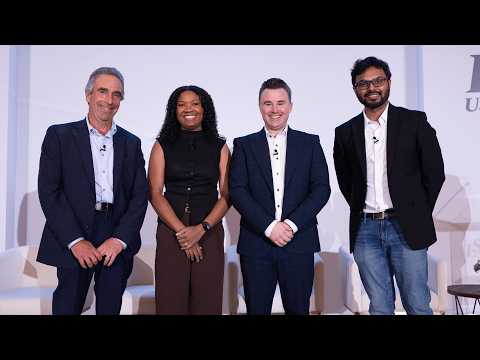
Industry leaders from Xeltis, Surfix, Bambi Medical, and Staplcam share strategic insights on balancing market adoption with value creation as medtech companies prepare for scaling operations.
Join Our Next Event
Partner with the leaders
shaping the future of
Medtech at LSI USA ‘26
March 16th - 20th, 2026
Waldorf Astoria, Monarch Beach

Eliane Schutte  0:05  
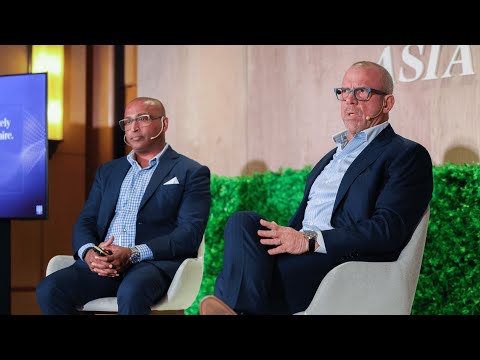
All right. Well, good morning, panelists. We're going to have a great conversation about adoption and value, especially for well, the propositions that you're running, scaling companies and thinking about what is now really drivers to success and to successful commercial story, is it having, you know, the right customer, or is it having the right volumes? Is it the right scaling mechanism? So it's a lot of different dynamics, and I'm really pleased that I have excellent panelists here on stage. So let's, let's start with Jos dunenberg, you're a serial entrepreneur. You run surf. You're CEO of that company, point in care, right? Diagnostics company. So love to hear a bit more later on, as we introduce you as where you are in a stage of commercialization. And then we have Fabio here, better care for patients, right? And especially babies. That's what you're after. You have a diagnostic monitoring device that is wireless. It's a belt, fantastic proposition. You already have your CE mark, so you're you're in the commercialization phase. So that's going to be very interesting. You know, story to tell, and how you tackle the market, and what your vision is towards that. And then we have Dinesh, all the way from the US, California. You're you're running an incubator with several portfolio companies that are in the trajectory, raising funds, getting to the commercial stage as well. You have a lot of learnings from the US and how you bring companies to success. Okay, fantastic. Welcome. So may I ask you also, could you tell a bit more about your lead program that you're running and where in which phase of commercialization you're currently are and maybe just also the challenge that you're today are seeing.


Jos Lunenberg  2:04  
Thank you, Elaine. Surfix on a mission to redefine point of care testing with a photonic diagnostic platform that we bring to market, I think, very unique platform in so many aspects. But to name one, it's a sensitivity we can bring to point of care testing, a sensitivity that is unheard that is comparable to the largest core lab systems. So it allows us to open up a completely new market segment for PT related to the so called low abundance markers, and these are coming more and more to to the surface, because in blood, there's a wealth of opportunity. 10 1000s of different proteins are in blood, and over 1000s are discovered just in the last decade, because of in research, you have these high sensitive instruments being added there, but being able to bring those to IVD, you need a high sensitive, multiplex instrument, able to do it at Pt level, because often time there's a need for speed, but also because low abundance markers degrade easily during shipment, storage and handling. And exactly that is what we can tackle on a small instrument time to result in 10 to 15 minutes, minutes multi modal even meaning we can on one instrument, run immunoassays and molecular assays and in the Multiplex, that's what we do. What is the main challenge? Well, challenge always is related to money. I would say, I mean, but we are in a very luxurious position currently that we already have been able to secure 4.5 million from the national growth fund photonics in the Netherlands, and the Netherlands is a great infrastructure for photonics industry. We only have to time our series a right to be able to match that amount with equity. That's why we're here.


Eliane Schutte  4:16  
Yeah, and how did you identify the right indication for this to enlarge.


Jos Lunenberg  4:22  
So the value of what we bring to market is not particularly in the essay, the first essay, however, call it the lighthouse essay. The first very important as a showcase. But the true value is in the fact that with our platform, we can serve all these low abundance markets, and they are scattered over different clinical market segments. We select the TBI because it does tick all the boxes, traumatic brain injury. It's high needs. There's a lot of low TBI cases are undetected, high growth. Both high volume, 69 million of cases annually. There's a high opportunity for good pricing levels, because it's replacing CT and MRIs.


Eliane Schutte  5:09  
Yeah, that's why. Great. Yeah, fantastic. So, Fabio, you have a different journey. You are in your CE marking. So tell me a bit more about your proposition and how you selected the one that you're currently you know about to launch and your challenge, yeah.


Fabio Bambang Oetomo  5:28  
So our also Dutch Medtech company Bambi medical, we are about skin friendly and wireless monitoring of prematurely born infants. So the huge issue today with the adhesives, with the EKG electrodes, is that they cause a lot of skin damage, infections. Also, the wired nature of the product doesn't allow the parent to take the babies out of the incubator without the help of a nurse and put them on their skin to provide skin to skin contact. And thirdly, the nurses are getting really fed up because the alarms currently of the EKG system are abundant. They get a lot of false alarms. So they run to the incubator for an apnea alarm, but there's nothing going on, so they switch off the respiratory alarms. We fix all of that with our skin friendly wireless bum belt. And indeed, We have now the CE marking under EU, MDR. So we are. We have started our limited commercialization, and we have taken the decision to do this really in a very slow way, because we believe if we go everywhere all at once, then that might might backfire for us as well. So we started with one hospital first to do an evaluation, and actually we learned that there was still a small redesign we needed to do. So we did that redesign, we fixed it, we made a happy customer, and then we slowly moved on to hospital number two, hospital number three. I think the key challenge for us, yeah, money. Money is a challenge for everyone, but I do see mainly that, since we have an innovation that comes at a bit of a higher price point than the current electrodes, we need to prove that the extra cost we bring with our product, there's also additional value we bring. So I think that is for us, the Yeah, the key thing for the next half year to a year to get more clinical data in have more clinical claims that will help convince hospitals to convert to and start using our product.


Eliane Schutte  7:43  
Yeah, fantastic. We're gonna ask more question about how you convince, you know, these hospitals to actually start buying this product. So Dinesh, in your you're running several startup companies. So tell me about the one proposition you know, portfolio company you run, and where it is towards commercialization, and how you see the challenge in the United States.


Dinesh Vyas  8:05  
Yeah, so I want to give a little bit background about myself, so it becomes perspective like, why we are justifying the topic of adoption versus value. So my background is, I'm for almost 30 years in the surgical domain now, as a surgeon, as an academician, as an administrator, cmo for the hospitals, and running basic science labs understanding the needs at different level, like what the hose is doing, so for last 10 years, running an incubator based on the needs, having worked both in Birmingham in The UK, a little bit in France, and for 23 years in the US now, understood what needs are like. We see a lot of value creation in robotics right now because that's taking up a lot of stage for what the funding is going for. We want to see like, is this the real value that we need, where the adoption would be, what is the technology for the future? So I'll share a couple of slides here that will talk about what the robotics is all about. Like when we do robotics, we look at large robots, $3 million investment, or million dollar investment, I think they don't justify the financial outcome that we want for our society. If I look at the US, like 30% patients don't get surgical care. If I look at Europe, numbers are pretty similar. If we look at world data, 60% patients don't get surgical care. So are we bringing the value to the society? Can we scale this care, or can we not scale the care? So looking at this like there are multiple things that we have done, and this is some kind of surgical trajectory. We see how surgery has evolved. Can we bring this kind of care to the. World? Can we bring this kind of technology where we can expand to the global scale? Can we bring the value while keeping the cost to the needs of the people with using the same number of surgeons, same number of resources, same number of hospital beds and readings, reducing the infection while giving the volume. So that's the main value we work after in my whole incubator, where we have four different companies that we are looking at, and I'll also talk today about this product that's coming to the market pretty soon, which is making 30% of the common surgeries that becomes very complex. How we can reduce the infection and postoperative complication, how we can do the surgery with ease, how we bring like hydrocision and the water dissection technology has been there for a while, but it's very costly. We want to bring with this device a technology which is very low cost, while it's handy and disposable. So surgeons across the board can use it and surgeries that are not even done in the best or the hospitals in the world, they are able to do the surgery with the disposable devices. So that's how we want to integrate. Definitely, the challenges stay the same, whether the companies in Europe or in the US, either funding the regulatory side the scaling. So we look at both B to C model and B to B model as ambulatory consent. Results are coming, and that is some new experiment we are trying with our company, like we do disruption in our companies with the devices, I'm also doing some disruption in B to C for surgical devices as well. So we'll see how, whether that is a scalable model for the early entrepreneurs that are coming who are thinking out of the box, can we do a B to C kind of model?


Eliane Schutte  11:54  
Yeah, very interesting. So just quickly on myself, I run a company called zeltest in the Netherlands that is targeting vascular surgery by bringing regenerative cardiovascular conduits to the market. So it's a platform technology, but we target it, one indication that we believe is the fastest go to market, which is a vessel that is needed for patients that are on end state kidney disease that require a vascular access in their arm that is less prone of infection, and all types of complications that are today existing now. We are currently, you know, applying for a C mark for this product. We're not yet ready on the market, and United States will follow in a year and a half later. So for us, it's also interesting with the funds we're having and we see backed. Where do we concentrate our efforts in launching, launching our device? And this is an interesting journey. Are we really, you know, after one country only, are we going after multiple countries? Are we going after one hospital and getting repeat sales or not? So I'd love to hear a bit from my panel. Is right? What do you what do you think is success in your launching strategy and those you might kick off? What is, how do you determine success?


Jos Lunenberg  13:23  
Eventually, for humankind, success means that the platform is adopted by many. So a lot of essays are running on it. So again, like I just remarked, the first lighthouse essay is not necessarily the one that determines the value, the value and true success is in the platform, yeah,


Eliane Schutte  13:44  
and that's your your focus. That's the focus that you focus. But you start with one, yeah,


Jos Lunenberg  13:49  
and talking about value creation versus adoption in earlier phases, because we are a prototype level, and there's always from such groups of investors, pressure on early sales, and which I do understand, especially in deep tech. Other markets than the med tech segment can have early sales, but in med tech, oftentimes it's better to hold your horses on that part a bit and concentrate on creating value while going and yeah, it's, at the end, every company, also smaller companies, that you team up with and do as a co development on your platform with they will, at a certain moment in time, ask for accessivity. And if you do that with many at a certain moment in time again, you lose your pie, and you have given away all those pieces to others, and there is no company left to sell when you're moving towards an exit. So you have to be really careful to make your choices while going on that part, and also have claw backs in there when there is an exit, etc. So we have chosen a path where we concentrate on what. Working only with top tier players, and have a limited number of them involved, but still do create a short lineup for a potential exit further down. Yeah.


Eliane Schutte  15:11  
And when, when did you determine such a strategy you've been it sounds like you have a very clear ID and how what you want to do and not to do. So. How did you come up with such a strategy, and when in the time of this assay development, did you determine that


Jos Lunenberg  15:28  
it evolved over time? And in all honesty, at first, we had a different path and and that's also, I would say, It's my third venture. The beauty of being small still, you can maneuver swiftly based upon the latest and greatest insights that you have from the market and also the developments in the market. And as long as you do so, yeah, you're agile, and you reach your point.


Eliane Schutte  15:51  
So you learn from the market. Also see that. So it's not a set in stone, but you see absolutely it goes and Fabio, how did that work with you? Right? I mean, you have your your you're based in the Netherlands, and how did you determine success for your company? What do you did you have in mind? And you have, you know, private, wealthy individuals as shareholders in your company. How did they determine success in your company?


Fabio Bambang Oetomo  16:18  
Yeah, I think that was obviously with investors, you always have a bit of attention. Our investors, they really went to invest in Bombay because they wanted to get a financial return, but also make a great impact on society, right? So they could go to birthday parties, other parties. Yeah, we invested in this great neonatal medical device company that's making the quality of care to premature babies better, but in the end, they are also looking for this financial return, and I think then maybe you can say bad luck, or actually in the situation we're in with our investors, for most of them, It's actually their first investment in a med tech company. So they know a lot about investing in all different kinds of industries where they used to, if you have a successful product, you sell it, you grow it, and it's all pretty much easy and straightforward. So I really had to manage my investors expectations that it is not something that you can just put in 1020 hospitals all at once. Get massive sales, get massive get get profitable very fast. I mean, I had to manage expectations and say it's also we have a great reputational risk at the moment. You can do all the testing that you want, you can do your clinical trials, get good results, but you only get the real feedback once you're in the field. And we've seen it, as I said before with our first customer, there were some small things still to fix. So if we would have had the same feedback from 10 hospitals, that would have been devastating. We probably wouldn't have been here even today, right? So it is about managing expectations of the investors that we have to go slow to in the end reach our goal. Because our goal is to bring this monitoring device to all premature babies in the developed world. I think patient monitoring, unfortunately, is not available everywhere, and you only monitor if you're also able to treat based on based on what you get from the monitor. So yeah, this a bit where we are


Eliane Schutte  18:29  
where, yeah, and the when in your journey, did you come up with such a strategy? Was that, because it sounds like very determined also, as you said, right, be very clear on where you want to target which hospital don't go too wide immediately. So was that already the idea that you had from the beginning, or did you also learn as you were talking to people?


Fabio Bambang Oetomo  18:53  
How does Oh, it was definitely we also learned over time. For me, is my first Medtech startup, so I'm learning as I go, learning from people around me, learning from talking a lot and listening a lot to others that have been here before. So to be fair, also in my initial business plans to raise my first round of equity, I guess my hockey stick also looks a bit different than what we executed in practice, right? I think hopefully a lot of people here in the room recognize that as well. So that is, yeah. So that was situation we learned over time, and we said it is, it is better to go slow but steady, rather than go big and feel big with that. Boom, Yeah,


Eliane Schutte  19:35  
makes sense. So Dinesh, in your your first proposition, when you want to make surgery available for a wider population, you have a bit of a different strategy than the rest, I would say, right? So, how does that differentiate your strategy? I mean, can you tell a bit more? But they've been very clear, right? I mean, be for focused and then expand. What's your vision and your Yeah,


Dinesh Vyas  19:58  
that's a great question. And. And I think I look at landscape of how the business evolve in healthcare. So if I look at the US healthcare business, the surgeons, maybe 20 years ago, 80% of them were independent, practicing surgeons, and 20% were employed. And what's happening right now, 80% are now employed. 20% are practicing prior to surgery, and I have won the other way. I used to be employed for 20 years. For last two years, I am self employed, right? Because I have to run my startups and all. It's hard because the financial burden of the instrumentation and the process and the manpower cost that's really too much for any surgeon to do his own practice. So if you bring in that situation, the high end technology into the picture, that is making it more harder for surgeons to bring their own skills out, and they have to go into the constraints of the corporate system. The other piece that's going into this thought process is ambulatory surgery centers. So right now, there are given take 7000 ambulatory surgery centers in the US, and majority of them are owned by corporates, and the surgeons are owning maybe 10% of the surgery centers in the US. So looking at the whole dynamic of how the things are evolving in 20 years, Can I shift the game back with the technology that can bring the surgeons back in the game as the owner of the business and the patients become the center of the care, rather than the corporate system, because corporate system looks at the bottom line. I think, look at this, the bottom line working this surgery can go, This can't go. And then the same way insurance follows the same bottom line, if we bring the surgeon and the patient into the center and then make the technology which is more pertinent for patient care, while the surgeon can drive the growth and it's good for his financial bottom line to run a business. That's where I run my business decisions. So if a staple cam say we bring in and we can make a $2,000 proposition for them to buy, and that get reimbursed maybe $8,000 and they make the money those surgeons are willing to leave their job and run their own independent business. And if they run their own independent business, rather than doing two or three surgeries, they will be willing to do six to eight surgeries a day. Yeah, they will be running more efficient care. They will provide care to 30% of the patients in the US and the western side that are not getting care. They get the care with the same amount of money, and the systems are more efficient. So the starting cost for setting up those business entities or surgery centers, which is right now in for a three operating room system, which is around four and a half million dollars. If we can bring that four and a half million dollar setting up cost to under $2 million by reducing all the or heads of the people as well as the the infrastructure needs, we can re start a new engine of surgical care. So that's one proposition we look at. The next proposition I look at is solving unsolved problem right now. So one big problem that I'm looking at to solve with this device is ovarian cancer. So ovarian cancer is one of the two cancers that always present in the stage three, stage four. And the reason it's presents at that stage is this tumor keeps growing in the belly, and patients, females don't realize that there is a tumor growing, because a very slow growing tumor, it keeps giving a feeling of fullness. It gives giving of discomfort, which pretty much everyone feels in this room once in a while. Belly Discomfort is normal thing. You eat or not eat. You feel something growing in the belly, and that next day it's not going on. So when you have this kind of disease, and you find a solution. Recently, in 2023 with a large data analysis, we found the females that have their fallopian tubes taken out and have the ovaries intact, they don't get ovarian cancer. So the tumor is coming from fallopian tubes, and then it's seal on the ovaries, and that's where it grows, and it's labeled as ovarian cancer. And they did 10,000 patient studies. The females that don't have tubes, they don't get ovarian cancer, and the females that have tubes, they have ovarian cancer. So to do, if a surgical body, like, say, American College of OBGYN, or surgical oncology society or US surgical Task Force, they release a guideline, okay, remove. Uh, just like colonoscopy, remove the depths of all the females that don't want to have ovarian cancer. And this is a prophylactic surgery we are providing you. Go ahead and do it. If they issue this guideline, there will be 70 million surgeries, like patients ready for you tomorrow. And you don't have resources, you don't have manpower, you don't have infrastructure to do that kind of surgery. So we provide an instrument where a surgeon can do in a day, eight to 10 surgeries with a single hole and finish all those interested females who want to have preventive surgery, or those who have high likelihood of having cancer. So my


Eliane Schutte  25:40  
question is now the following, right? You have a very economic model. It's very much business around, okay, bringing more revenues to either a surgeon or, you know, scaling in terms of getting more procedures done, which means a revenue model for either the hospital or where it brings so the question is now, how do you how, if you would think about the next step to commercialize. Do you have a showcase? Where do you start? So where do you start and launch? Let's take the laparoscopic application. I mean, obviously you need to get the device approved and the like, but forget about that if you really want to start making a success and show there can be many more procedures done. Do you have a showcase? Do you start with one hospital you spread all in the US?


Dinesh Vyas  26:25  
So that's a really good question. So what I have done is we have tied, made, what you can call it a loose goose, contract with 10 surgery centers, 10 centers, very high surgery volume, surgery centers


Eliane Schutte  26:39  
close to your area. Network I


Dinesh Vyas  26:42  
think we want to test out with first 10 centers. And while we are warming up the relation across the nation, I think I'm not very putting a lot of eggs on the side of going to the hospital chains. I would rather focus more on surgery centers and build those networks and bring the revenue up. So that's where the adoption game will come. Yeah, and then once there is some adoption game going on and where the surgeons are feeling valued here, I think that's when we will try to shift to the major hospitals and maybe outside the US at the same time. So bringing first product out, testing that strategy, and we are looking at out of the box commercialization strategy as well, not a traditional way. And then we want to expand at the same time, building relationship with the making gynecological surgery centers. Right now there are no gynecological surgery centers. Yeah, so I'm trying to prime those


Eliane Schutte  27:45  
gynecologists step by step. So that's that's super interesting. So Fabio, now in your your proposition, right? You said, also target it and then expand. Have you selected those hospitals that also have reasonable revenues and volumes and you have some repeat use it was that important in your in your decision making, who to select to go after. And, I mean, how did you define that, and what was your strategy behind it?


Fabio Bambang Oetomo  28:13  
Yeah, I guess hospital reputation is obviously important. But even more than that is also the neonatologist. Neonatologists and working there and their line of research, I think because we are looking for the hospitals to adopt our product in their clinical practice, that's one but we're also asking them to run some studies to basically give us more clinical data to for us to be able to make more clinical claims, right? So that is where the value really is, because we are saying right now, but we cannot really write it down, but we're saying right now that the nurses will spend much less time. And nurse shortage is like a big problem that we are, that we are facing. So we need to find the hospitals that have the right reputation, but also they have a doctor researcher that is really into doing clinical trials. We always look for the win, wins with the doctors, with the investigators, because we also don't want to pay for expensive clinical trials, but we try to go for clinical trials where there's an interest from the hospital, and then they're happy to do it in a very cost effective way. So that's, that's how we do it, yeah, yeah,


Eliane Schutte  29:30  
I understand that. So, and how do you eventually get, you know, a because you said your product is premium price, it's more expensive, yeah? So what is the turning point where you think they're actually willing to pay for this? Is that, is that in your Rex, because the reputation important, right? You have the network that's important, also good results important. So when is the flipping point that they're going to actually pay the premium price?


Fabio Bambang Oetomo  29:56  
Yeah, yeah. So in that, it's, I guess it's also important. Do some pricing validation early on. So we have done this quite a bit. Basically flow the price point to a customer, then get the response. And we have noticed that the initial price that we have floated was really too high, so there was a low willingness to pay that price. So we kind of went to now a sweet spot range in which we are a bit more expensive than the EKG electrodes, but it's an acceptable price by the hospital. And at the same time, we are increasing the perceived value by getting more clinical data and by proving how much time can we save using this one big thing is, of course, as you might know or not, but these premature babies can be at very low oxygenation levels, right? Really? Oxygenation levels of 60 65% can be quite normal, but it's not good for them. So by having superiority in apnea detection, which we have the nurses start running to the baby the moment the baby stops breathing, they can act on this and they can keep the baby much longer in the let's say, healthy oxygenation range. So getting all of this data in, we expect to also be able to slowly increase our price, or at least keep our price at a at this level, and at the same time work with our supplier of the belt to also do a cost down and to scale up the manufacturing and still have a margin, a good margin, good margin on the margin ultimately important as well. Yeah, yes. So you also, you picked your essay an indication TBI, as you just discussed, right? So, so have you considered pricing, and, you know, actually making sure that the indication you pick, because you're also targeting for a very focused, you know, penetration, when is this going to materialize in a real revenue strain for you, and the price to that?


Jos Lunenberg  31:57  
Eric, again, since we build a platform, and TBI, the example I gave for the lighthouse. Sa is a market that accepts high price, high prices you already replace MRI. CT, however, there's other market segments where those low abundance marks make sense to measure at PSA, t where the pricing levels are much lower. So for us at this stage, cost of goods is the most important. If you also look at the collaborations that we've set up, been able to set up already with top tier players, they look into this. And for us, it's extremely important, because the starting point is this photonic chip. And chips are produced on waivers that you're able to have a manufacturing workflow in place that can do the dicing, which normally is not by a compatible still on scale. So we had to develop, and we did that early on, looking at the manufactorability, and therefore looking at controlling cost of goods and being able to warrant low cost of goods, we have been able to develop a unique workflow that we can do everything, the camera, the chemical layer, the nano coating and the biology at the waiver level, so we can dice it still at scale, and that drills down the cost and your margin be all very large, yeah, that, in that sense, helps us to be able to deliver to all different marketplaces, also in those where the pricing is not as high as that, as it will be for TBI, yeah.


Eliane Schutte  33:31  
Okay, understood, and for your launching strategy, I mean, help us a bit understand how you picked, you know, countries have you looked at only? The Netherlands. Have you looked at other countries? What? What were part of your your


Jos Lunenberg  33:45  
England prior? And not that? No, that's too early, too early. But are you doing very important later on to Yeah, to think about that absolutely.


Eliane Schutte  33:55  
Yeah. Okay, and, and Fabio, in your thinking is, is, how do you determine which country could be most appealing for adoption. I mean, did you do? You did pricing analysis, yeah, did you also look in different countries, what could be most reasonable for somebody to pay for your device?


Fabio Bambang Oetomo  34:14  
Yeah, we did. We did, definitely, the tree attractiveness analysis, okay, looking at a lot of different variables to see where to go for us, since for us, one thing that's very important is their willingness to innovate. So that's why the as those of you familiar with the European landscape, had the Nordics also came out as a part of part of Europe that is very much open to innovation and a good place for us to start, and also the willingness to pay you kind of see that Northern Europe is more attractive at this moment in time than Southern Europe. Yeah, that's why we we chose our first focus markets in the Nordics, Belgium, Netherlands. And also Germany, where, I must say Germany has been quite of a challenging market, because it's also quite conservative. But luckily, you have some spots of very innovative hospitals also in the German market. Yeah, that's our focus,


Eliane Schutte  35:13  
your focus? Yeah. And it's maybe interesting to say, because we do slightly the opposite when we think about launching. We're also looking at the southern parts of Europe, because there's basically where our customers today are and bring most of the volumes. So when we look where is our network, it's now our trials are run in Spain, in Italy, in Portugal. So even though the pricing might be slightly, you know, more challenging, the fact that we believe also, we get repeat use, we get paid. We get, you know, actually, volumes from the Centers, because they know us. They know the product. They want it, because they have their own experience. Is going to facilitate speed to get some volumes out the door and see that there's really some adoption to use, while, in fact, you know, the classical countries are probably when you're in an extreme premium paid, you know, Proposition, it's more interesting to get an actual value. So it's always a bit the dance you have to play. And in your I guess, let's assume that for laparoscopic are you targeting very high volume centers in the beginning? Is that you're in your thinking, or are you thinking, No, the ones that really want to pay what's How do you pick your centers to work?


Dinesh Vyas  36:32  
Well, I think the most important thing is the high volume Center and the more comfort, yeah, and disruption. I think when you talk about Nordic region, I think that gives me a little bit more insight into the European mentality as well, how to pick the centers. I think our goal is the same. I think the 20% eye surgeons, I said, they're all high volume surgeons. They are the only one who are staying out as standalone surgeons, because they can survive and they can make money out of that is still eating it. That's why the revenue and the profit model that the solder has, yeah, yeah. I have a question for you, then for the our all the audience here, so you have this vessel that you're working on building. So how are you choosing which kind of surgical indications you should focus on? And like, is it the cardiovascular cabbage is a more important thing for you, which is very critical, or hemo dialysis is a very big challenge for you. So how you're finding your sweet spot in commercialization?


Eliane Schutte  37:41  
Yeah, because this is a platform technology. As you know, some of us are speaking about platform as well. So I think there's always a balance between, okay, where's the unmet needs, the biggest and you can demonstrate the fastest, versus what could be high risk, high reward. I mean, so this for every application, there's pro and cons, and for the three applications that we're after, which is dialysis, it's clearly a problem that exists today, that you can demonstrate very early on, that you have a benefit. I call that. It's not so risk key for us to execute, because we can demonstrate. But the Holy Grail will be in cabbage. But that could be a rocky right to get there. So I picked the flagship being the dialysis we just want to show that we have a proposition that can bring something to the market and immediately solving a big problem that is there today might not be, not be the gigantic market that that could be for cabbage. So that's how we've done it. Also, you know, first you you crawl, you walk, you run and but you can't, if you only go after the big, big This company started, in fact, working on heart valves, which is the most complex body part in that we have. And that is a long, long journey to show success. So sometimes, you know the, let's say low hanging fruits is the pathway to choose, and this is what we picked. I mean, then you can also demonstrate value inflection point very quickly and get the money in the company. So that's, that's what we've done. Yeah, well, great. So we're getting a bit at the end. I'm just want to ask a bit of controversial question to you, right if, if there would be, ultimately an exit for your companies. And you want to track the strategic in your conversations with strategic, what is most important to them, is it indeed your pathway, as you're pursuing now, is it like at least have the focused approach and at least show success in a limited amount of centers and spread and they have the breadth of understanding that? Or are they looking for volume adoption and premium pricing? So just short answer on that.


Jos Lunenberg  40:00  
It maybe too early for us to go there. Still what talking about an exit I think most important is that to give them the insight that you have multiple exit opportunities ahead, that you're building a sustainable business, but if need be there is exit moment coming up, yes,


Eliane Schutte  40:21  
yeah, yeah, very clear answer. Fabia, what do you see?


Fabio Bambang Oetomo  40:25  
Yeah, I think for us, what we're expecting also based on the fact that two of our board members used to work for potential buyers of our company, they're saying you need a small but decent number of hospitals that use your product, they place the repeat orders, and they are very happy with the product. So the moment that the strategic picks on the phone calls one of your customers, they will only hear great stories. And if you have 10 of these centers in Europe, we think that will be sufficient for the strategic to basically say tick in the box for de risking, the commercial risk. So maybe that's the hope and wish we have as well. But the our board members have seen that in the past, although I must say the landscape is changing, and I mean everyone is investing later, strategics are acquiring companies later. So we are, we are preparing also for a situation in which we might have to go a bit further in terms of growing our revenue, in terms of growing our customers before we get an exit. So let's see. I think beyond, beyond showing this happy customers is really showing where a technology can go and how it can really connect to the portfolio of your potential buyer. So I think we're also spending a lot of effort on this making really a tailored story for all of the potential buyers that we're talking to to see how does our bummy belt match to your portfolio of things you're selling into the NICU, yeah, I think that's also very important. They they should partly, maybe find it out themselves, but you also need to help them a little bit.


Eliane Schutte  42:09  
Yeah, understand it. Are you strategically? I mean, picking your sites also in that direction that you know that someone strategic already working with these sites, they can actually see how the belt works in tri nation with the machines,


Fabio Bambang Oetomo  42:22  
yeah, yeah. I need to definitely that to be, to be insights that are on the radar, also of the strategic, or that are clinical, important clinical sites for the strategic that, yeah.


Eliane Schutte  42:31  
So there's not an holy grail number you have in mind, like, I have to have X amount of revenues, and then I know the strategic will be interested. No, this is not with Yes, it's,


Fabio Bambang Oetomo  42:42  
it's very difficult to really know. I mean, we, I don't know who here in the room has gotten, like, the three bullets of things that the strategic want before they acquire, but I haven't received them. No, yeah, unfortunately, no. Perfect.


Eliane Schutte  42:57  
And so what's your answer to this question? What would a strategic look for when, when they would invest in your laparoscopic device. 


Dinesh Vyas  43:03  
I have no idea. 


Eliane Schutte  43:04  
You have no idea. 


Dinesh Vyas  43:05  
I'm just working. 


Eliane Schutte  43:06  
Okay, okay, fantastic. Well, for us, it's a bit, you know, talking from my own proposition, it's, it's where we also see what is important is premium pricing for us is, of course, volume matters, but even more is our willingness to pay for something that is has superior benefits with less interventions and alike. Or the is, is the is there a price that can be paid? Do we get through reimbursement agencies? And even though the volume might be still limited, I think that's, that's what we're after at the moment, simply, also, because you can't afford a lot of revenues, you can't afford yet to build your full commercial, you know, Team spread in all the countries, you can't afford it. Just so you have to be very focused in where you're going to concentrate your efforts commercially, to show that there is, you know, a willingness to pay that makes sense, makes sense. So I think we're gonna close off right unless there's questions from the audience or any any comments that people want to make. Let me thank everyone and the panel. Thank you for taking the time and explain this so well. 


Fabio Bambang Oetomo  44:17  
Thank you. 


Dinesh Vyas  44:17  
Thank you. 


Eliane Schutte  44:18  
Enjoy the conference. 


Jos Lunenberg  44:19  
Thank you.