
Helmed by CEO Andrew Cleeland, Fogarty Innovation is carrying forward the legacy of Thomas J. Fogarty, MD, by nurturing the next generation of medtech innovators. Blending mentorship, education, and collaboration, and fresh off of its newly announced merger with the Cardiovascular Research Foundation and the awarding of the first Thomas J. Fogarty Innovation Prize, the organization has become a catalyst for global, purpose-driven medtech innovation. Cleeland’s own personal journey from a working-class childhood in Australia to leading billion-dollar startups and now guiding a global nonprofit reflects the same values at the heart of Fogarty Innovation and his deeply human approach to coaching innovators.
When you walk into Fogarty Innovation’s offices in Mountain View, CA, you can feel the pulse of invention. The walls tell stories of prototypes that became lifesaving devices, of startups that grew into category-defining companies, and of founder Thomas J. Fogarty, MD, the pioneering surgeon, inventor, and entrepreneur whose balloon embolectomy catheter and dozens of other revolutionary inventions launched the minimally invasive surgery era and forever changed patient care. However, Dr. Fogarty’s impact goes far beyond his vast contributions to medical science. He inspired a transformational culture of mentorship, courage, and a “patient first”-focused community that is nurturing the next generation of medtech leaders.
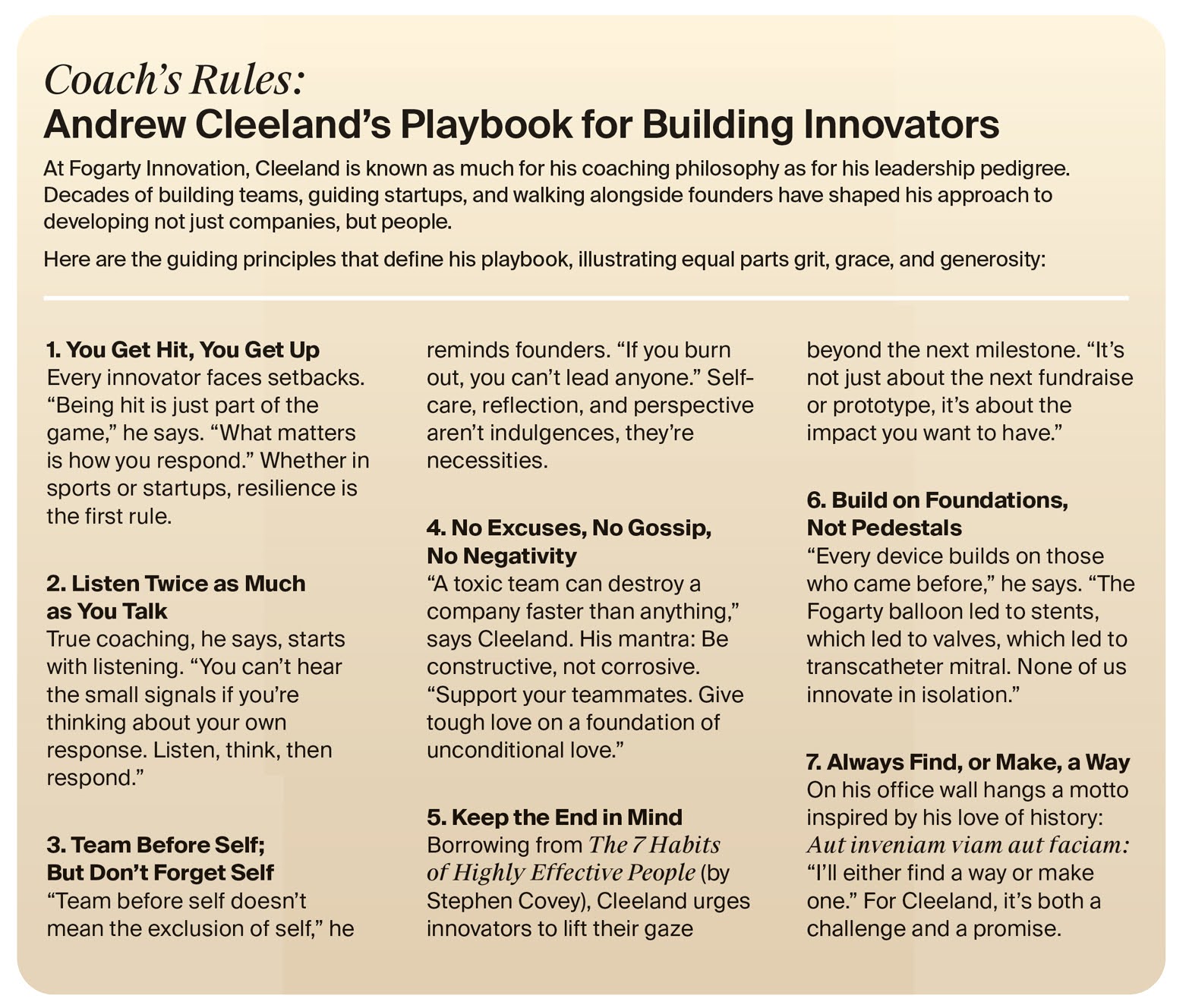
At the center of that culture today is Andrew Cleeland, Fogarty Innovation’s CEO and one of today’s most influential medtech leaders. A native of Melbourne, Australia, Cleeland learned early the value of grit and teamwork, raised by a single mother who taught him and his brother to meet challenges head-on. His values and life philosophy were also greatly influenced by sport. As an Australian Rules Football player, he discovered leadership and resilience, the ability to keep driving forward, no matter how many times you are knocked down.
“Sport teaches you everything about building teams and leading under pressure,” he says. “It’s where I first learned that character matters as much as skill.”
That mindset carried him across the world and into the heart of medtech innovation. After earning his degree in biophysics and beginning his medtech career reviewing devices at the Australian Therapeutic Goods Administration, he followed an opportunity to Denver, CO. There, he joined Telectronics, an Australian company best known for its role in developing the pacemaker. As Cleeland describes, he probably didn’t realize it at the time, but this move exemplifies a classic element of his personal and professional mindset: think big, set audacious goals, and act boldly.
“It was one of those moments when you just have to leap,” he says. “You can’t know how it’s going to turn out, but you know you’ll regret not trying. It was meant to be a two-year U.S. rotation, but 30 years later, I’m still here.”
What followed were audacious leaps that culminated in billion-dollar exits. After Telectronics, Cleeland accepted a management role at Baxter Healthcare’s Novacor division, and later as vice president of clinical and regulatory affairs at Bay Area startup Radiant Medical. In these positions, he learned about the interplay between vision and execution. He moved on to serve as CEO of Ardian, which pioneered the use of renal denervation to treat hypertension. Ardian was acquired by Medtronic in 2011 in a transaction valued at over $1.3 billion, which, at the time, was the largest medical device acquisition ever for a pre-revenue medical device company.
Cleeland then took on the role of CEO at Twelve, a startup in the emerging transcatheter mitral valve replacement space. Several years after he joined, this company was also acquired by Medtronic in a transaction valued at $458 million. At both Ardian and Twelve, he learned how to turn visionary science into transformative outcomes.
Yet Cleeland’s pride isn’t in the valuations. “What I’m most proud of are the teams we built,” he says. “Those companies became families. Seeing people from those days now leading their own startups. That’s the real legacy.”
After back-to-back triumphs in the startup world, Cleeland faced a different kind of question: How do you give back to an industry that has given you everything? And he realized, what if his next chapter isn’t about building a company, but about building builders?
A Coach at Heart
His answer came in 2017, when the opportunity arose to lead Fogarty Innovation. But his first reaction was hesitation.
“I said, ‘I had never even thought about working at a nonprofit.’” But after sketching out with a close friend what Fogarty could become, the idea sparked a new sense of purpose. “It hit me. This is how I can have real, meaningful impact and give back to an ecosystem that’s been so generous to me,” he says.
The CEO role has allowed him to channel his experience into mentoring the next generation of founders. That purpose drives everything at the organization’s headquarters on the El Camino Hospital campus in Mountain View, CA.
“When I stepped out of the world of medtech startups and into the nonprofit world at Fogarty Innovation, I had a specific goal in mind: to grow an organization that would leverage the experience of a veteran team to shape individuals, advance technologies, and grow companies,” says Cleeland.
“Working at Fogarty gives me the ability to influence the ecosystem and give back in a meaningful way,” he tells The Lens. “It’s the most rewarding thing I’ve ever done.”
“I’ve been lucky to have mentors who believed in me before I believed in myself,” he continues. “Now it’s my turn to do that for others.”
He encourages founders to measure success not just by valuations but by impact. “When you help a patient, you help their family and their community. That ripple effect is the real return,” he says.
Inside Fogarty’s walls, Cleeland’s coaching philosophy runs deep. “One thing is that I remind teams to take care of themselves,” he says.
He speaks from experience. “When I was a first-time CEO, I was so focused I forgot to look after myself. There’s a cost to that. You have to protect your own humanity.”
Under Cleeland’s leadership, Fogarty Innovation’s model has evolved far beyond its origins as an incubator. “We used to talk about three pillars: incubation, education, and alliances. But they’re not really pillars,” Cleeland says. “They’re integrated. Each one supports the other.”
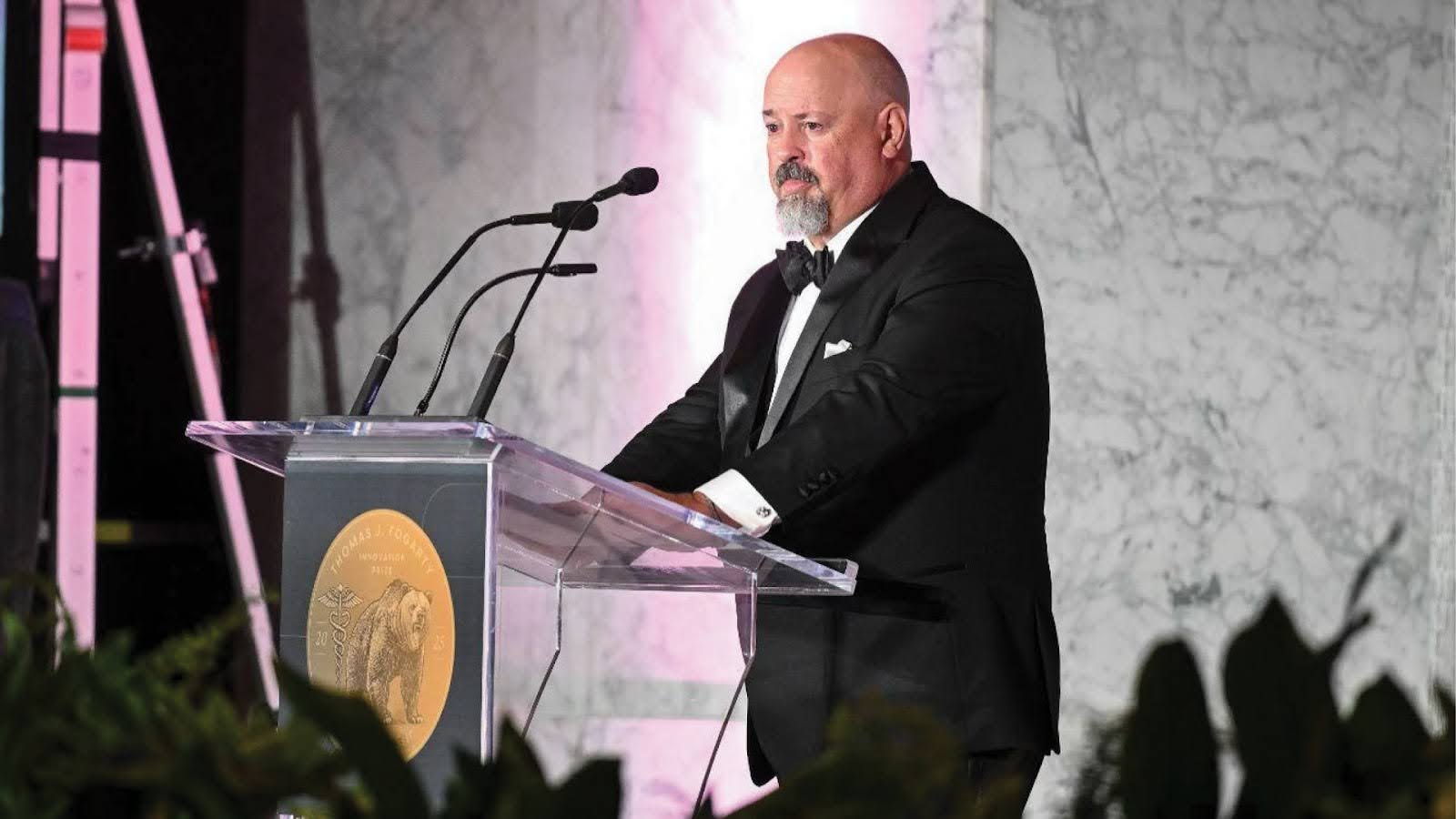
Andrew Cleeland onstage at the inaugural Thomas J. Fogarty Innovation Prize Gala, October 24, 2025
(Source: Fogarty Innovation/Rod Searcy)
Incubation remains core. With 23 companies in its portfolio, Fogarty provides coaching, resources, and access to a network of investors and strategics. But education and collaboration are where the organization has multiplied its impact.
Fogarty’s 24-member team includes 17 seasoned coaches, averaging more than 30 years of experience each, and a combined track record of over $8 billion in investor returns before joining the organization.
“Everyone here was chosen for their shared values,” says Cleeland. “We’ve all been through the battles. We have the scars. And we all want to give back in a meaningful way.”
Last year, Fogarty hosted more than 10,000 participants across its educational programs, earning a Net Promoter Score of 94. “That tells me people aren’t just attending,” Cleeland says. “They’re recommending us. They’re finding real value.”
“We’re not professional teachers,” he adds. “We’re engineers, clinicians, and operators who are sharing what we’ve learned the hard way.”
But Cleeland considers himself a coach first. “I coach our young companies, and I coach our people,” he says.
It’s a subtle distinction, but an important one. Fogarty Innovation doesn’t “mentor” its startups in the typical sense. As Cleeland explains, mentoring is a phone call every few months. Coaching, on the other hand, means rolling up your sleeves and working alongside founders daily to help them navigate the emotional, strategic, and financial complexities of turning an idea into a device that changes lives.
“Coaching is helping people look up from the next milestone and see where they really want to go,” he says.
And, one important theme recurs in every conversation with Cleeland: listening. “Whether you call it coaching or friendship,” he says, “a good listener listens twice as much as they talk.”
It’s a skill he emphasizes to his teams and even his children. “We tend to assume we know what someone’s going to say. You're not going to pick up the small signals that the person is sending if you're thinking about your own response. There's always time."
Humanizing the System: Working with FDA and Beyond
Cleeland described that one of Fogarty Innovation’s most influential initiatives began with a challenge from longtime collaborator Jeffrey Shuren, MD, who led the FDA's Center for Devices and Radiological Health for 15 years. Frustrated by industry complaints, Shuren famously told Dr. Fogarty, “If you think you can do better, help us do it.”
The result was the FDA Fellowship Program, launched in 2015, in which agency representatives, including reviewers, scientists, branch chiefs, and division directors, spend time at Fogarty Innovation learning how startups actually operate. The relationship has proven to be beneficial for both sides: The FDA better understands the challenges inherent in device development, and Fogarty Institute entrepreneurs better appreciate the reasons behind the steps required in the regulatory process, according to a Fogarty Innovation release.
“What we’re doing is humanizing early-stage medtech,” Cleeland explains. “We’re showing regulators that companies are made up of engineers and scientists trying to do the right thing, and showing startups that the FDA is made up of the same kind of people.”
During COVID, when travel halted, the fellowship morphed into virtual webinars. Cleeland expected 50 attendees, but in one, nearly 800 signed in. “At one point, half of CDRH was in our session,” he jokes. “I told colleagues, if you couldn’t reach FDA that day, it’s because they were on with us.”
With 64 fellows having come through the FDA Fellowship Program to date, the successful model has now expanded internationally, with educational partnerships in Singapore and interest from Japan and Ireland. “If one person leaves our program with a single insight that makes their process safer or faster, we’ve done our job,” Cleeland says. (Read more about the program on the Fogarty Innovation website, at https://www.fogartyinnovation.org/what-we-do/elevate/.)
A Global View: Connecting Innovators Across Continents and Cultures
Cleeland’s global reach, spanning board roles with Saluda Medical, Zenflow, MMI, and Francis Medical, and advisory positions with Longitude Capital and Arboretum Ventures, has shaped his conviction that medtech innovation transcends geography. “Innovation doesn’t stop at borders,” he says. “Our patients are everywhere, and so must be our ideas.”
That vision took on new scale this October, when Fogarty Innovation announced a strategic merger with the Cardiovascular Research Foundation (CRF). The partnership combines Fogarty’s early-stage incubation expertise with CRF’s global leadership in cardiovascular research and education, establishing Fogarty as CRF’s West Coast Innovation Hub.
“We’re excited to join forces with CRF,” Cleeland said in the merger announcement. “Together we can scale our impact globally, giving entrepreneurs a larger stage, stronger resources, and a faster path to delivering transformative care.”
The merger unites two missions devoted to advancing patient-focused innovation through education and collaboration. Under the new structure, Fogarty’s influence will extend upstream to nurture early inventors, while CRF’s reach will accelerate clinical adoption and access.
“This is how we unite ecosystems,” Cleeland continues. “By connecting discovery with delivery, and making sure ideas born in one country can help patients everywhere.”
“We’ve built our community over nearly 20 years. CRF has built theirs over 30 years. Now we’re linking them, and the effect will be exponential,” he tells The Lens.
The partnership also furthers a mission that Cleeland accepted when he took the helm at Fogarty: the profound responsibility of stewarding Dr. Fogarty’s remarkable legacy.
“Our partnership with CRF not only advances my vision for Fogarty Innovation and for our industry, it also safeguards our future and ensures that Tom’s curiosity, determination, and refusal to accept the status quo will continue to inspire innovators for decades to come.”
Cleeland notes that, importantly, Fogarty will remain Fogarty. “From our home on the El Camino Health campus, and now as CRF’s West Coast Innovation Hub, we will continue to coach entrepreneurs and startups across clinical specialties, produce practical educational programs that enrich the medtech community, and work with our alliance partners to strengthen the early-stage innovation ecosystem.”
Also in October, Fogarty Innovation celebrated its focus on the power of medtech innovation to improve the lives of patients everywhere in an epic way, with the inaugural Thomas J. Fogarty Innovation Prize. At a sold-out black tie gala in San Francisco, the team behind the FARAPULSE Pulsed Field Ablation (PFA) System was announced as the winner. More than 300 medtech, venture, academia, healthcare, and local government leaders attended the celebration. (See the upcoming December issue of The Lens for an article spotlighting FARAPULSE and Fogarty Innovation’s vision for the Fogarty Prize looking into the future.)
Carrying the Torch for a Purpose-Driven Future
In an industry defined by disruption, Andrew Cleeland’s leadership stands out for its constancy of purpose. “Devices save lives,” he says. “But it’s the people behind them who change the world.”
Cleeland often reminds his teams that every breakthrough rests on the work of others. “Everything we build is on someone’s shoulders,” he says. “The Fogarty balloon catheter led to stents and transcatheter valves. Those, in turn, led to what we’re doing today in mitral and renal technologies.”
Those beliefs anchor Fogarty Innovation’s next chapter. The merger with CRF expands its reach, but its essence remains: mentorship, empathy, and relentless optimism. For Cleeland, true success is measured not in valuations but in people: the students, fellows, and founders who walk through Fogarty’s doors uncertain of what’s possible and leave believing they can make a difference.
“The next generation of innovators will be different,” he says. “They’re thinking about equity, access, and sustainability. Our job is to give them the skills and the courage to tackle all of it.”
Cleeland sees promise in digital health, AI, and home-based care as levers for expanding access while addressing systemic challenges such as an aging population and workforce shortages.
“The wave is coming,” he says. “More people will need care, fewer people will be available to deliver it, and resources will be tighter. We have to move care from hospital to home wherever possible.”
In closing, Fogarty Innovation’s story is, at its core, a relay. Dr. Fogarty built the foundation. Andrew Cleeland carries the torch. And now, innovators shaped by that same culture of curiosity and care are preparing to take the next leg.
Dr. Fogarty, although not in the office as often, still shapes the culture profoundly. “When Tom walks through the halls, you feel it,” Cleeland says. “He’s charismatic, brilliant, and utterly fearless about challenging the status quo.”
And his mantra, that there’s always a better way, remains a cornerstone. “It’s about courage,” Cleeland says. “Courage to push back against the norm, to find another path.”
Cleeland still keeps books that Dr. Fogarty gave him on his desk, including The No Bullshit Rules. “That’s Tom,” he laughs. “He doesn’t suffer fools. He gets to the heart of a problem with surgical precision.”
Cleeland often returns to a favorite quote from Mahatma Gandhi that has guided him since his earliest days: “A small body of determined spirits fired by an unquenchable faith in their mission can alter the course of history.”
“That’s what we are here, a small body of determined spirits,” he says, smiling. “And we’re just getting started.”
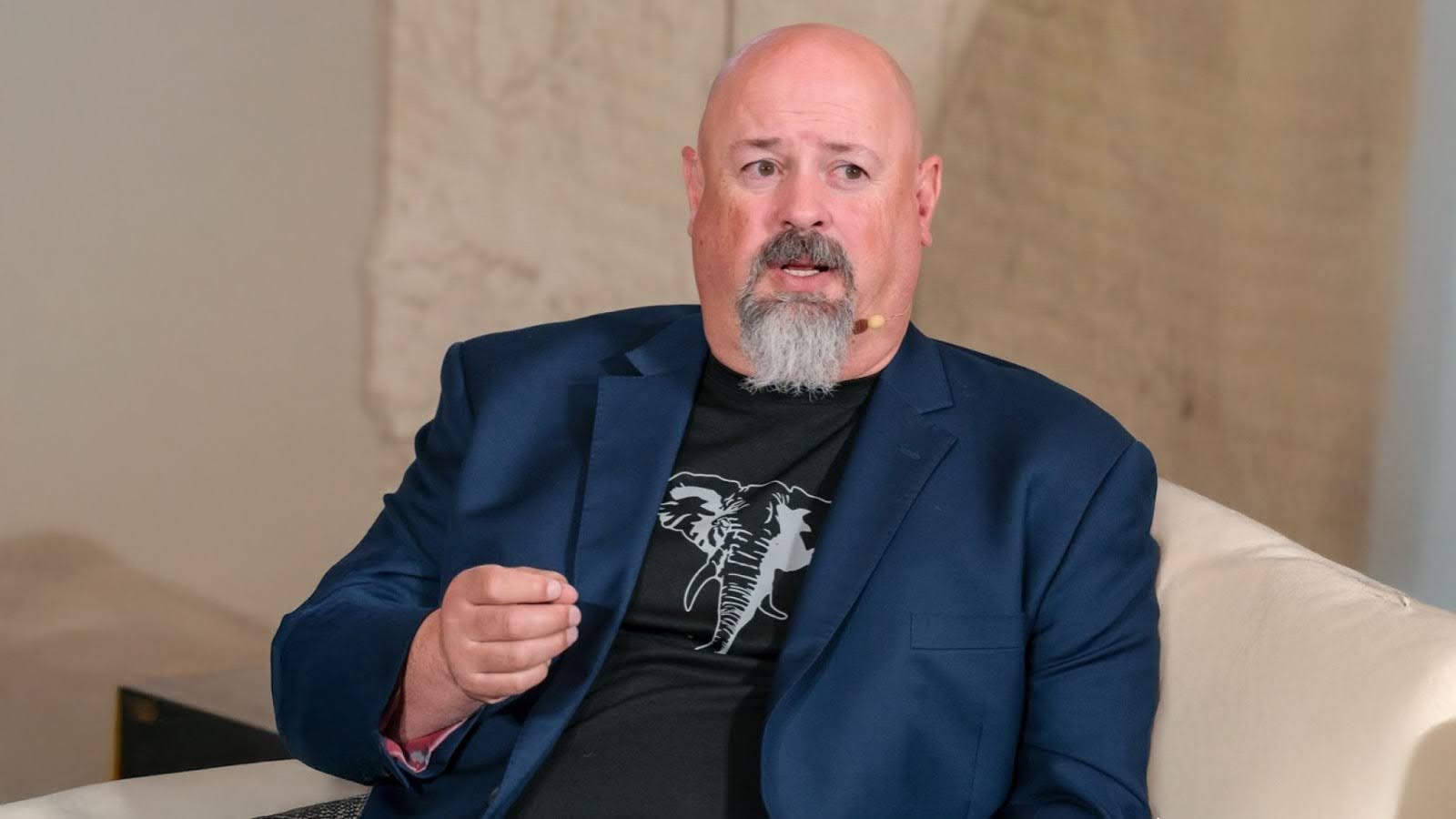
(Source: LSI Europe ‘24)
Andrew Cleeland–CEO, Fogarty Innovation
Andrew Cleeland has spent more than three decades shaping the global medtech landscape. A native of Melbourne, Australia, he began his career at the Therapeutic Goods Administration before moving to the U.S. to join Telectronics. He later held leadership roles at Baxter and Radiant Medical, and as CEO of Ardian and Twelve, guided both companies to landmark acquisitions by Medtronic valued at more than $1.7 billion combined.
Today, as CEO of Fogarty Innovation, Cleeland channels that experience into building the next generation of innovators. Known for his belief that “innovation is a team sport,” he leads with a mix of humility, mentorship, and mission-driven clarity.
He also currently serves on the board of four venture-funded companies: Saluda Medical, Zenflow (chairman), MMI (chairman), and Francis Medical (chairman). He also holds advisory positions at the top-tier venture capital firms, Longitude Capital and Arboretum Ventures. At a global industry level, he has been invited to serve on multiple initiatives, including the UCSF-Stanford Pediatric Device Consortium, the Medical Device Innovation Consortium, and the Singapore government’s Medtech Catapult.
Away from work, he draws inspiration from sport, family, and a personal motto that sums up his approach to leadership: “Think big, act boldly, and always lead with purpose.”




Request Info

The Lens - Complimentary Issue
Subscription Includes

Global Medtech Market Analysis & Projections (MAP), 2021-2031
Published: 2023
Next Update: Q4 2024
Deliverables:



Global Surgical Procedure Volumes Dashboard, 2018-2029
Published: 2022
Next Update: Q2 2024
Deliverables:
United States Surgical Procedure Volumes, 2018-2029
Published: 2022
Next Update: Q2 2024
Deliverables:
Aesthetics, Global Surgical Procedure Volumes, 2018-2029
Published: 2022
Next Update: Q2 2024
Deliverables:
Cardio, Global Surgical Procedure Volumes, 2018-2029
Published: 2022
Next Update: Q2 2024
Deliverables:
ENT, Global Surgical Procedure Volumes, 2018-2029
Published: 2022
Next Update: Q2 2024
Deliverables:
General, Global Surgical Procedure Volumes, 2018-2029
Published: 2022
Next Update: Q2 2024
Deliverables:
Neuro, Global Surgical Procedure Volumes, 2018-2029
Published: 2022
Next Update: Q2 2024
Deliverables:
OB/GYN, Global Surgical Procedure Volumes, 2018-2029
Published: 2022
Next Update: Q2 2024
Deliverables:
Ophthalmology, Global Surgical Procedure Volumes, 2018-2029
Published: 2022
Next Update: Q2 2024
Deliverables:
Orthopedic, Global Surgical Procedure Volumes, 2018-2029
Published: 2022
Next Update: Q2 2024
Deliverables:
Peripheral Vascular, Global Surgical Procedure Volumes, 2018-2029
Published: 2022
Next Update: Q2 2024
Deliverables:
Spine, Global Surgical Procedure Volumes, 2018-2029
Published: 2022
Next Update: Q2 2024
Deliverables:
SRS, Global Surgical Procedure Volumes, 2018-2029
Published: 2022
Next Update: Q2 2024
Deliverables:
Urological, Global Surgical Procedure Volumes, 2018-2029
Published: 2022
Next Update: Q2 2024
Deliverables:
Global Markets for Hip Replacement Implants, 2023-2028
Published: 2023
Next Update: Q2 2024
Deliverables:
Global Markets for Peripheral Vascular Guidewires, 2023-2028
Published: 2023
Next Update: Q2 2024
Deliverables:
Global Markets for Peripheral Atherectomy Catheters, 2023-2028
Published: 2023
Next Update: Q2 2024
Deliverables:
Global Markets for Electrosurgery, 2023-2028
Published: 2023
Next Update: Q2 2024
Deliverables:
Global Markets for Peripheral Vascular Balloons & Vena Cava Filter, 2023-2028
Published: 2023
Next Update: Q2 2024
Deliverables:
Global Markets for Mechanical Heart Valves, 2023-2028
Published: 2023
Next Update: Q2 2024
Deliverables:
Global Markets for Tissue Heart Valve Replacement, 2023-2028
Published: 2023
Next Update: Q2 2030
Deliverables:
Global Markets for Transcatheter Mitral Valve Devices, 2023-2028
Published: 2023
Next Update: Q2 2024
Deliverables:
Global Markets for Femoral Closure, 2023-2029
Published: 2023
Next Update: Q2 2024
Deliverables:
Global Markets for Tricuspid Valve Repair, 2023-2028
Published: 2023
Next Update: Q2 2024
Deliverables:
Global Markets for Percutaneous Pulmonary Valves, 2023-2028
Published: 2023
Next Update: Q2 2024
Deliverables:
Global Markets for Coronary Angio Guidewires & Catheters, 2023-2028
Published: 2023
Next Update: Q2 2024
Deliverables:
Global Markets for Oncology Ablation Devices, 2023-2028
Published: 2023
Next Update: Q2 2024
Deliverables:
Global Markets for ENT Devices, 2023-2028
Published: 2023
Next Update: Q2 2024
Deliverables:
Global Markets for Cell Delivery Catheters, 2023-2028
Published: 2023
Next Update: Q3 2024
Deliverables:
Global Markets for Urology Devices, 2023-2028
Published: 2023
Next Update: Q3 2024
Deliverables:
Global Markets for External Pain Pumps, 2023-2028
Published: 2023
Next Update: Q3 2024
Deliverables:
Global Markets for Ureteral Access Devices, 2023-2028
Published: 2023
Next Update: Q3 2024
Deliverables:
Global Markets for Pelvic Floor Repair, 2023-2028
Published: 2023
Next Update: Q3 2024
Deliverables:
Global Markets for Atrial Fibrillation, 2023-2028
Published: 2023
Next Update: Q3 2024
Deliverables:
Global Markets for Neurovascular Devices Ischemic, 2023-2028
Published: 2023
Next Update: Q3 2024
Deliverables:
Global Markets for Neuromodulation Devices, 2023-2028
Published: 2023
Next Update: Q3 2024
Deliverables:
Global Markets for Vertebroplasty Devices, 2023-2028
Published: 2023
Next Update: Q3 2024
Deliverables:
Global Markets for Benign Prostation Hyperplasia Implants, 2023-2028
Published: 2023
Next Update: Q3 2024
Deliverables:
Global Markets for Cryoablation, 2023-2028
Published: 2023
Next Update: Q3 2024
Deliverables:
Global Markets for Diagnostic Electrophysiology Catheters, 2023-2028
Published: 2023
Next Update: Q3 2024
Deliverables:
Global Markets for Hernia Repair, 2023-2028
Published: 2023
Next Update: Q4 2024
Deliverables:
Global Markets for CRM Devices, 2023-2028
Published: 2023
Next Update: Q4 2024
Deliverables:
Global Markets for Neurovascular Devices Hemorrhagic, 2023-2028
Published: 2023
Next Update: Q4 2024
Deliverables:
Global Markets for Renal Denervation, 2023-2028
Published: 2023
Next Update: Q4 2024
Deliverables:
Global Markets for Upper+Lower Suture Anchors, 2023-2028
Published: 2023
Next Update: Q4 2024
Deliverables:
Global Markets for Peripheral Stents, 2023-2028
Published: 2023
Next Update: Q4 2024
Deliverables:
Global Markets for Electromagnetic Navigation Systems, 2023-2028
Published: 2023
Next Update: Q4 2024
Deliverables:
Global Markets for GI Endoscopy, 2023-2028
Published: 2023
Next Update: Q4 2024
Deliverables:
Global Markets for Hemodialysis, 2023-2028
Published: 2023
Next Update: Q4 2024
Deliverables:
Globals Markets for Cardiac Ablation, 2023-2028
Published:
Next Update:
Deliverables:
Global Markets for Atrial Septal Occlusion, 2023-2028
Published: 2023
Next Update: Q4 2024
Deliverables:
Global Markets for Aortic Grafts, 2023-2028
Published: 2023
Next Update: Q4 2024
Deliverables:
Global Markets for Interventional Cardiology Devices, 2023-2028
Published: 2023
Next Update: Q4 2024
Deliverables:
Global Markets for Oncology Embolization, 2023-2028
Published: 2023
Next Update: Q4 2024
Deliverables:
Global Markets for Vascular Access Devices, 2023-2028
Published: 2023
Next Update: Q4 2024
Deliverables:
Global Markets for Rotator Cuff Repair Suture Anchors, 2023-2028
Published: 2023
Next Update: Q4 2024
Deliverables:
Global Markets for Electrical Stimulation Devices, 2023-2028
Published: 2023
Next Update: Q4 2024
Deliverables:
Global Markets for Wearable Monitoring Devices, 2023-2028
Published: 2023
Next Update: Q4 2024
Deliverables:
Global Markets for Low Complexity Medical Devices, 2023-2028
Published: 2023
Next Update: Q4 2024
Deliverables:
Canada Surgical Procedure Volumes, 2018-2029
Published: 2022
Next Update: Q2 2024
Deliverables:
Germany Surgical Procedure Volumes, 2018-2029
Published: 2022
Next Update: Q2 2024
Deliverables:
France Surgical Procedure Volumes, 2018-2029
Published: 2022
Next Update: Q2 2024
Deliverables:
U.K. Surgical Procedure Volumes, 2018-2029
Published: 2022
Next Update: Q2 2024
Deliverables:
Italy Surgical Procedure Volumes, 2018-2029
Published: 2022
Next Update: Q2 2024
Deliverables:
Spain Surgical Procedure Volumes, 2018-2029
Published: 2022
Next Update: Q2 2024
Deliverables:
Poland Surgical Procedure Volumes, 2018-2029
Published: 2022
Next Update: Q2 2024
Deliverables:
Netherlands Surgical Procedure Volumes, 2018-2029
Published: 2022
Next Update: Q2 2024
Deliverables:
Belgium Surgical Procedure Volumes, 2018-2029
Published: 2022
Next Update: Q2 2024
Deliverables:
Sweden Surgical Procedure Volumes, 2018-2029
Published: 2022
Next Update: Q2 2024
Deliverables:
Switzerland Surgical Procedure Volumes, 2018-2029
Published: 2022
Next Update: Q2 2024
Deliverables:
Denmark Surgical Procedure Volumes, 2018-2029
Published: 2022
Next Update: Q2 2024
Deliverables:
Finland Surgical Procedure Volumes, 2018-2029
Published: 2022
Next Update: Q2 2024
Deliverables:
Norway Surgical Procedure Volumes, 2018-2029
Published: 2022
Next Update: Q2 2024
Deliverables:
China Surgical Procedure Volumes, 2018-2029
Published: 2022
Next Update: Q2 2024
Deliverables:
India Surgical Procedure Volumes, 2018-2029
Published: 2022
Next Update: Q2 2024
Deliverables:
Japan Surgical Procedure Volumes, 2018-2029
Published: 2022
Next Update: Q2 2024
Deliverables:
South Korea Surgical Procedure Volumes, 2018-2029
Published: 2022
Next Update: Q2 2024
Deliverables:
Australia Surgical Procedure Volumes, 2018-2029
Published: 2022
Next Update: Q2 2024
Deliverables:
Thailand Surgical Procedure Volumes, 2018-2029
Published: 2022
Next Update: Q2 2024
Deliverables:
Malaysia Surgical Procedure Volumes, 2018-2029
Published: 2022
Next Update: Q2 2024
Deliverables:
Singapore Surgical Procedure Volumes, 2018-2029
Published: 2022
Next Update: Q2 2024
Deliverables:
New Zealand Surgical Procedure Volumes, 2018-2029
Published: 2022
Next Update: Q2 2024
Deliverables:
Caribbean Surgical Procedure Volumes, 2018-2029
Published: 2022
Next Update: Q2 2024
Deliverables:
Argentina Surgical Procedure Volumes, 2018-2029
Published: 2022
Next Update: Q2 2024
Deliverables:
Colombia Surgical Procedure Volumes, 2018-2029
Published: 2022
Next Update: Q2 2024
Deliverables:
Chile Surgical Procedure Volumes, 2018-2029
Published: 2022
Next Update: Q2 2024
Deliverables:
Guatemala Surgical Procedure Volumes, 2018-2029
Published: 2022
Next Update: Q2 2024
Deliverables:
Dominican Republic Surgical Procedure Volumes, 2018-2029
Published: 2022
Next Update: Q2 2024
Deliverables:
Costa Rica Surgical Procedure Volumes, 2018-2029
Published: 2022
Next Update: Q2 2024
Deliverables:
Panama Surgical Procedure Volumes, 2018-2029
Published: 2022
Next Update: Q2 2024
Deliverables:
Mexico Surgical Procedure Volumes, 2018-2029
Published: 2022
Next Update: Q2 2024
Deliverables:
Brazil Surgical Procedure Volumes, 2018-2029
Published: 2022
Next Update: Q2 2024
Deliverables:
Turkey Surgical Procedure Volumes, 2018-2029
Published: 2022
Next Update: Q2 2024
Deliverables:
Russia Surgical Procedure Volumes, 2018-2029
Published: 2022
Next Update: Q2 2024
Deliverables:
South Africa Surgical Procedure Volumes, 2018-2029
Published: 2022
Next Update: Q2 2024
Deliverables:
Request Info
See Full Attendee List